



Blog | GARAGE DOORS
Torsion vs Extension Garage Door Springs: Which is better for your home?
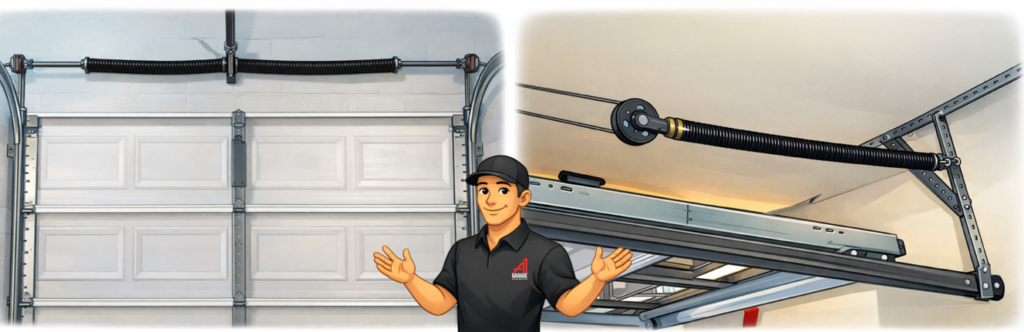
Quick Answers Before You Read
Don’t have time to read the whole article? Here is the short version first.
- What are the two main residential spring systems?
Torsion springs mount above the door on a tube. Extension springs run along the side tracks.
- Which system is better for most homes?
Torsion springs are usually the better system because they lift more smoothly, stay more controlled, and are generally safer.
- Do extension springs have any benefit?
Yes. They still have a place in garages with very low headroom or unusual space limits.
- What is the biggest safety issue with extension springs?
If there is no safety cable, a broken spring can fly loose and cause major damage.
- How can I tell if an extension spring is going bad?
The coils may look stretched out and stop returning to their normal tight shape.
- What happens when one extension spring breaks?
One side of the door may lift while the other side drops, which can jam the door in the opening.
- Why do many pros prefer torsion springs?
Torsion systems move the door in a smoother, more even way and still keep the spring on the tube if it breaks.
- Can torsion springs be customized more than extension springs?
Yes. Torsion springs can be selected by cycle life and use case. That gives homeowners more options.
- What cycle life should a homeowner ask about?
At minimum, ask what cycle spring is being installed and whether there are better options for a high-use home.
- Should a new spring system be checked later?
Yes. Even a good new spring system should usually be checked after the first year because springs settle and relax over time.
Do you have garage door springs above your door, or down the sides? And does it really matter which kind you have?
It does.
At A1 Garage Door Service, we see and service every type of garage door spring in every state of its life.
In this guide, we will explain the two most common residential garage door spring systems, the pros and cons of each, and what homeowners should ask before spring repair or replacement.
By the end, you will know which system is usually better, what warning signs to watch for, and how to make a smarter decision for your home.
Direct Answer: Torsion vs Extension Garage Door Springs
For most homeowners, torsion springs are the better choice.
Torsion springs usually offer:
- smoother door travel
- better control
- more spring options
- safer containment if a spring breaks
- better fit for high-use homes
 A1 Pro Tip:
Extension springs still have a place in some garages. They are useful when the garage has low headroom or a tricky layout. But in a normal setup, most trained garage door pros would choose torsion over extension.
What Is a Torsion Spring?
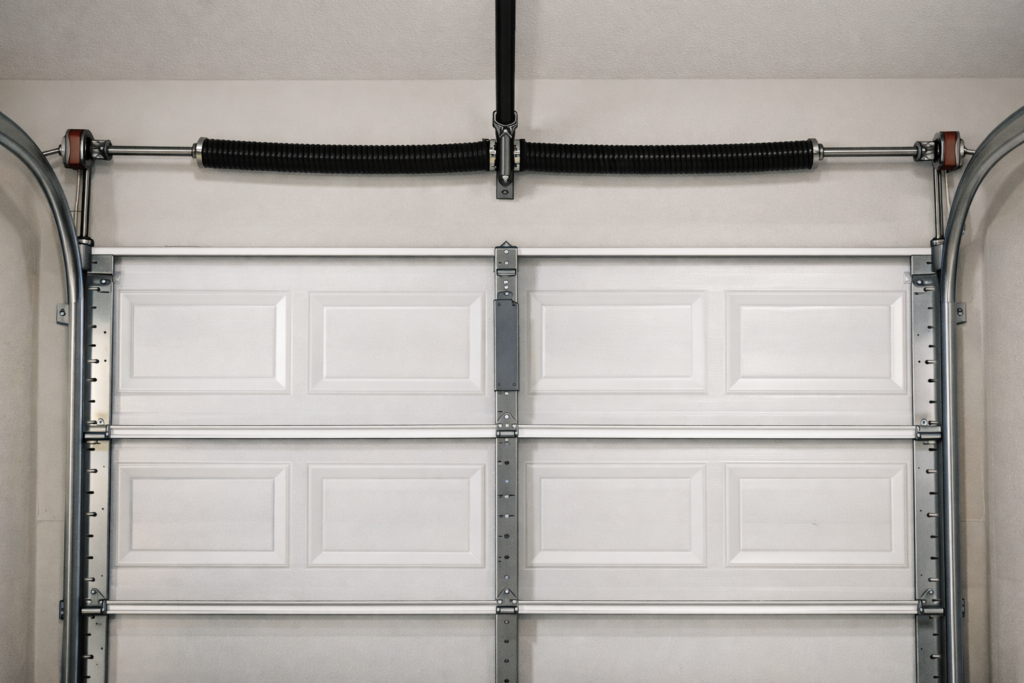
A torsion spring system sits above the garage door on a metal tube. When the door moves, the spring twists and stores energy. That energy helps lift the door.
Why many pros prefer torsion springs
A torsion system helps spread the lifting force more evenly across the door. That usually means smoother movement and less side-to-side shaking.
It also has an important safety advantage. If a torsion spring breaks, it stays on the tube. It does not usually fly across the garage.
What Is an Extension Spring?
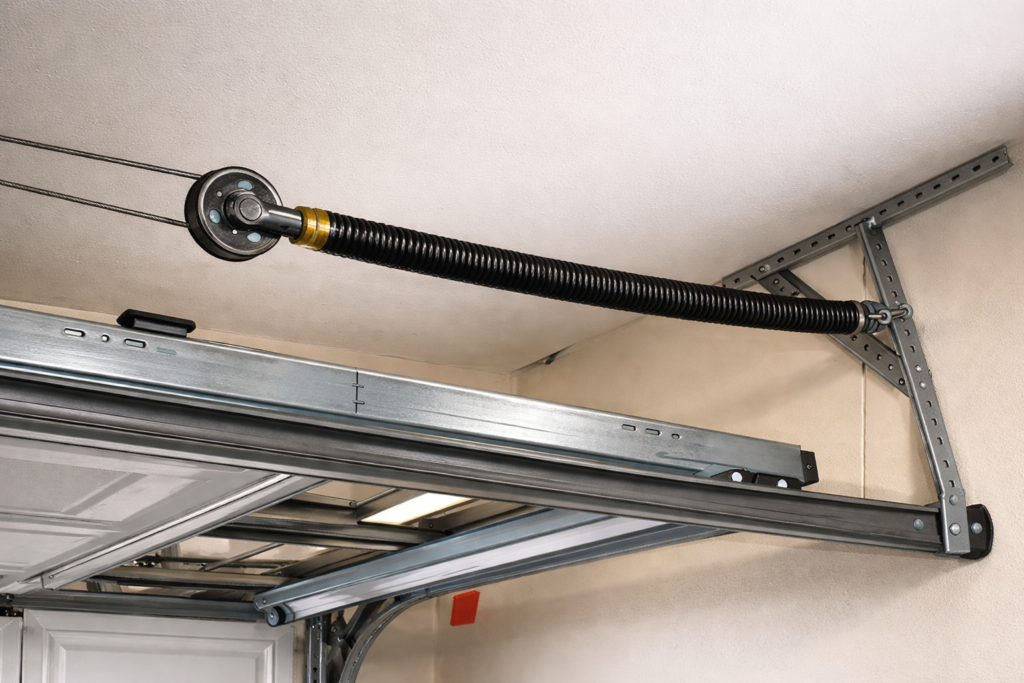
An extension spring system runs along the sides of the horizontal tracks. Instead of twisting, these springs stretch and contract as the door moves.
Where extension springs still make sense
Extension springs are often used when there is not enough room above the door for a torsion setup. In some garages, that makes extension the practical option.
That is the main advantage of extension springs. They can work when space in the garage is limited.
Torsion vs Extension Springs: Pros and Cons
Torsion Springs Pros
- smoother movement
- more controlled lift
- spring stays on the tube if it breaks
- better spring sizing options
- better cycle life choices for different households
Torsion Springs Cons
- may need more headroom
- may not fit every garage layout
Extension Springs Pros
- useful in low-headroom garages
- can work in unusual or tight spaces
- often used in more basic builder setups
Extension Springs Cons
- less smooth operation
- more independent side-to-side movement
- greater risk if safety cables are missing
- fewer upgrade options for cycle life
The Biggest Extension Spring Safety Issue
If you have extension springs in your garage, here is the most important thing you should know:
Check for safety cables!
A safety cable runs through the extension spring and helps contain it if the spring breaks. Without that cable, a broken spring can become a dangerous projectile.
That is why this is not a small detail. It is a major safety issue.
Homeowner takeaway
If you have extension springs and do not see safety cables, call a professional right away. Your system is potentially unsafe for anyone who enters your garage.
Early Warning Signs of a Bad Extension Spring
One of the clearest signs that an extension spring is on its way to failure is visual.
The coils start to look stretched out. Instead of returning to a neat shape, they begin to look loose and uneven, like an old phone cord that no longer pulls back the way it should.
That means the spring is fatiguing.
Other warning signs may include:
- uneven door movement
- shaky travel
- strange noise
- one side of the door lifting differently than the other
A1 Pro Maintenance Tip:
Regular balance and spring checks are part of good garage door maintenance standards.
What Happens When an Extension Spring Breaks?
This is where extension systems can create bigger problems.
Because each side works more independently, one broken spring can leave one side trying to lift while the other side does nothing. The door may jam at an angle in the opening.
If the opener keeps trying to run, that can lead to:
- bent panels
- damaged track
- cable issues
- extra strain on the opener
This is one reason many pros strongly prefer torsion systems.
Why Torsion Springs Give Homeowners More Options
With extension springs, the choices are limited. They are mostly selected by door weight.
With torsion springs, there is more room to fine-tune the system.
That means you can choose torsion springs based on:
- door weight
- door height
- drum type
- use level
- expected time in the home
- desired cycle life
Why cycle life matters
A garage door spring is rated by cycles. One cycle means the door goes up and comes back down.
For a family that uses the garage as the main entry, cycle life matters a lot. A busy household can wear out springs faster than a homeowner who only leaves a few times a week.
High-use households wear down springs and openers faster. As readers of these guides know, regular maintenance helps extend garage door system life.
What Homeowners Should Ask Before Spring Replacement
If a garage door company comes out for spring repair, ask these questions:
- Do you recommend torsion or extension springs for my setup?
If both are possible, ask them to explain why.
- How are you choosing the spring for my door?
They should be able to explain how they match the spring to the door.
- How do you check door balance after the repair?
A good technician should test and confirm balance.
- What cycle life options do I have?
This is a big one, especially for busy families who enter and exit their home primarily thrpugh the garage.
- Is this the best fit for how often we use the door?
Your spring should match your lifestyle, not just the door weight.
Common Mistake: Adding Tension to an Old Spring
Sometimes a tired spring is adjusted to add more tension instead of being replaced. That does not really fix the problem. It merely changes where the problem shows up.
The door may feel better in one position, but worse in another. It can also increase the chance of failure.
A1 Pro Tip:
Remember: A fatigued spring is still a fatigued spring, even if tension has been added.
Best Practice After New Springs Are Installed
Even if you get the right spring from a good company, do not assume the job is done forever.
At A1, we recommend having the system checked after the first year. Springs can settle and relax, and a follow-up adjustment can keep the door balanced and reliable.
DIY vs Pro
Safe for homeowners
- look at the spring type
- check whether safety cables are present
- listen for odd sounds
- watch for uneven movement
Leave to a pro
- spring adjustment
- spring replacement
- cable work
- balance correction under tension
A1 Pro Safety Tip:
Garage door springs store serious force. This is not a casual DIY job. Leave it to the trained professionals. Always.
FAQs on Torsion and Extension Springs
Which is better, torsion or extension garage door springs?
For most homes, torsion springs are better because they are smoother, safer, and offer more spring options.
Are extension springs unsafe?
They can be safe when installed and maintained correctly, especially with safety cables. But they carry more risk if safety cables are missing.
What is a safety cable on a garage door?
It is a cable that runs through an extension spring to help keep it contained if it breaks.
Can I upgrade from extension to torsion springs?
Sometimes, yes. It depends on the headroom and layout in your garage.
How often should garage door springs be checked?
A yearly inspection is a smart rule, and new springs should often be checked after the first year.
In One Minute
- Torsion springs sit above the door and twist
- Extension springs run along the side tracks and stretch
- Torsion is usually the better system for most homes
- Extension still has a place in low-headroom garages
- Safety cables are critical on extension spring systems
- Cycle life matters, especially for busy households
- A good company should explain spring choice and balance
- New springs should still be checked after the first year
Need help figuring out which spring system you have? Schedule a garage door inspection with the trusted experts at A1 and have a pro show you exactly what is on your door and whether it is still safe.
Want to learn more about this topic from the A1 experts? Watch A1’s podcast, “The Garage Authority,” below: