



Blog | GARAGE DOORS
7 Warning Signs Your Garage Door Needs Maintenance
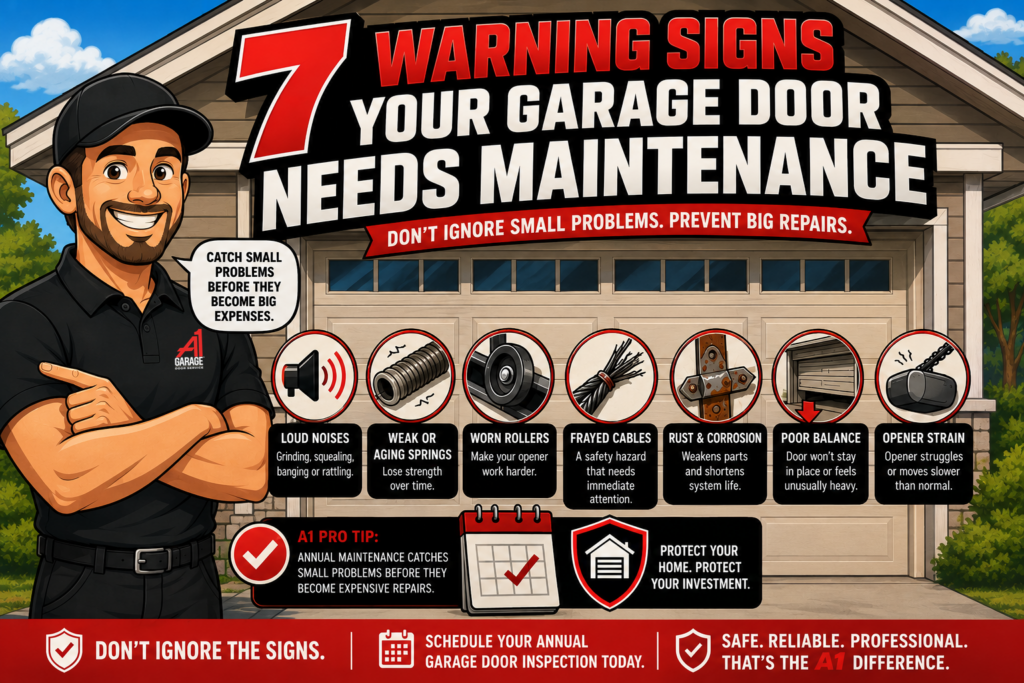
If you only have a minute, here’s what every homeowner should know.
- If your garage door suddenly gets louder, don’t ignore it. New noises are usually the first sign something needs attention.
- Broken springs aren’t the only problem. Old springs can lose strength long before they snap.
- Worn rollers make your opener work harder. That extra strain can shorten the life of your opener.
- Have your garage door professionally inspected once a year. Preventative maintenance catches small problems before they become expensive repairs.
- Watch for frayed cables, damaged rollers, rust, and poor balance. These are common warning signs that your system needs service.
- Sometimes replacement makes more sense than repair. If your door is older, heavily rusted, or repairs approach the cost of a new door, replacing the system may provide better long-term value.
- Don’t ignore changes. Most major garage door failures begin with small warning signs homeowners notice weeks or months earlier.
Is Your Garage Door Trying to Tell You Something? Are you listening to it?
Your garage door works hard every day. For many families, it opens and closes several times before dinner. But unlike your car, most homeowners never think about maintenance until something breaks.
That can be an expensive mistake.
At A1 Garage Door Service, we’ve inspected thousands of garage door systems over the years. One pattern appears over and over again. Most major breakdowns don’t happen without warning. The signs were there. They were simply ignored.
The good news?
Knowing what to watch for can save you money, improve safety, and help your garage door last much longer.
What Are the First Signs Your Garage Door Needs Maintenance?
Listen Before You Look
One of the earliest warning signs is sound.
A healthy garage door should open and close smoothly. If it suddenly begins making grinding, squealing, banging, or rattling noises, something has changed.
Those sounds often point to worn rollers, aging springs, loose hardware, or parts beginning to bind together.
Ignoring those sounds forces other components to work harder, creating a chain reaction of wear throughout the entire system.
Other warning signs include:
- Jerky movement
- Door feels unusually heavy
- Door won’t stay balanced halfway open
- Frayed lifting cables
- Rust on moving components
- Broken or cracked rollers
- Slow operation
- Opener straining during operation
 A1 Pro Tip:
With garage doors, small problems rarely stay small for long.
The Parts Homeowners Wait Too Long to Replace
One of the biggest misconceptions is that springs only need attention after they break.
The reality? That’s simply not true.
Garage door springs gradually lose lifting power over time. Even if they haven’t snapped, they may no longer properly counterbalance the weight of the door.
When that happens, your opener begins doing work it was never designed to do.
The same is true for worn rollers.
Think about driving your car with the parking brake partially engaged. It still moves, but every mile puts unnecessary stress on the engine.
That’s exactly what happens when worn rollers force your opener to pull a door that isn’t moving freely.
A1 Pro Tip:
Routine garage door maintenance helps identify these issues before they create larger repairs.
A Real A1 Customer Story We See Every Week
A homeowner called A1 because their garage door had become “a little louder.” The family noticed it for months but kept putting off service because the door still opened.
Eventually, one of the aging springs failed.
Without proper spring support, the opener struggled to lift the door. The additional strain damaged other components that had previously been working fine.
What could have been a straightforward maintenance visit turned into multiple repairs that were completely preventable.
Situations like this happen every week.
The lesson is simple:
When your garage door starts acting differently, schedule an inspection sooner rather than later.
Five Things Every Garage Door Inspection Should Include
At A1 Garage Door Service, we believe a complete inspection goes beyond adding lubricant. A professional inspection should evaluate the entire garage door system.
- Door Balance
A properly balanced garage door should lift easily and stay in place when partially opened.
Poor balance usually indicates worn springs.
- Rollers
Inspect rollers for:
- Cracks
- Flat spots
- Excessive wear
- Binding
- Rough movement
Smooth rollers reduce stress throughout the entire system.
- Cables
Garage door cables should never appear frayed or damaged.
If they do, professional replacement is recommended immediately.
- Garage Door Opener
Inspect the opener for:
- Excessive vibration
- Struggling during operation
- Metal shavings
- Unusual sounds
- Inconsistent movement
Often the opener isn’t the problem. It’s simply compensating for issues elsewhere.
- Mounting Structure
The spring anchor and surrounding framing should be inspected for cracking, movement, or deterioration.
Older homes may have wood that has weakened over decades of supporting spring tension.
When Does It Make More Sense to Replace Instead of Repair?
This is one of the biggest questions homeowners ask. The answer depends on several factors.
Replacement often becomes the better investment when:
- The door is 15–20 years old or older.
- Multiple major components need replacement.
- The door has significant rust or structural damage.
- It’s an older non-insulated builder-grade door.
- Repair costs begin approaching the value of a new system.
A new garage door provides more than just new panels.
It also includes:
- New tracks
- New weather seals
- Updated hardware
- Improved insulation
- Modern safety features
- Better curb appeal
Instead of repairing one aging component after another, replacement gives homeowners an entirely new system designed for years of reliable service.
Why Annual Garage Door Maintenance Pays Off
Many homeowners service their HVAC system every year. They change oil in their vehicles.
Yet the largest moving object in their home often receives no maintenance at all.
Annual garage door maintenance helps:
- Extend equipment life
- Reduce unexpected breakdowns
- Improve safety
- Keep the opener operating efficiently
- Catch worn parts before they fail
- Protect your investment
A1 Pro Tip:
Preventative maintenance almost always costs less than emergency repairs.
DIY vs. Professional Garage Door Maintenance
Some maintenance tasks are homeowner-friendly and safe to perform.
Safe DIY Tasks
- Keep the tracks clean.
- Watch and listen for changes.
- Test safety sensors.
- Visually inspect rollers and cables.
- Replace remote batteries.
Leave These Jobs to Professionals
- Spring replacement
- Cable replacement
- Track adjustments
- Door balancing
- Major hardware repairs
A1 Pro Safety Tip:
Garage door springs are under extreme tension and should never be serviced without proper training and equipment.
Frequently Asked Questions about Garage Door Maintenance
How often should a garage door be serviced?
Most homeowners should schedule professional maintenance once each year. Heavy-use doors may benefit from more frequent inspections.
Why is my garage door suddenly louder?
New noises often indicate worn rollers, aging springs, loose hardware, or components that need adjustment.
Can I keep using my garage door if a spring is getting weak?
It’s not recommended. Weak springs place additional stress on your opener and can eventually lead to more expensive repairs.
How long do garage door springs last?
Spring life depends on usage, but all springs eventually wear out through repeated opening and closing cycles.
Is it better to repair or replace my garage door?
If your door is relatively new and in good condition, repairs often make sense. If it’s older, heavily worn, or multiple major components are failing, replacement may provide better long-term value.
In One Minute
- Strange noises are early warning signs.
- Worn springs affect your entire system before they break.
- Rollers have a major impact on opener life.
- Annual inspections prevent expensive repairs.
- Older doors may be better candidates for replacement than repeated repairs.
- Addressing small problems early usually saves money.
Ready to Protect Your Garage Door?
At A1 Garage Door Service, we believe educated homeowners make better decisions.
Whether your garage door needs a simple tune-up or it’s time to discuss replacement, a professional inspection gives you the information you need to make the right choice for your home.
Schedule an annual garage door inspection and catch small problems before they become costly repairs.