



Blog | GARAGE DOORS
How to Tell If Your Garage Door Spring Is About to Break (Warning Signs Homeowners Must Know)
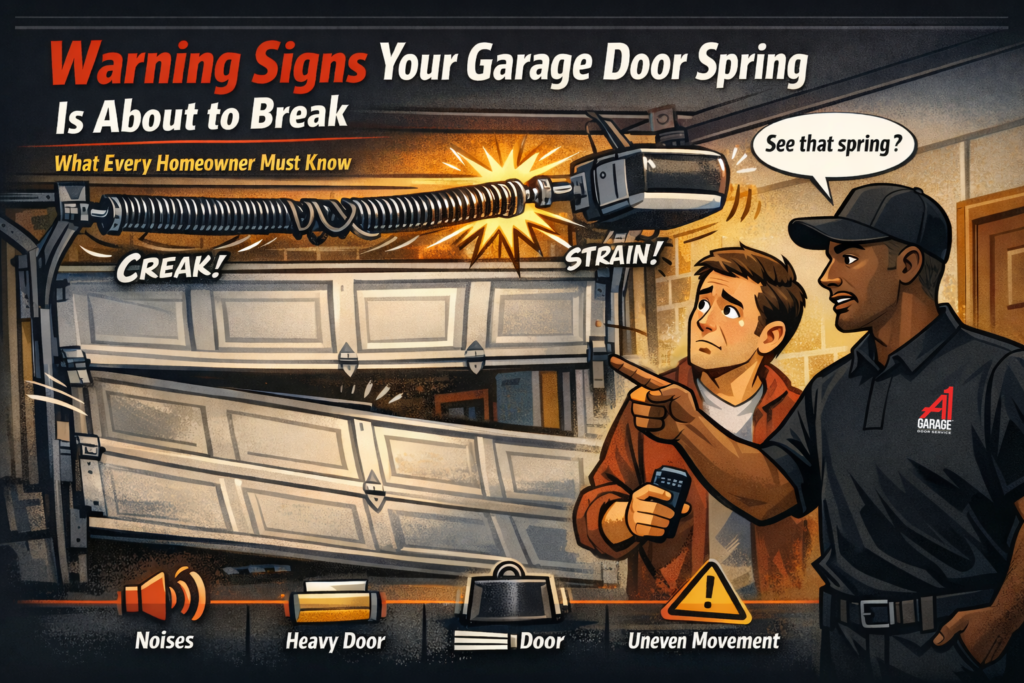
In a hurry and don’t have time to read the guide? Here are the basics:
- Strange noises are often the first warning sign.
- Springs may look stretched or wavy when worn out.
- A heavy door means the spring is losing strength.
- The opener may struggle or sound louder than normal.
- The door may move unevenly, jerk, or close too fast.
- A loud “bang” in the garage often means a spring snapped.
- Do not touch springs. Call a professional immediately.
Is your garage door suddenly louder than usual? Does it feel heavier or move differently than before?
At A1 Garage Door Service, we have customers every week tell us their door is presenting these symptoms. Usually, they are tell-tale signs that the springs on their garage door are on the brink of failure.
In this guide, we break down the real warning signs of a failing spring, what they mean, and what you should do next.
By the end, you will know exactly how to spot problems early and avoid costly damage to your garage door.
The Most Common Warning Signs (Direct Answer)
If your garage door spring is about to break, you will usually notice the door is making noise, feels heavier, or is experiencing movement issues
Here are additional common signs that a spring is nearing failure:
- New or unusual noises
- A heavier-than-normal door
- Slower opening or faster closing
- Jerky or uneven movement
- Visible gaps or waviness in the spring
 A1 Pro Insight:
Your garage door spring is the system’s main muscle that provides the lift for the door. When that “muscle” weakens, everything else in the system starts to struggle.
-
Strange Noises Coming From the Garage
One of the first warning signs a failing spring will display is sound.
If your garage door suddenly starts making:
- Grinding noises
- Squeaking
- Loud straining sounds
…it is often the result of a spring losing tension. These noises mean the system is working harder than it should and additional parts will soon fail.
-
The Door Feels Heavy (Balance Test)
This is one of the most important tests to determine the state of your garage door’s springs.
How to Perform the Balance Test Safely
- Make sure the door is fully closed
- Pull the emergency release
- Try lifting the door manually
A healthy door should feel light. At A1, we believe it should feel around 0–5 pounds of force. If it feels heavy, your spring is failing.
A1 Pro Insight:
Every homeowner should know how to perform the balance test. When the door’s getting heavy, it’s a sign that the spring is losing tension.
-
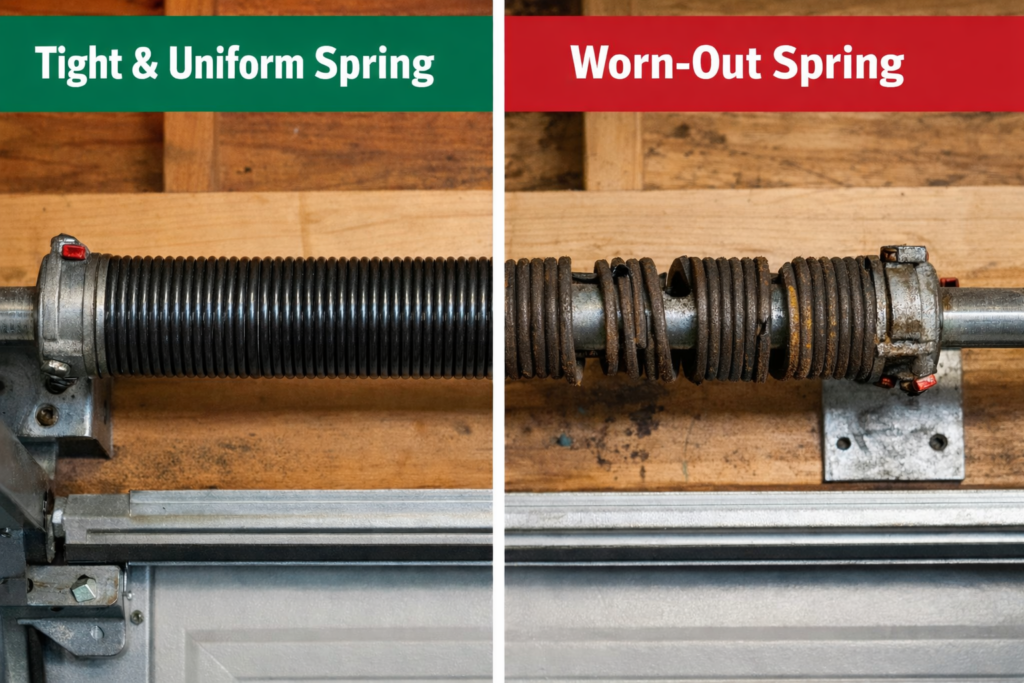
The Spring Looks Wavy or Stretched
When a spring is on its last legs (so to speak), the problem is often visible. .
Look at your springs:
- They should be tight and uniform
- If they look stretched or wavy, they are worn out
This is a clear sign of metal fatigue.
-
The Door Moves Differently
Watch how your door operates.
Warning signs of a failing spring include:
- Opens slower than before
- Closes faster than normal
- Jerks or shakes while moving
- Rail or opener appears to strain
These changes often go unnoticed until it is too late and the homeowner has to deal with an expensive repair.
-
The Opener Sounds Like It’s Struggling
Many homeowners think the opener is the problem when they hear odd noises from their garage door. It is usually not.
The opener’s motor is simply guiding the door up and down. Remember, the spring is the system’s muscle and is actually doing the lifting.
If the spring is weak, the opener works harder. That extra effort on the opener often leads to:
- Louder operation
- Shorter opener lifespan
- Possible motor failure
A1 Pro Tip:
Fixing or even replacing a garage door spring is much less expensive than buying and installing a new garage door opener. Homeowners should remember this next time their door is showing signs of a failing spring.
-
You Hear a Loud Bang
This is the big one. If you hear a loud noise like a gunshot in your garage, the spring has likely broken.
Many homeowners describe this noise as:
- A crash
- Something falling
- A car hitting the house
That sound is the spring snapping under tremendous tension.
What Happens If You Ignore These Signs?
This is where problems get expensive.
Ignoring a failing spring can lead to:
- Bent door panels
- Broken openers
- Damaged tracks and cables
- Doors falling unexpectedly
- Cars getting damaged
In some cases, repairs can cost thousands of dollars. This ties directly to what we see in routine maintenance failures.
DIY vs Professional: What Should You Do?
What You Can Do as a Homeowner
- Look at the springs
- Listen for noises
- Test the balance safely
What You Should NOT Do
- Do not touch or adjust springs
- Do not try to fix tension
- Do not force the door open
A1 Pro Safety Tip:
Regular readers of these guides have heard us say this before: Garage door springs are under extreme tension. They are dangerous. Do NOT touch or attempt to repair them on your own. Leave that work to trained professionals.
When Should You Call a Professional?
Call a technician if you notice:
- Any of the warning signs above
- A heavy door
- Strange noises
- A visible spring issue
Cost Factors (What to Expect)
While pricing varies, spring repairs depend on:
- Spring type
- Door size and weight
- Number of springs
- Labor and parts
In general, fixing a problem early is always cheaper than waiting.
Common Mistakes Homeowners Make
Avoid these:
- Ignoring noises
- Blaming the opener
- Buying a stronger motor instead of fixing springs
- Waiting until the door stops working
A bigger motor will not fix a bad spring. It will just wear out faster.
Pro Tips From the Field
A1’s most experienced field technicians offer the following garage door wisdom for homeowners:
- Trust your instincts if something feels off.
- If your spouse says something is wrong, check it.
- Look at your system regularly.
- Schedule annual maintenance.
A1 Pro Tip:
Small checks prevent big problems.
FAQs About Garage Door Springs
How do I know if my garage door spring is going bad?
Look for noise, heavy door movement, slow operation, or visible wear.
Can I open my garage door with a broken spring?
You can, but it is unsafe and can cause major damage.
What does a broken spring sound like?
It often sounds like a loud bang or gunshot.
How often should springs be checked?
At least once per year during routine maintenance.
In One Minute: Recap
- Springs do the heavy lifting, not the opener.
- Noise is often the first warning sign.
- A heavy door means spring failure.
- Visual damage like waviness is a red flag.
- A loud bang usually means the spring broke.
- Early action prevents expensive repairs.
If your garage door feels off, don’t wait. Call A1 Garage Door to schedule a professional inspection today and avoid costly damage.