



Blog | GARAGE DOORS
Should You Repair or Replace a Damaged Garage Door Panel? A Homeowner’s Guide
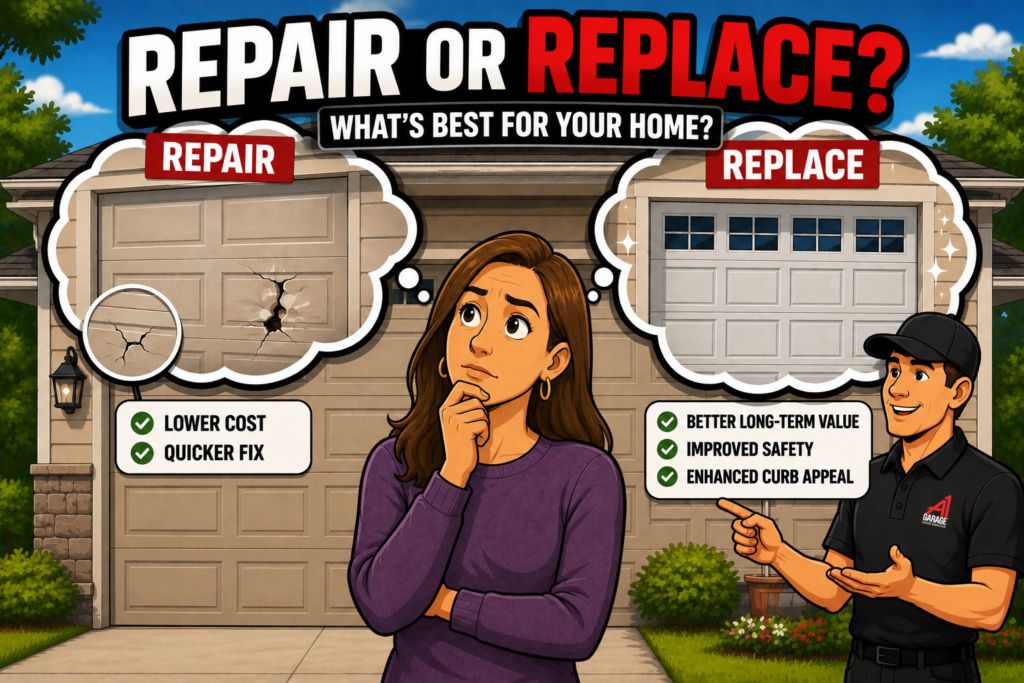
Here’s what you need to know:
- What causes panel damage?
Age, daily use, and accidental impact (like cars) are the most common causes.
- Cosmetic vs structural damage?
Faded paint = cosmetic. Cracks, bending, or broken supports = structural and serious.
- Can you replace just one panel?
Sometimes. But older doors often won’t match due to design changes.
- When should you replace the whole door?
If there’s structural damage, mismatch issues, or multiple failing parts.
- What makes panels fail faster?
Lack of reinforcement, low-quality materials, and DIY fixes.
- Best material for longevity?
Insulated steel-backed doors last longer and resist damage better.
- Should you DIY a fix?
No. Temporary fixes often make the problem worse and more expensive.
Is your garage door making your home look great… or dragging it down? Did you know one damaged panel can affect safety, not just looks?
At A1 Garage Door Service, customers often ask us, “Should I repair or replace a damaged panel?”
In this guide, A1 explains when to repair, when to replace, and how to avoid costly mistakes. By the end, you’ll know exactly what to do if your garage door panel is damaged.
What Causes Garage Door Panel Damage?
The truth is simple. Garage door panels take a beating over time.
Here are the most common causes for damaged panels:
- Everyday Wear and Tear
Garage doors open and close thousands of times. Over time, parts weaken.
- Accidental Impact
Cars are the number one cause of panel damage. It happens more often than you think.
- Lack of Reinforcement
Missing support parts can cause panels to crack or bend.
- Weather Exposure
Sun, heat, and moisture can fade or weaken materials.
Cosmetic vs Structural Damage: What’s the Difference?
This is one of the biggest questions homeowners ask about damaged panels.
Cosmetic Damage (Usually Safe)
- Faded or oxidized paint
- Minor surface dents
- Discoloration
These issues affect appearance, not function.
Structural Damage (Serious Problem)
- Cracks in panels
- Bending or buckling
- Broken internal supports
- Light showing through seams
If you see these, the door may not be safe to use.
The Hidden Parts That Keep Panels Strong
Most homeowners never see these parts, but they matter.
Strut (Top Reinforcement Bar)
A metal bar across the top panel that prevents bending.
Operator Reinforcement Bracket (ORB)
Spreads the opener’s force across the panel.
Without these parts, panels often crack or fail early.
Can You Replace Just One Garage Door Panel?
Sometimes, yes. But often, no.
Here’s why:
Manufacturers Change Designs
Panel connections (called tongue and groove) change every few years.
Styles Don’t Match
Even if it looks similar:
- Panel size may differ
- Depth and “shadow lines” may change
- Patterns may not align
The result? A mismatched door that stands out for the wrong reasons.
When Panel Replacement Makes Sense
Panel replacement can work if:
- Your door is newer (under 10–12 years)
- Damage is isolated to one section
- Matching panels are still available
- No structural components are compromised
When It’s Time to Replace the Whole Door
At A1 Garage Door Service, we recommend full replacement when:
- Structural Damage Exists
Safety always comes first. Period.
- Panels can’t be matched
Older doors often can’t be matched properly.
- Multiple Parts Are Failing
Garage doors work as one system. One issue leads to others.
- DIY Repairs Made It Worse
Temporary fixes often add weight and stress to the system.
 A1 Pro Insight:
According to industry guidance, if repairs keep stacking up, replacement is often the smarter long-term choice.
Comparing Garage Door Panel Types
Basic (Vinyl Back)
- Lightweight
- Easier to dent
- Lower cost
Steel-Back Insulated Doors
- Strong and durable
- Resistant to bending
- Better insulation
- Longer lifespan
A1 Pro Tip:
If you want durability, steel-backed insulated doors are the better investment.
Why DIY Fixes Can Cost You More
Many homeowners try quick fixes such as:
- Adding wood supports
- Using hardware store brackets
- Reinforcing panels temporarily
Here’s the problem. These DIY fixes:
- Add extra weight
- Wear out springs and opener faster
- Cause more system damage
Pro Insight:
Garage doors are balanced systems. One change affects everything.
Cost Considerations (What to Expect)
While pricing varies, here’s a general guide:
- Panel repair: Lower upfront cost
- Multiple repairs: Costs add up quickly
- Full replacement: Higher upfront, better long-term value
A1 Pro Insight:
If repair costs approach half the price of a new door, replacement is usually smarter.
Common Mistakes Homeowners Make
- Waiting too long to fix damage
- Ignoring structural warning signs
- Trying DIY fixes
- Assuming panels will match
- Focusing only on appearance, not safety
What Should You Do Next?
If your garage door panel is damaged:
- Inspect for cracks or bending
- Check if the door operates smoothly
- Avoid DIY fixes
- Call a professional for an inspection
FAQ: Garage Door Panel Repair vs Replace
Can a bent garage door panel be fixed?
Minor bends may be repaired. Structural bends usually require replacement.
Is it cheaper to replace one panel or the whole door?
One panel is cheaper upfront, but not always possible or practical.
How long do garage door panels last?
Typically 15–30 years, depending on material and maintenance.
Will a new panel match my old door?
Not always. Design changes make matching difficult.
Is a damaged panel dangerous?
Yes, if structural. It can lead to system failure.
In One Minute: What You Need to Know
- Panel damage is common and often caused by impact or age
- Cosmetic issues are okay, structural ones are not
- Panel replacement isn’t always possible
- Older doors often require full replacement
- DIY fixes can make problems worse
- Steel-backed doors last longer and perform better
Ready for a Professional Opinion? Not sure if you need a repair or full replacement?
At A1 Garage Door Service, we help homeowners make the right call every day. Schedule an inspection and get clear answers before the problem gets worse.
Want to learn more about this topic from the A1 experts? Watch A1’s podcast, “The Garage Authority,” below: