



Blog | GARAGE DOORS
How Long Do Garage Door Springs Last? Cycle Ratings Explained
Quick Answers Before You Read:
- A spring cycle = one full open and close of your garage door.
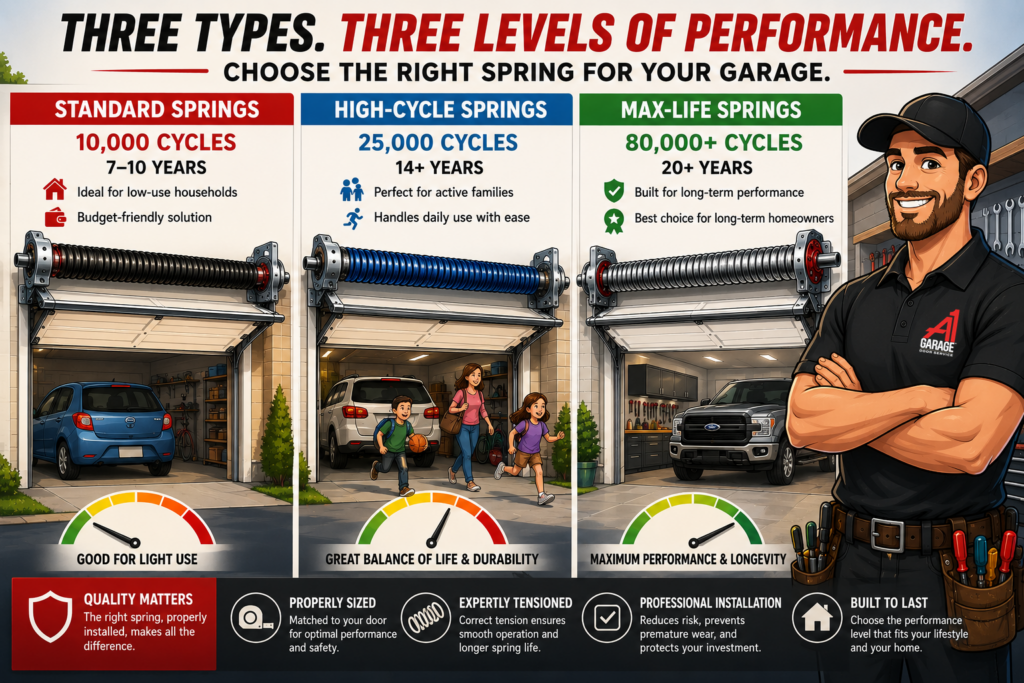
- Standard springs last about 10,000 cycles.
- High-cycle springs last about 25,000 cycles.
- Max-life springs can reach 80,000+ cycles.
- Spring lifespan depends on usage, size, and installation quality.
- Using the wrong spring or too much tension shortens the lifespan.
- DIY spring repair can be extremely dangerous and costly.
- The right spring setup can last as long as you live in your home.
What Is a Garage Door Spring Cycle? Simple Answer:
A garage door spring cycle is one full opening and closing of your garage door. Every time your door goes up and comes back down, that counts as one cycle.
How long should your garage door springs really last? And why do some fail in just a few years while others last decades?
At A1 Gargae Door Service, we receive these questions from homeowners every week.
In this guide, we’re going to explain spring cycles, lifespan, and what most homeowners get wrong.
By the end, you will know how to choose the right spring for your garage door and avoid costly mistakes.
Why Spring Cycles Matter More Than You Think
Your garage door is the largest moving object in your home. But most homeowners never think about the springs until they break.
Here’s the truth:
Spring cycles determine how long your garage door will last. If you choose the wrong spring, you could cut its life in half.
The 3 Types of Garage Door Springs (By Cycle Rating)
-
Standard Springs (10,000 Cycles)
- Found in builder-grade homes
- Designed for basic daily use
- Typically lasts 7–10 years
Standard springs are best suited for:
- Low-use households
- Budget-focused installs
-
High-Cycle Springs (25,000 Cycles)
- More durable than standard springs
- Last about twice as long
- Better for active households
High-cycle springs are best for:
- Families using the garage as the main entrance
- Homes with kids coming and going often
-
Max-Life Springs (80,000+ Cycles)
- Built for long-term performance
- Designed to last decades under normal use
- Often backed by lifetime warranties
Max-life springs are best for:
- Long-term homeowners
- High-use garages
- Those who want fewer repairs
What Actually Determines Spring Lifespan?
Many garage door service companies oversimplify this explanation. The truth is more technical.
At A1 Garage Door Service, we look at three key factors:
- Wire Size
Thicker wire = stronger spring = longer lifespan
- Spring Length
Longer springs spread tension better and last longer
- 3. Proper Tension (Installation)
Too much tension = faster failure. Too little tension = poor performance. This is why proper installation matters.
What’s the Biggest Mistake Homeowners Make with Springs?
Using the Wrong Spring for the Door. Not all garage doors are the same.
Factors that matter when considering garage door springs include:
- Door height
- Door weight
- Track type
- Drum size
 A1 Pro Tip:
If a technician skips measuring and weighing your door, that’s a red flag.
Real Problem: More Use = Shorter Life. Even the best spring will fail early if overused.
Example:
- Home A: 2 cycles per day → long lifespan
- Home B: 50+ cycles per day → much shorter lifespan
Same spring. Very different outcomes.
Cost vs Value
Many homeowners ask, “Should I pay more for better springs?”
Here’s the honest answer:
- Standard spring = lower upfront cost
- High-cycle or max-life = lower long-term cost
A1 Pro Insight:
If you plan to stay in your home for a while, better springs usually save money over time.
DIY Spring Replacement: A Serious Risk
The Truth (and potential problems)
Garage door springs are under extreme tension.
Common DIY risks include:
- Winding bars slipping
- Damage to walls, cars, or doors
- Severe injuries
In one real case, a homeowner lost a thumb attempting a spring repair. Even experienced technicians can get injured if a spring snaps.
A1 Pro Safety Tip:
This is not a typical DIY job. We cannot stress this enough. Do not attempt to fix garage door springs yourself. Call a professional.
Best Practices for Homeowners
- Always choose the correct spring for your door.
- Ask if your technician weighs the door.
- Upgrade to high-cycle springs if you use your garage daily.
- Schedule regular inspections.
- Never attempt spring repairs yourself.
DIY vs Professional Installation
DIY:
- Lower upfront cost
- High safety risk
- Easy to install incorrectly
Professional (Recommended):
- Correct spring sizing
- Proper tension setup
- Safer and longer-lasting
FAQs about Choosing the Right Garage Door Springs
How many cycles does a garage door spring last?
Standard springs last about 10,000 cycles. High-cycle springs last 25,000, and max-life springs can exceed 80,000 cycles.
How long is 10,000 cycles in years?
For most homes, about 7–10 years, depending on daily use.
Can garage door springs last forever?
No. All springs wear out over time due to repeated tension and use.
Is it safe to replace garage door springs yourself?
No. Springs are under high tension and can cause serious injury. Professional installation is strongly recommended.
Are high-cycle springs worth it?
Yes, especially for high-use households. They last longer and reduce repair frequency.
In One Minute (Quick Recap)
- A cycle = one open and one close
- Standard springs = 10,000 cycles
- High-cycle = 25,000 cycles
- Max-life = 80,000+ cycles
- Installation quality matters as much as the spring
- More use = shorter lifespan
- DIY repairs are dangerous
If your garage door is making noise or feels heavy, don’t wait.
A1 Garage Door Service can inspect your system, recommend the right spring, and keep your home safe.
Want to learn more about this topic from the A1 experts? Watch A1’s podcast “The Garage Authority” below: