



Blog | GARAGE DOORS
Garage Door Seals Explained: Costs, Problems, Types, and Best Options
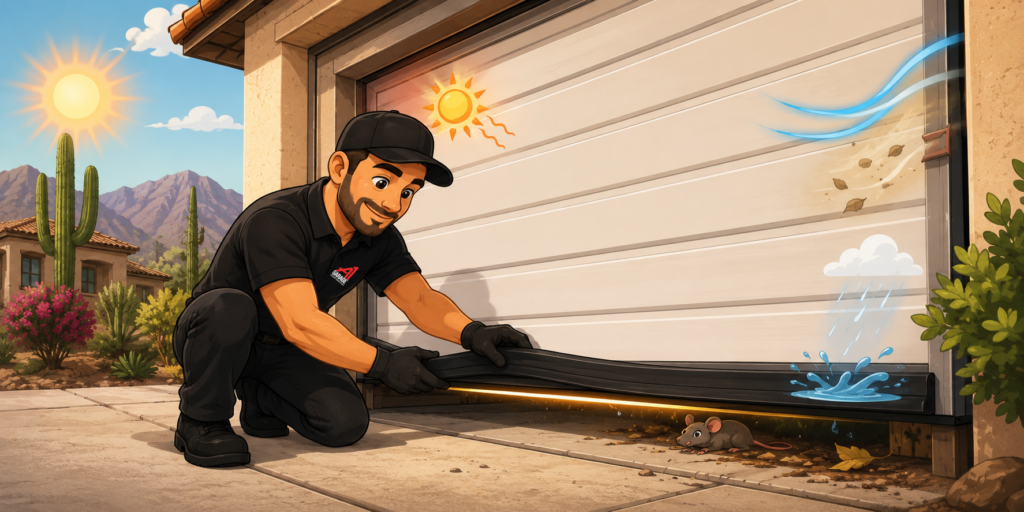
Before diving into the full guide, here are the biggest takeaways about garage door seals from A1 Garage Door Service:
- Garage door seals are not just the rubber on the bottom.
- Weather trim, bottom seals, storm shields, and top seals all matter.
- The wrong seal for your climate can crack, shrink, or fail early.
- Homeowners in hot climates should usually avoid solid trim because heat causes cracking.
- Cold climates often need solid trim because hollow trim becomes brittle.
- Oversized bottom seals help uneven concrete floors seal properly.
- Using the wrong bottom seal style can damage the door and trim.
- Black bottom seals absorb more heat and may shrink faster in hot climates.
- Gray bottom seals often perform better in extreme heat.
- Rodent-resistant seals use metal mesh to stop mice and rats from chewing through.
- DIY installs fail when seals are cut too short or installed crooked.
- Storm shields help prevent rainwater from entering garages on sloped driveways.
- Wood garage doors need heavy-duty rubber seals, not thin foam products.
- Rotting wood around a seal usually means it may be time for a new door.
- Proper sealing improves comfort, energy efficiency, and pest control.
Why Do Garage Door Seals Matter?
Have you ever noticed light coming through the sides of your garage door? Have water, dust, bugs, or even mice gotten into your garage?
Most homeowners think garage door seals are only the rubber strip at the bottom. But a properly sealed garage door uses several different parts working together.
In this guide, the experts at A1 Garage Door Service explain:
- The different types of garage door seals
- Which seals work best in different climates
- Common installation mistakes
- DIY tips homeowners should know
- When it makes more sense to replace parts instead of repairing them
By the end of this guide, you’ll understand how proper sealing can give you a quieter, cleaner, and better-protected garage.
What Are the Different Types of Garage Door Seals?
Weather Trim Around the Garage Door
The trim around the sides and top of the garage door is called weather trim or weather stripping.
Its jobs are simple:
- Block outside air
- Keep out dust and insects
- Reduce water intrusion
- Help insulation perform better
Today, most weather trim is made from vinyl composite instead of natural wood.
Solid vs. Hollow Weather Trim
Choosing the proper trim is one of the biggest homeowner mistakes. Not every trim works in every climate.
Solid Trim
Solid trim performs better in cold climates because it stays stronger in freezing weather. But in very hot climates such as Phoenix, solid trim often cracks or splits from heat exposure.
Hollow Trim
Hollow trim handles heat expansion better and works well in hot climates. However, in cold regions, it can become brittle and crack.
 A1 Pro Tip:
Always choose weather trim based on your local climate, not just the trim’s price.
The Most Important Seal: Bottom Garage Door Seals
The bottom seal is the rubber strip attached to the bottom of the garage door.
This seal keeps out:
- Water
- Dirt
- Heat
- Cold air
- Pests
As with trim, not all bottom seals are the same.
Oversized Bottom Seals for Uneven Concrete
Many garage floors are uneven, if only slightly. When this happens, standard bottom seals may leave gaps.
Oversized bottom seals provide extra material to fill low spots in the concrete. This helps create a tighter seal.
The Problem With Oversized Seals
If oversized seals are used unnecessarily, they can:
- Fold inward or outward
- Look messy
- Catch on trim
- Tear prematurely
A1 Pro Tip:
At A1 Garage Door Service, we strongly recommend matching the seal to the condition of the floor.
Garage Door Bottom Seal Styles
There are several bottom seal styles, including:
- T-style seals
- Bulb seals
- P-style seals
- Brand-specific seals
Each style fits a specific retainer system on the garage door.
Common DIY Mistake
Many homeowners buy replacement seals without checking the retainer type first. The seal may not fit correctly even if it looks similar.
Black vs. Gray Bottom Seals
Color matters more than most homeowners realize.
Black Seals
Black rubber absorbs more sunlight and heat. In hot climates, this can cause shrinking and gaps near the edges of the door.
Gray Seals
Gray seals absorb less heat and often last longer in places with extreme sun exposure.
A1 Pro Tip:
In hot climates, gray bottom seals may provide better long-term performance.
One DIY Trick Most Homeowners Miss
When installing a bottom seal, do not cut it flush with the edge of the door.
Instead:
- Leave several extra inches on each side
- Fold the extra seal back into the retainer
- Allow room for future shrinking
This simple trick helps prevent gaps later.
Rodent-Proof Garage Door Seals
Standard rubber seals are easy for mice and rats to chew through. That is why rodent-resistant seals were created.
These seals contain metal mesh material inside the rubber. When rodents bite into the seal, they hit the metal mesh and usually stop chewing.
Best Uses for Rodent Seals
Rodent seals work especially well for:
- Homes near fields
- New construction areas
- Rural properties
- Barns and workshops
DIY Warning
Rodent seals are harder to install because of the internal metal mesh. Cutting away some mesh near the ends makes installation easier.
Storm Shields for Water Problems
If your driveway slopes toward the garage, rainwater can push under the door. A storm shield adds a raised barrier across the garage floor.
Think of it like a small dam for water.
Benefits of Storm Shields:
- Helps block heavy rain
- Adds another protection layer
- Works well with bottom seals
Common Installation Problems
DIY storm shield installs often fail because:
- The floor was not cleaned properly.
- Weak adhesive was used.
- The strip was installed crooked.
A1 Pro Tip:
Storm shields are not a fix for badly uneven concrete. In many cases, oversized bottom seals work better.
Garage Door Seals for Wood Doors
Wood garage doors require different sealing methods. Many wood doors use tack-on rubber seals instead of slide-in retainers.
Avoid Thin Foam Seals
Cheap foam seals crush quickly under heavy wood doors. Instead, use heavy-duty rubber materials designed for garage door weight.
Check for Rot First
Before installing new seals on wood doors:
- Inspect for rotting wood.
- Check loose staples or nails.
- Look for soft spots near the bottom panel.
A1 Pro Tip:
If the wood is badly damaged, replacing the door may be smarter than repairing it.
Commercial and Metal Building Seals
Metal buildings and RV garages often need specialty seals.
These setups may use:
- Reverse-angle track systems
- Top draft seals
- Brush seals
Brush seals are especially useful for:
- Workshops
- Food-grade buildings
- Barn-style garages
- Garages with bug problems
How Much Does Garage Door Seal Replacement Cost?
One of the biggest homeowner questions we get at A1 is cost.
Pricing depends on:
- Seal type
- Door size
- Labor
- Climate requirements
- Damage to surrounding materials
Simple bottom seal replacement is usually affordable. But if trim, retainers, wood rot, or uneven concrete are involved, costs can increase.
A1 Pro Tip:
Cheap materials usually fail faster. Choosing the right seal the first time saves money long term.
DIY vs. Professional Installation
DIY May Work If:
- You have a standard steel door.
- The retainer is in good condition.
- The floor is mostly level.
- You are replacing the basic bottom rubber.
Call a Professional If:
- Water enters the garage regularly.
- Rodents are getting inside.
- The floor is severely uneven.
- The door has wood rot.
- The seal style is unknown.
- The trim keeps failing.
FAQ: Garage Door Seals
How often should garage door seals be replaced?
Most seals last 3–8 years, depending on climate and exposure.
Why is light showing around my garage door?
The trim or bottom seal may be worn, damaged, or improperly sized.
Can I replace a garage door seal myself?
Yes, many homeowners can replace standard bottom seals. Specialty seals are harder.
What is the best garage door seal for hot climates?
Hollow trim and gray bottom seals often perform better in extreme heat.
Do rodent-proof seals actually work?
Yes. Metal mesh inside the seal helps stop rodents from chewing through.
In One Minute: What Homeowners Should Remember about Garage Door Seals
- Garage door seals protect against water, heat, dust, and pests.
- Climate matters when choosing trim and rubber materials.
- Oversized seals help uneven floors but can cause problems if misused.
- Gray bottom seals often last longer in hot climates.
- Rodent-resistant seals contain metal mesh for extra protection.
- Storm shields help prevent flooding on sloped driveways.
- Cheap foam products usually fail quickly on wood doors.
- Proper installation matters as much as the seal itself.
Ready to Seal Your Garage the Right Way?
At A1 Garage Door Service, we help homeowners choose the right seals for their climate, garage type, and long-term needs.
Whether you need:
- Bottom seal replacement
- Weather trim
- Rodent protection
- Water protection
- Full garage door replacement
Our A1 team can help. Schedule an inspection today and protect your garage from heat, water, pests, and costly damage.
Want to learn more about this topic from the A1 experts? Watch A1’s podcast “The Garage Authority” below: