



Blog | GARAGE DOORS
What Happens When You Use WD-40 on a Garage Door?
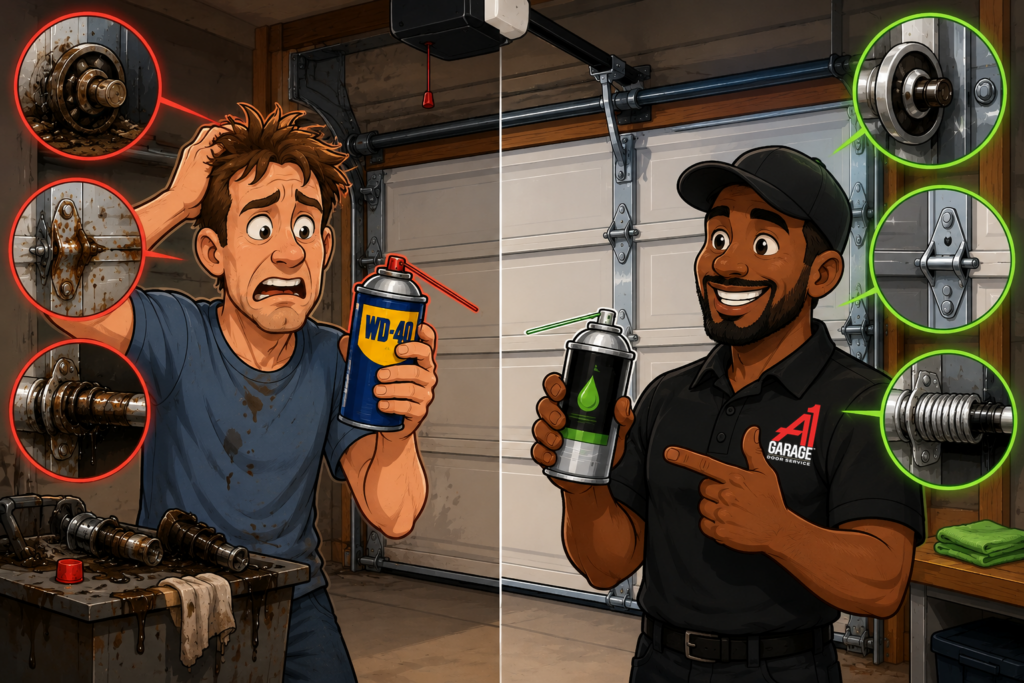
Short on time? Here is what A1 Garage Door Service wants you to know:
No, WD-40 is not the best lubricant for garage door parts.
While it can temporarily stop squeaks and remove rust, WD-40 is primarily a cleaner and water displacement product, not a long-term lubricant.
Over time, it can attract dirt, wash away existing grease, and leave critical garage door components without proper protection.
For most garage door parts, a silicone-based or lithium-based garage door lubricant is the better choice.
Have you noticed your garage door getting louder?
Did someone tell you to spray WD-40 on the moving parts?
Over the years at A1 Garge Door Service, we’ve seen many well-intentioned homeowners do exactly that. After all, WD-40 seems to fix squeaks around the house. But when it comes to garage doors, using WD-40 can create bigger problems down the road.
In this article, we’ll explain why WD-40 is not the best choice for garage door maintenance, what happens when you use it, and what professional technicians recommend instead.
By the end, you’ll know exactly how to keep your garage door running quietly and smoothly.
What Is WD-40 Actually Designed To Do?
One of the biggest misconceptions about WD-40 is that it is a lubricant. While it does provide temporary lubrication, that is not its primary purpose.
WD-40 stands for “Water Displacement, Formula 40.” It was originally developed to:
- Remove moisture
- Loosen stuck parts
- Prevent rust
- Clean metal surfaces
- Break down grime and buildup
These are useful functions. The problem is that many homeowners stop there and assume it provides long-lasting lubrication.
It doesn’t.
Think of WD-40 more like a cleaner than a dedicated lubricant.
Why WD-40 Can Cause Problems with Garage Doors
Garage doors contain dozens of moving parts.
These include:
- Rollers
- Hinges
- Bearings
- Springs
- Pulleys
- Tracks
- Opener components
Many of these parts require a lubricant that stays in place under repeated movement and changing temperatures. WD-40 tends to evaporate faster than purpose-built garage door lubricants.
This creates three common issues.
1. It Doesn’t Last Long
You may notice an immediate improvement after spraying WD-40.
The squeak disappears. The door sounds smoother. A few weeks later, however, the noise often returns.
That’s because WD-40 does not provide the lasting protection that garage door components need.
2. It Can Remove Existing Lubrication
Many garage door parts already contain grease from the factory. When WD-40 is applied repeatedly, it can wash away or dilute that protective layer.
This leaves metal components more vulnerable to wear.
3. Dirt and Dust Can Build Up
Garage environments are dusty by nature. Over time, WD-40 residue can combine with dirt and debris.
The result is a sticky buildup that can accelerate wear on moving parts.
What Should You Use Instead?
Professional garage door technicians typically recommend one of two options:
Silicone-Based Garage Door Lubricant
Silicone sprays are popular because they:
- Resist moisture
- Reduce friction
- Stay cleaner
- Perform well in hot and cold temperatures
They are especially effective on rollers, hinges, and springs.
White Lithium Grease
White lithium products provide thicker protection.
They are commonly used for:
- Metal-to-metal contact points
- Bearings
- Hinges
- Springs
Many garage door-specific lubricants use lithium-based formulas.
A good rule of thumb is simple:
If the product specifically says “Garage Door Lubricant” on the label, you’re usually on the right track.
Which Garage Door Parts Need Lubrication?
Proper lubrication should focus on moving parts.
Lubricate These Components
- Roller bearings
- Hinges
- Torsion springs
- Extension springs
- Bearing plates
- Pulleys
Apply only a light coating. More is not better.
Excess lubricant attracts dirt.
Do NOT Lubricate These Components
- Garage door tracks
- Safety sensors
- Rubber weather seals
- Garage door windows
Many homeowners mistakenly spray lubricant directly into the tracks. The tracks should be cleaned, not lubricated.
Rollers are designed to move inside the tracks. Adding lubricant to the track often creates more buildup and dirt accumulation.
Why Garage Door Lubrication Matters
Lubrication is one of the simplest forms of garage door maintenance.
When done correctly, it can help:
- Reduce noise
- Extend roller life
- Reduce strain on the opener
- Minimize wear on springs
- Improve overall performance
A well-maintained garage door often lasts longer and experiences fewer unexpected breakdowns.
That’s one reason most service professionals recommend annual garage door inspections. Regular maintenance helps catch small problems before they become expensive repairs.
Common DIY Mistakes Homeowners Make
We see these mistakes all the time.
Using WD-40 as a Permanent Lubricant
It may provide a temporary fix, but it is not designed for ongoing garage door lubrication.
Spraying Everything
Not every garage door part needs lubricant. Applying it everywhere can create a mess and attract dirt.
Ignoring Noises
A noisy garage door isn’t always a lubrication problem. Worn rollers, failing bearings, loose hardware, or spring issues can produce similar symptoms.
If lubrication doesn’t solve the issue, a professional inspection may be needed.
Waiting Too Long
Many homeowners don’t think about garage door maintenance until something breaks. By then, what could have been a simple adjustment may turn into a larger repair.
DIY or Call a Professional?
Basic lubrication is a homeowner-friendly maintenance task. However, certain garage door components can be dangerous.
Never attempt to adjust:
- Torsion springs
- Lift cables
- Spring hardware
- High-tension components
Garage door springs store significant energy and should only be serviced by trained professionals. If your door is making unusual noises, operating unevenly, or struggling to open, schedule an inspection before the problem gets worse.
Final Word From A1
WD-40 isn’t a bad product. It simply isn’t the right product for long-term garage door lubrication.
Think of it as a cleaner and moisture remover rather than a dedicated lubricant. If you want your garage door to operate smoothly, quietly, and reliably, choose a garage door-specific lubricant designed for moving parts and repeated use.
A few minutes of maintenance today can help you avoid bigger repairs tomorrow. Contact A1 Garage Door Service to schedule a professional inspection and keep your garage door performing at its best.
In One Minute
If you only remember a few things, remember these:
- WD-40 is primarily a cleaner and water displacement product.
- It is not designed as a long-term garage door lubricant.
- Silicone and white lithium lubricants are better choices.
- Lubricate rollers, hinges, springs, and bearings.
- Do not lubricate garage door tracks.
- Regular maintenance helps extend garage door life.
- Strange noises should never be ignored.
- Annual inspections can prevent expensive repairs.
Frequently Asked Questions about WD-40 as a Garage Door Lubricant
Is WD-40 bad for garage door rollers?
WD-40 won’t immediately damage rollers, but it is not the best long-term lubricant. A silicone or lithium-based garage door lubricant provides better protection.
Can I use WD-40 on garage door springs?
You can use WD-40 to clean springs or remove surface rust, but it should not be your primary lubricant. Use a garage door-specific lubricant afterward.
What is the best lubricant for a garage door?
Most professionals recommend silicone-based garage door lubricants or white lithium grease products designed specifically for garage door systems.
How often should I lubricate my garage door?
Most homeowners should lubricate moving parts every six months. High-use doors may benefit from more frequent maintenance.
Should I lubricate garage door tracks?
No. Tracks should be cleaned but not lubricated. Lubricating tracks often attracts dirt and debris.
Why is my garage door still squeaking after lubrication?
Persistent squeaking may indicate worn rollers, damaged bearings, loose hardware, or spring issues that require professional inspection.