



Blog | GARAGE DOORS
What Happens If You Install a Garage Door Without HOA Approval?
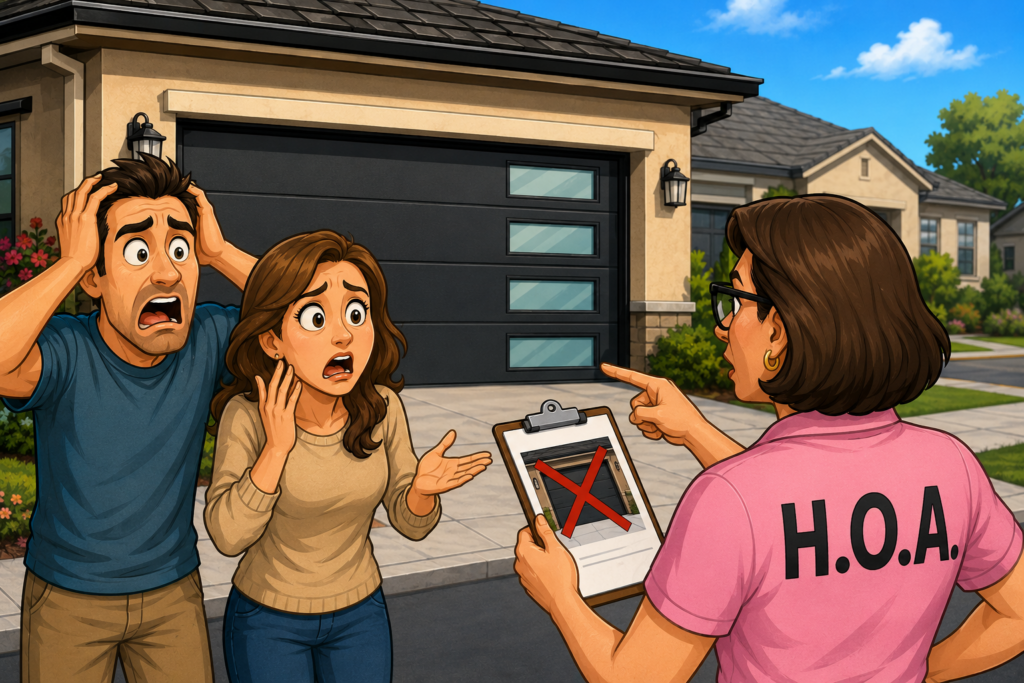
Before you replace or upgrade your garage door, here’s what you need to know:
- Most HOAs regulate garage door appearance because garage doors can make up 40% to 60% of a home’s curb appeal.
- Many HOAs can require repairs or replacement if a door becomes damaged, faded, dented, or falls outside community standards.
- Changes such as colors, windows, decorative hardware, panel styles, and oversized doors often require HOA approval.
- Installing a new garage door without approval can lead to fines, violation notices, forced removal, delayed home sales, and legal disputes.
- Dark colors and modern designs may be restricted in some neighborhoods.
- The smartest first step is requesting HOA guidelines before shopping for a new garage door.
- Common HOA violations include peeling paint, dents, rust, missing windows, mismatched panels, and unapproved colors.
- Getting approval before installation is usually much easier and less expensive than fixing a violation afterward.
Do you need HOA approval before replacing your garage door?
What happens if you install a new door without checking the rules first?
If you live in an HOA community, your garage door isn’t always your decision alone. Because garage doors can make up as much as 40% to 60% of your home’s curb appeal, many homeowner’s associations have strict requirements regarding colors, styles, windows, decorative hardware, and even complete door replacements.
In this guide, A1 Garage Door Service will explain the most common HOA garage door rules, what changes typically require approval, the consequences of skipping the approval process, and the smartest steps homeowners can take before investing in a new garage door.
By the end, you’ll know exactly how to avoid costly mistakes, prevent HOA violations, and choose a garage door that both you and your community can approve.
Why Do HOAs Care So Much About Garage Doors?
Many homeowners wonder why their HOA seems so concerned about garage doors.
The answer is simple.
Garage doors are often the largest visual feature on the front of a home. In many neighborhoods, they account for 40% to 60% of what people see from the street.
Because of that, HOAs often regulate garage door appearance to maintain:
- Neighborhood consistency
- Property values
- Community aesthetics
- Long-term curb appeal
 A1 Pro Insight:
From A1 Garage Door Service’s experience, garage doors play a major role in how an entire neighborhood looks and feels.
Can an HOA Make You Replace Your Garage Door?
Direct Answer
Yes, in many communities, an HOA can require homeowners to repair, repaint, maintain, or replace a garage door that violates community standards.
Common reasons include:
- Faded paint
- Severe dents
- Rust damage
- Broken windows
- Poor maintenance
- Unapproved modifications
The exact authority depends on your HOA’s governing documents, covenants, and local regulations.
A1 Pro Tip:
Before making assumptions about garage doors, review your HOA guidelines carefully.
The Garage Door Changes That Usually Require HOA Approval
One of the biggest mistakes homeowners make is assuming they can upgrade their garage door without approval.
Many HOAs require approval for:
Color Changes
Changing from a standard beige or white door to black, charcoal, slate, or other bold colors often triggers a review.
Window Additions
Adding windows can significantly change a home’s appearance.
Decorative Hardware
Even magnetic decorative hinges and handles may require approval.
Panel Design Changes
Switching from:
- Short panel designs
- Long panel designs
- Contemporary flush panels
- Carriage house styles
may need HOA review.
Wood-Look Finishes
Modern steel doors that mimic real wood have become popular. While beautiful, they often require approval because they change the home’s exterior appearance.
Oversized Garage Doors
Expanding garage openings or installing larger doors almost always requires HOA approval.
An A1 Real Customer Story: When a Garage Door Upgrade Became an Expensive Mistake
A homeowner wanted to modernize their home with a sleek black garage door featuring decorative glass windows. The design looked incredible.
The problem? Approval paperwork was never submitted.
Shortly after installation, the homeowner received a violation notice from the HOA. The neighborhood guidelines only allowed specific colors and panel designs.
Instead of enjoying the upgrade, the homeowner faced:
- HOA fines
- Additional paperwork
- Delays
- The possibility of replacing the new door
The project ended up costing far more than expected.
A1 Pro Tip
Situations like this highlight why approval should happen before installation, not after.
What Can Happen If You Skip HOA Approval?
Many homeowners assume they can ask for forgiveness later. That can be a costly gamble.
Potential consequences include:
Violation Notices
The HOA may formally notify you of the violation.
Financial Penalties
Fines can accumulate until the issue is corrected.
Forced Removal
In some cases, homeowners may be required to remove non-compliant doors.
Delayed Home Sales
Unresolved HOA violations can create complications during real estate transactions.
Legal Disputes
Serious disputes may escalate depending on HOA agreements and local laws.
The safest approach is always to get approval first.
Are Dark Garage Doors Allowed?
Dark garage doors are one of the fastest-growing design trends.
Homeowners increasingly choose:
- Black
- Charcoal
- Slate gray
- Dark bronze
However, some HOAs restrict these colors.
Why?
Heat Absorption
In hot climates, darker colors absorb more heat.
Neighborhood Consistency
A dark door can stand out dramatically in communities dominated by lighter color palettes.
Modern communities may embrace darker colors, while traditional neighborhoods often maintain more conservative standards.
The key is checking first.
The Smartest Thing Homeowners Can Do Before Buying a Garage Door
Before requesting quotes, before choosing colors, and before selecting windows, do this:
Request HOA Guidelines
Ask for:
- Architectural standards
- Exterior modification requirements
- Approved color palettes
- Design restrictions
- Application procedures
Then:
- Select your preferred design.
- Gather specifications and images.
- Submit for approval.
- Wait for confirmation.
- Schedule installation.
This process helps prevent expensive surprises.
Why Some Modern Garage Doors Get Approved and Others Don’t
Approval often depends on neighborhood style.
Modern Communities
Many newer developments allow:
- Full-view glass doors
- Contemporary designs
- Black finishes
- Modern hardware
Traditional Communities
Older neighborhoods frequently prefer:
- Short-panel doors
- Long-panel doors
- Traditional color schemes
- Minimal decorative changes
A simple drive through your neighborhood can provide clues about what your HOA is likely to approve.
Common HOA Garage Door Violations
At A1 Garage Door Service, these are among the most common issues homeowners encounter.
Peeling Paint
Sun exposure can quickly damage finishes.
Dented Panels
Accidents happen, especially in active households.
Unapproved Colors
Even attractive upgrades can trigger violations.
Missing or Broken Windows
Damaged windows impact appearance and curb appeal.
Rust
Rust creates both cosmetic and structural concerns.
Mismatched Panels
This is a common issue after partial repairs.
While replacement panels may technically fit, slight differences in manufacturing often create visible inconsistencies.
In many cases, replacing the entire door provides a cleaner and more HOA-friendly solution.
Cost Considerations: Approval Is Usually Cheaper Than Violations
While every HOA differs, homeowners should consider the financial impact of skipping approval.
Potential costs include:
- Repainting
- Replacing hardware
- Correcting modifications
- HOA fines
- Reinstallation expenses
A few weeks spent obtaining approval can prevent thousands of dollars in unnecessary costs later.
Frequently Asked Questions about Garage Doors and HOAs
Do all garage door replacements require HOA approval?
Not always, but many communities require approval whenever appearance changes are involved.
Can an HOA reject my garage door color?
Yes. Many HOAs maintain approved color palettes and exterior design standards.
Can I add decorative hardware without approval?
Some HOAs require approval even for decorative handles and hinges.
What is the most common HOA garage door violation?
Peeling paint, dents, rust, and unapproved colors are among the most common issues.
How can I improve curb appeal without violating HOA rules?
Work within approved designs, colors, and materials while selecting modern options that complement neighborhood standards.
In One Minute: Key Takeaways
- Garage doors significantly impact curb appeal.
- Many HOAs regulate garage door appearance.
- Approval is often required for colors, windows, hardware, and design changes.
- Skipping approval can lead to fines and forced corrections.
- Modern styles may be accepted in newer communities.
- Traditional neighborhoods often maintain stricter standards.
- Request HOA guidelines before shopping.
- Prevention is almost always less expensive than correction.
Final Thoughts from A1
Garage door projects should improve your home’s appearance, not create headaches.
At A1 Garage Door Service, we encourage homeowners to treat HOA approval as the first step, not the last. Understanding your community’s requirements before installation can save time, money, and frustration while helping you achieve a garage door you’ll enjoy for years.
Want to learn more about what the A1 experts think on this topic? Watch A1’s podcast “The Garage Authority” below: