



Blog | GARAGE DOORS
RV Garage Doors: Everything Homeowners Need to Know Before Building or Buying
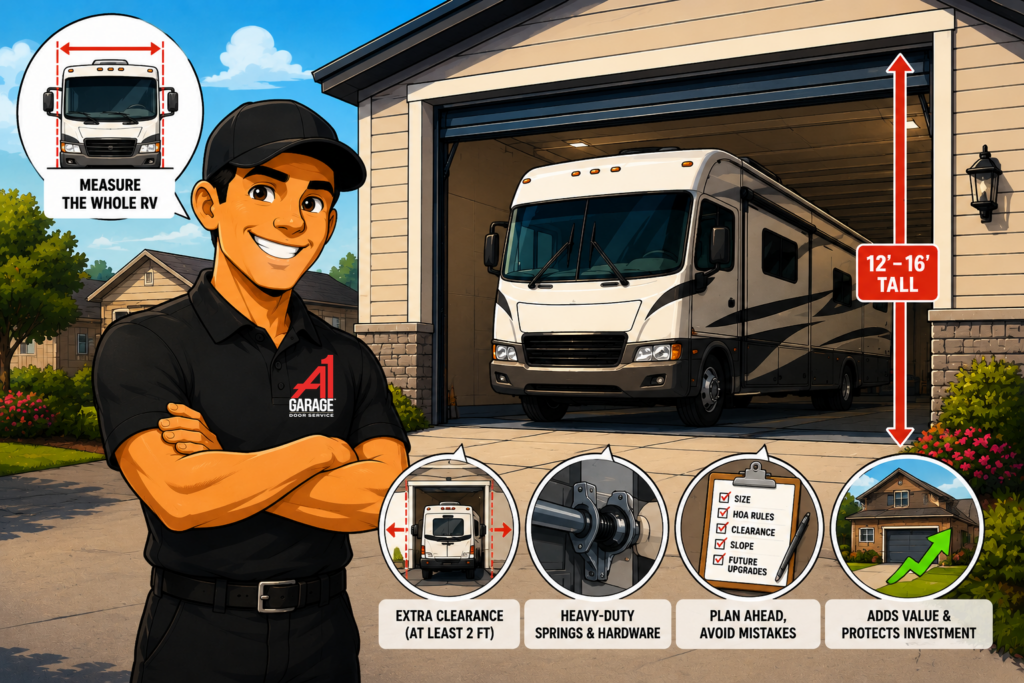
If you’re researching an RV garage door, here are the answers you’re probably looking for:
- Most RV garage doors are 12 to 16 feet tall.
- Width matters just as much as height. Many homeowners forget to measure mirrors and roof accessories.
- Plan for at least two feet of extra clearance whenever possible.
- Oversized doors require heavier-duty springs, hardware, and openers.
- Insulated RV garage doors offer better durability and climate control.
- Poor installation can dramatically reduce the lifespan of oversized doors.
- HOA restrictions may limit the size or appearance of an RV garage.
- In RV-friendly markets, an RV garage can increase home appeal and resale value.
- DIY installation is not recommended due to the size and weight of these doors.
- Larger doors require more maintenance because of increased weight and mechanical stress.
Have you ever measured your RV and wondered if it will actually fit through your garage door? What happens if you build an RV garage only to discover your mirrors, roof-mounted air conditioner, or driveway slope prevent you from getting inside?
In this guide, A1 Garage Door Service will walk you through everything homeowners need to know about RV garage doors, including sizing, clearance requirements, insulation options, maintenance considerations, HOA restrictions, and the most common mistakes people make when planning an RV garage.
By the end, you’ll know exactly how to choose the right RV garage door size, avoid expensive design errors, and protect your investment for years to come.
What Is an RV Garage Door?
An RV garage door is an oversized residential garage door designed to accommodate recreational vehicles, boats, toy haulers, trailers, and other large equipment.
Unlike a standard residential garage door, which is typically 7 or 8 feet tall, an RV garage door is built with significantly more height and width.
For many homeowners, the goal is simple: protect a major investment from weather, theft, and HOA restrictions while making storage more convenient.
How Tall Should an RV Garage Door Be?
Most residential RV garage doors fall between 12 and 16 feet tall.
The right height depends on the vehicle being stored. Height alone, however, is not enough.
Many homeowners focus on the roofline of the RV but forget about:
- Air conditioning units
- Satellite equipment
- Roof racks
- Kayaks
- Solar panels
These accessories can add valuable inches that determine whether your RV fits safely inside.
 A1 Pro Tip
Measure the tallest point of the RV, not just the body of the vehicle.
The Biggest Mistake Homeowners Make
The most common mistake is underestimating clearance.
Many homeowners measure the width of the RV itself but forget about the mirrors.
The result?
A garage opening that looks large enough on paper but becomes frustratingly tight in real life.
Other common mistakes include:
- Ignoring driveway slope
- Forgetting roof accessories
- Designing a garage with minimal clearance
- Not planning for future RV upgrades
A1 Pro Recommendation:
Whenever space allows, plan for approximately two feet of additional clearance beyond the dimensions of your current vehicle.
That extra room can prevent expensive remodeling later.
An A1 Real Customer Story: When an RV Barely Fits
A homeowner built a detached RV garage in a mountain community and measured only the height of the RV body.
On paper, everything worked.
But when the vehicle approached the garage, the steep driveway angle changed the vehicle’s position as it entered.
The roof-mounted air conditioning unit nearly struck the opening.
The homeowner eventually had to modify the entrance and surrounding structure to gain the needed clearance.
The lesson?
The approach angle matters just as much as the opening size.
When planning an RV garage, think beyond the measurements on a specification sheet.
Do Oversized Garage Doors Require Special Openers?
Yes.
An RV garage door typically weighs significantly more than a standard residential door.
Because of that weight, many oversized doors require:
- Heavy-duty chain drive systems
- Commercial-grade motors
- High-lift compatible openers
- Side-mount jackshaft openers
The opener should be selected based on the door’s weight, height, and track configuration.
Installing an undersized opener often leads to premature wear and shorter equipment life.
Are RV Garage Doors Harder to Maintain?
Generally, yes. This is one of the biggest concerns homeowners ask about.
The larger the door, the greater the stress on:
- Springs
- Rollers
- Bearings
- Tracks
- Openers
A properly installed RV garage door can provide years of reliable service. However, installation quality becomes even more important as the door size increases.
Best Practices for Long-Term Performance
- Schedule annual inspections.
- Lubricate moving parts regularly.
- Check door balance.
- Inspect weather seals.
- Address unusual noises immediately.
A heavier door magnifies small issues over time.
Is an Insulated RV Garage Door Worth It?
For most homeowners, yes. An insulated RV garage door offers several advantages:
Better Temperature Control
Large garages can become extremely hot during the summer months. Insulation helps reduce heat transfer and creates a more stable environment.
Added Structural Strength
Insulated steel-back doors tend to flex less than non-insulated models. This added rigidity becomes especially valuable on oversized doors.
Better Weather Protection
In areas that experience strong storms, wind, or seasonal weather changes, insulated doors often perform better and reduce rattling and vibration.
Protection for Your Investment
Many RVs cost tens or even hundreds of thousands of dollars. A more controlled storage environment can help protect equipment, finishes, and interior components.
Do RV Garage Doors Increase Home Value?
In many markets, they can. This is especially true in areas where RV ownership is common.
Potential buyers often see value in:
- Protected RV storage
- HOA compliance
- Reduced storage fees
- Convenience
- Enhanced property functionality
A1 Pro Tip:
An RV garage may not appeal to every buyer, but it can be a significant selling point for the right audience.
HOA Restrictions You Need to Check First
Before building an RV garage, always review:
- HOA rules
- Architectural guidelines
- Height restrictions
- Setback requirements
- Visibility requirements
Some communities restrict:
- Structure height
- Garage placement
- Exterior appearance
- Vehicle storage visibility
Failing to verify these requirements can lead to costly redesigns.
How Much Does an RV Garage Door Cost?
Cost is one of the most common questions homeowners ask.
Pricing varies significantly based on:
- Door size
- Insulation level
- Design options
- Track configuration
- Opener requirements
- Installation complexity
Because oversized doors require specialized hardware and installation methods, they typically cost more than standard residential garage doors.
The best approach is to obtain a custom quote based on your specific vehicle and structure.
DIY vs. Professional Installation
This is not a typical DIY project.
Oversized RV garage doors can weigh several hundred pounds and often operate 12 to 16 feet above ground.
Professional installation helps ensure:
- Proper spring sizing
- Safe operation
- Correct balance
- Longer equipment life
- Manufacturer warranty compliance
A1 Pro Safety Tip:
When dealing with a large door over vehicles and people, professional installation is the safest option.
Frequently Asked Questions about RV Garage Doors
What size garage door do I need for an RV?
Most homeowners need a door between 12 and 16 feet tall, depending on the RV.
Is insulation worth the extra cost?
In most climates, yes. Insulation improves durability, comfort, and protection.
Can I use a standard garage door opener?
Usually not. Most RV doors require heavier-duty openers designed for larger doors.
Does an RV garage add resale value?
It can, particularly in areas where RV ownership is common.
How much extra clearance should I allow?
A1 recommends planning additional clearance beyond the vehicle’s dimensions whenever possible.
In One Minute: What Homeowners Should Remember
- Measure the entire RV, including accessories and mirrors.
- Consider driveway slope and entry angles.
- Most RV garage doors range from 12 to 16 feet tall.
- Oversized doors need stronger hardware and openers.
- Insulated doors provide better performance and durability.
- Check HOA restrictions before construction begins.
- Professional installation is strongly recommended.
- Proper planning today prevents expensive changes later.
Ready to Explore RV Garage Door Options?
If you’re planning an RV garage or replacing an oversized door, A1 Garage Door Service can help you evaluate sizing, insulation, opener requirements, and installation options.
Speak with an A1 expert to ensure your garage is designed correctly from the start.
Want to learn more about what the A1 experts think about this topic? Watch A1’s podcast “The Garage Authority” below: