



Blog | GARAGE DOORS
Insulating the Garage: What Actually Works (And What Doesn’t)
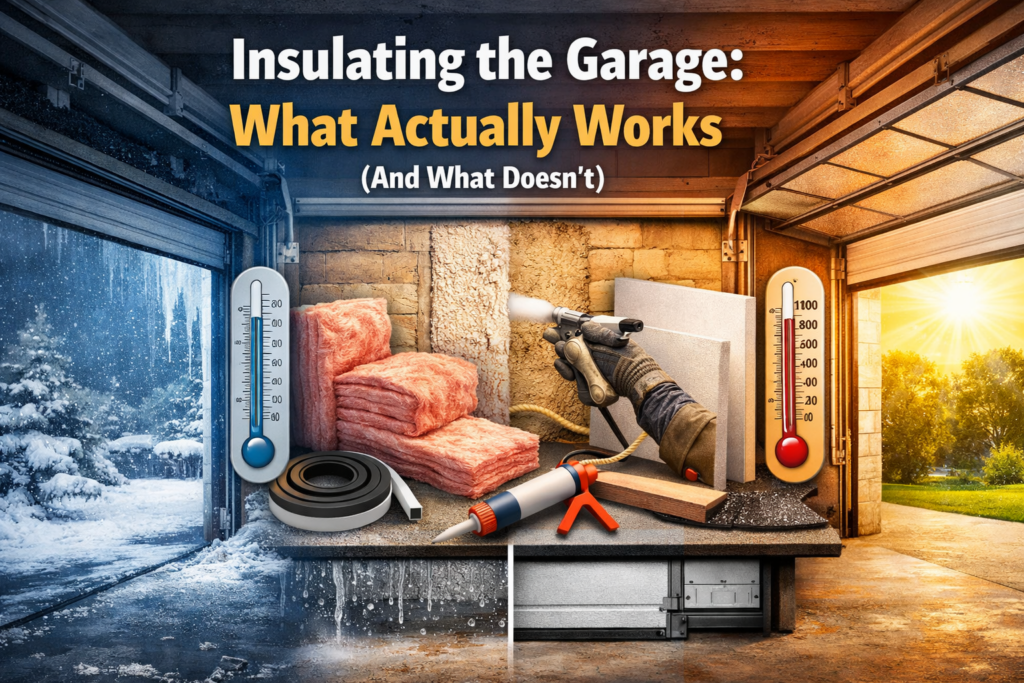
If you’ve ever tried to work out, focus, or even stand comfortably in your garage during peak summer or winter, you already know:
The garage is the most temperature-volatile space in the house.
When homeowners convert garages into gyms, offices, studios, or hybrid spaces, insulation becomes the turning point between “occasionally usable” and “comfortable year-round.”
But insulation is also one of the most misunderstood upgrades in garage transformations. R-values are thrown around. Spray foam gets hyped. DIY batt insulation looks affordable. And almost no one talks about moisture dynamics or how the garage door affects everything.
Let’s fix that.
Below is a practical, transparent breakdown of what works, what doesn’t, what it costs, and how to think about insulating a garage the right way.
Step One: Define the Goal
Before choosing materials, clarify your objective.
Are you trying to:
- Take the edge off extreme heat and cold?
- Fully climate-control the space?
- Reduce noise?
- Prevent condensation?
- Increase energy efficiency for HVAC systems?
Different goals require different insulation strategies.
The Four Key Areas of Garage Insulation
To properly insulate a garage conversion, you must evaluate:
- Walls
- Ceiling
- Garage Door
- Air Sealing
Skipping one weak link undermines the others.
- Insulating the Walls
Most attached garages have either:
- Uninsulated exterior walls
- Partially insulated shared walls (between house and garage)
Common Wall Insulation Options
Fiberglass Batt Insulation
Cost
- $0.50–$1.50 per sq. ft. (materials)
- $1.50–$3.50 per sq. ft. installed
Pros
- Affordable
- DIY-friendly
- Widely available
Cons
- Poor air sealing
- Can trap moisture
- Requires drywall covering for finished look
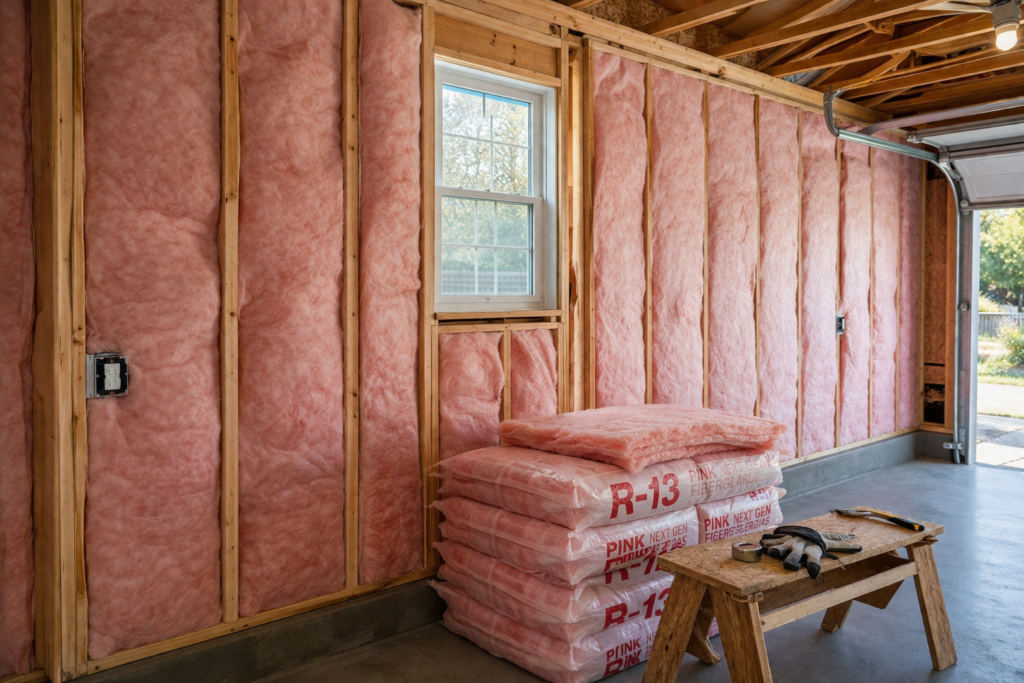
 A1 Pro Insight: Batts Only Work When Installed Perfectly
Gaps, compression, or exposed edges dramatically reduce performance. Improper installation can reduce real-world R-value by 20–40%.
Spray Foam Insulation (Open-Cell or Closed-Cell)
Cost
- $2–$6 per sq. ft. installed
- Full garage: $2,000–$6,000 depending on scope
Pros
- Excellent air sealing
- High R-value per inch
- Moisture-resistant (closed-cell)
Cons
- Higher upfront cost
- Requires professional installation
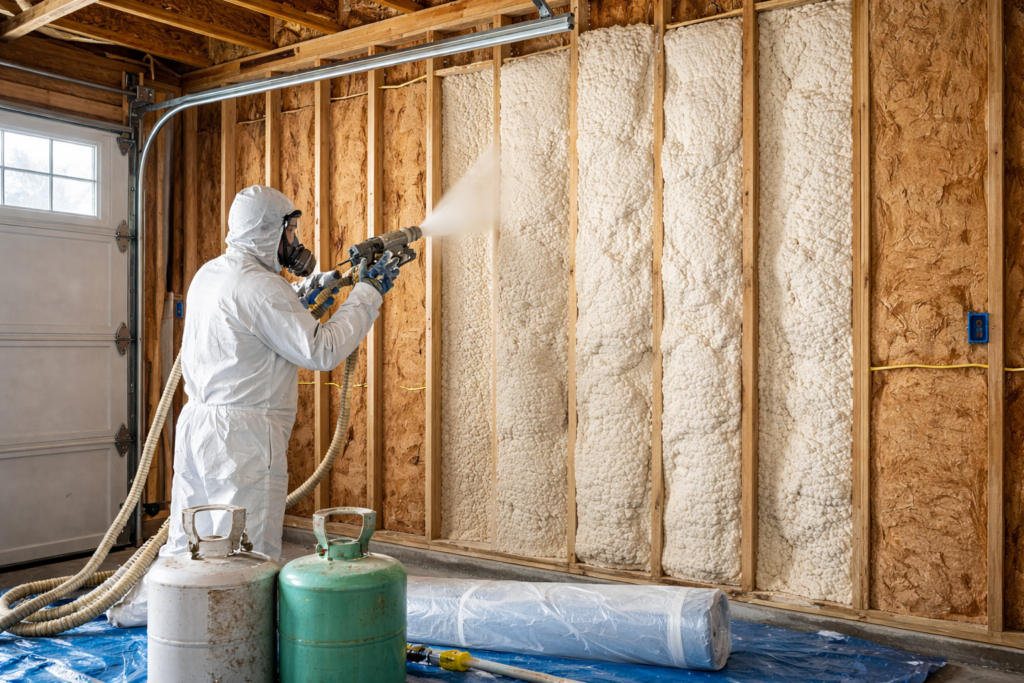
A1 Pro Insight: Spray Foam Is Air Sealing + Insulation
Traditional insulation slows heat transfer. Spray foam also blocks air movement. In garages with temperature swings and door openings, air sealing is often more important than R-value alone.
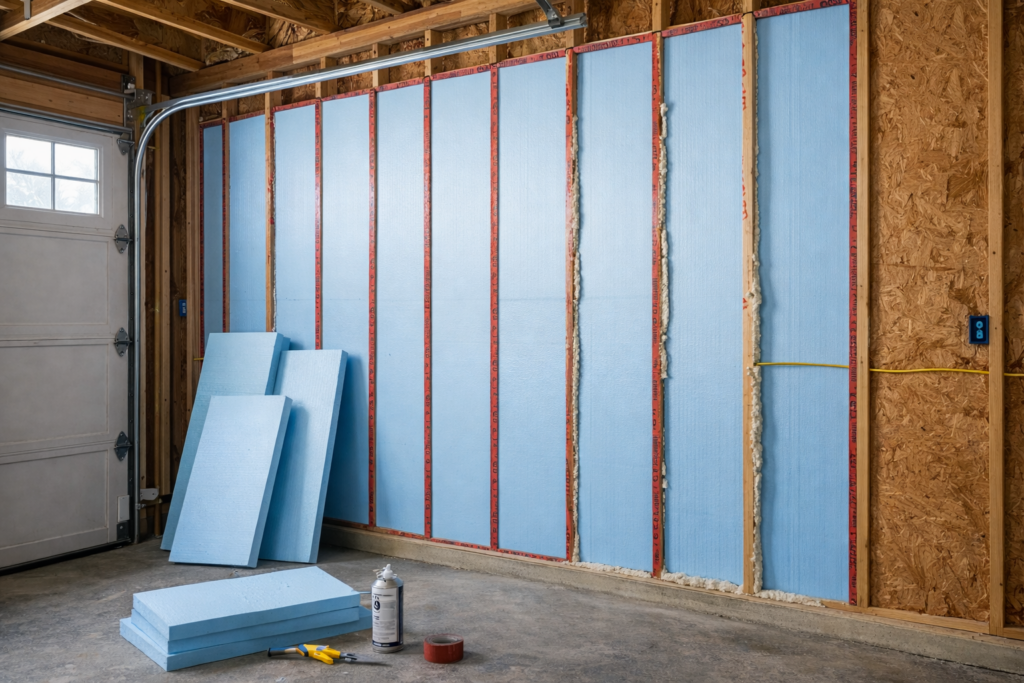
Rigid Foam Board (Continuous Insulation)
Cost
- $1–$3 per sq. ft. materials
- $3–$7 per sq. ft. installed with finishing
Pros
- Moisture resistant
- Higher R-value than fiberglass
- Good for retrofits
Cons
- Requires careful seam sealing
- Must be covered to meet fire code
-
Insulating the Ceiling
This is often overlooked—but it’s critical.
If there is living space above the garage, insulation between floors is essential for both temperature and noise control.
Common Ceiling Options
- Fiberglass batts (most common)
- Blown-in cellulose
- Spray foam (premium)
Cost Range
- $1,000–$3,000 typical for full ceiling upgrade
- More if drywall removal is required
A1 Pro Insight: Don’t Forget Air Gaps Around Lighting
Recessed lighting, attic hatches, and ventilation openings are common heat-loss points. Air sealing these areas improves comfort more than simply adding thicker insulation.
-
The Garage Door: The Largest Weak Point
Here’s the reality:
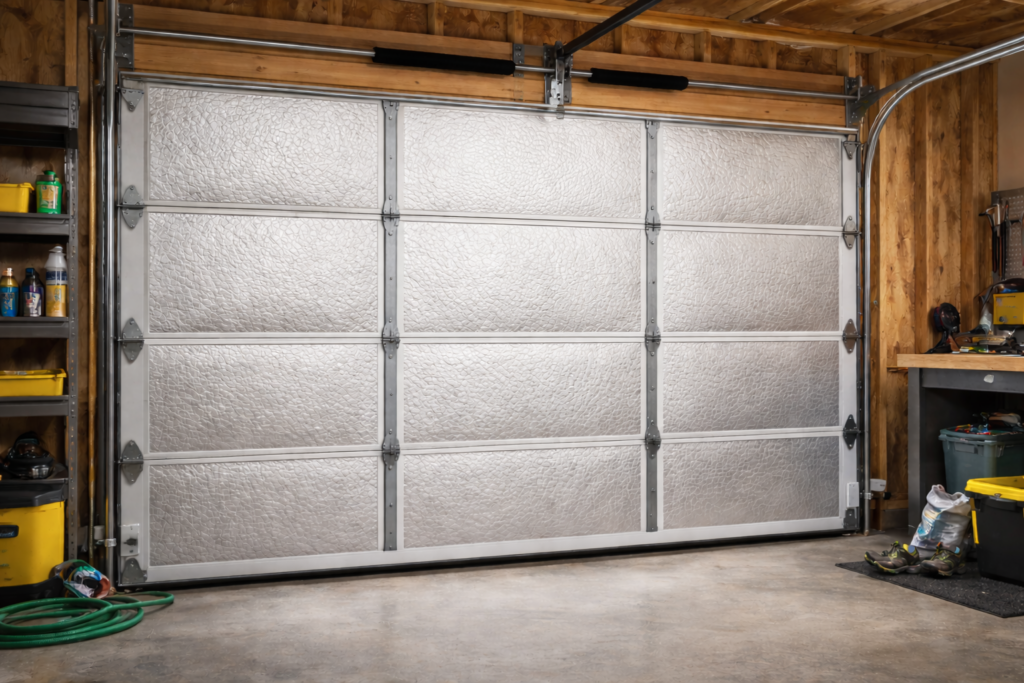
The garage door is often the single largest uninsulated surface in the space.
A thin, non-insulated steel door can have an R-value as low as R-0 to R-2.
Compare that to insulated doors rated:
- R-6
- R-12
- R-18+
That difference is enormous.
A1 Pro Insight: Insulating Walls but Not the Door Is a Common Mistake
Upgrading wall insulation without addressing the garage door is like insulating three walls of a room and leaving the fourth wide open. If your goal is temperature control, the door must be evaluated.
Insulated Garage Door Options
Polystyrene-Insulated Doors
- Moderate R-values (R-6 to R-9)
- Affordable upgrade
Polyurethane-Injected Doors
- Higher R-values (R-12 to R-18+)
- Denser insulation
- Increased structural rigidity
- Better noise reduction
Upgrade Cost Range
- $1,000–$3,500 depending on size and design
A1 Pro Insight: Insulated Doors Improve More Than Temperature
They:
- Reduce vibration and noise
- Strengthen panel structure
- Improve opener efficiency
- Increase overall comfort during frequent use
In lifestyle garages, this upgrade often delivers the most noticeable improvement per dollar.
- Air Sealing: The Hidden Performance Multiplier
Insulation slows heat transfer.
Air sealing stops uncontrolled airflow.
Gaps commonly exist around:
- Bottom door seals
- Side and top weatherstripping
- Framing joints
- Electrical penetrations
A1 Pro Insight: A $100 Seal Upgrade Can Outperform $1,000 in Insulation
If outside air is constantly entering through gaps, insulation cannot perform effectively. Weatherstripping and threshold seals are foundational upgrades.
Climate-Specific Considerations
Hot Climates
Focus on:
- Radiant heat reduction
- Reflective barriers
- Insulated garage doors
- Ventilation
Cold Climates
Focus on:
- Higher R-value insulation
- Air sealing
- Vapor barrier placement
- Insulated doors with thermal breaks
Humid Climates
Focus on:
- Moisture management
- Dehumidification
- Proper slab sealing
What Doesn’t Work (Common Mistakes)
- Foam Board Glued to Garage Door Panels
DIY kits rarely provide meaningful R-value improvements and can interfere with door balance.
- Ignoring Moisture Dynamics
Adding insulation without managing vapor can create condensation and mold risk.
- Insulating Without Ventilation Strategy
In tightly sealed garages, air circulation must be considered.
A1 Pro Insight: Insulation Without a Plan Creates New Problems
Improperly insulated garages can develop:
- Condensation on slabs
- Rusted tracks and hardware
- Mold behind drywall
- Warped framing
Insulation should always be paired with an evaluation of ventilation and door sealing.
Cost Overview (Transparency)
Here’s what most homeowners can expect for a full insulation upgrade:
| Upgrade Scope | Typical Range |
| Wall insulation only | $1,500–$4,000 |
| Ceiling insulation | $1,000–$3,000 |
| Insulated garage door upgrade | $1,000–$3,500 |
| Spray foam full space | $2,500–$6,000+ |
| Air sealing improvements | $100–$500 |
Full garage conversion insulation projects commonly land between $3,000 and $8,000, depending on materials and size.
Is Insulation Worth It?
If your garage remains vehicle storage only, insulation may be optional.
But if the space is becoming:
- A gym
- An office
- A studio
- An entertainment area
- A climate-controlled storage space
Insulation shifts the space from seasonal to usable.
The Bigger Picture: Comfort Is Cumulative
Insulation works best when layered:
- Walls slow transfer.
- Ceiling protects from above.
- Air sealing stops leaks.
- The garage door stabilizes the largest opening.
Together, they create a stable environment that protects flooring, electronics, equipment, and daily comfort.
Without addressing the door, however, the system remains incomplete.
The garage door is not just an access point—it is the thermal gateway to the entire space.
When properly insulated and sealed, it transforms the garage from the most volatile room in the home into one of the most versatile.
And versatility is the foundation of garage life.