



Blog | GARAGE DOORS
How to Choose the Right Garage Door Springs for your Home
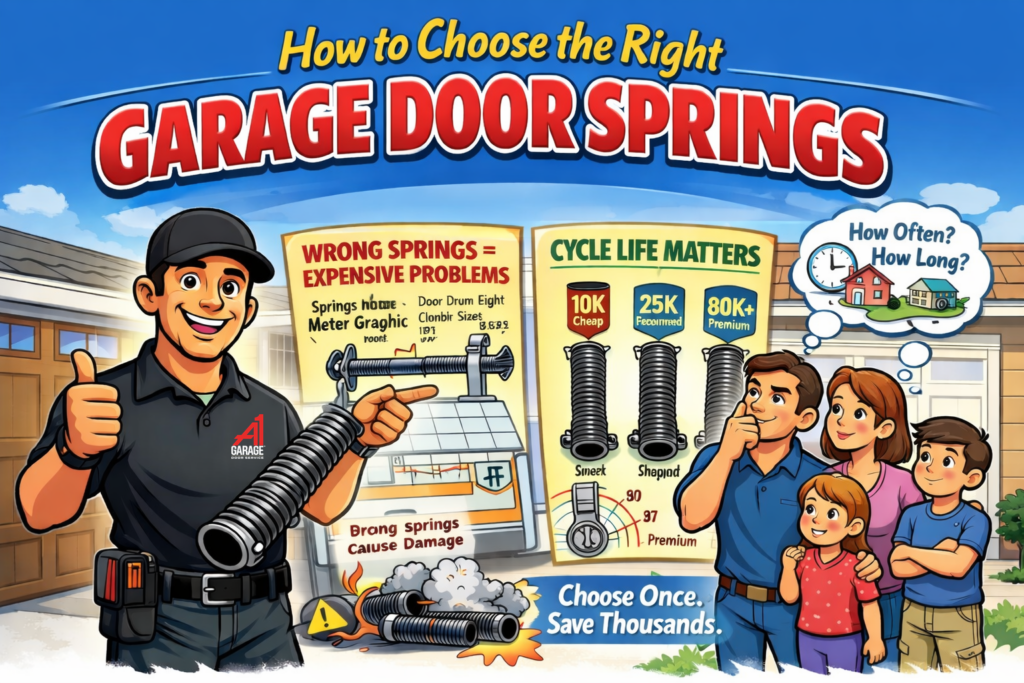
Short on time? Here’s what homeowners need to know.
- Garage door springs do the lifting, not the opener
- Wrong springs can damage your opener or cause failure
- Correct spring sizing depends on door weight, height, drum size, and cable setup
- Cycle life matters: 10,000 vs 25,000 vs 80,000+ cycles
- Cheap springs often cost more long-term
- Best choice depends on how often you use your door and how long you’ll stay in the home
Is a garage door spring just a spring? Or can the wrong one actually damage your entire system?
In our two decades of servicing garage doors at A1, we’ve helped a lot of homeowners who’ve unfortunately learned the answer to that lesson the hard (and expensive) way.
In this guide, we break down how springs work, what really matters, and how to choose the right one. By the end, you’ll know exactly what garage door spring your home needs and how to avoid costly mistakes.
What Do Garage Door Springs Actually Do?
Most homeowners think the opener lifts the door, but it doesn’t.
The opener merely guides the door. The springs do the heavy work.
Readers of these guides have heard us call garage door springs the muscle fibers of the system. If your springs are wrong for your door, your system will struggle and eventually fail.
Why Choosing the Wrong Spring Is a Big Problem
The wrong spring can:
- Burn out your opener
- Make the door too heavy or too fast
- Cause unsafe operation
- Lead to early system failure
These reasons, above all, are why proper sizing matters.
The 3 Key Parts of a Garage Door Spring
Every garage door spring is built from three main factors:
- Inside Diameter
Common sizes: 1¾ inch or 2 inch
- Length
Longer springs usually last longer.
- Wire Size
Thicker wire = more strength, but fewer cycles
 A1 Pro Tip:
Bigger is not always better. As wire size increases, cycle life shortens. That means a stronger spring can wear out faster if not balanced correctly.
The Most Important Step: Getting the Right IPT
IPT (inch-pounds of torque) is the key measurement that ensures your door lifts correctly.
To calculate IPT, a technician must measure:
- Door weight
- Door height
- Drum size (radius)
- Cable setup
A1 Pro Tip:
If a technician skips these steps, they are guessing at IPT. That leads to problems that can turn into costly repairs for the homeowner.
What Happens If Springs Are Installed Incorrectly?
Two things can happen. Both are bad:
- The door becomes too heavy
- The door becomes dangerous and fast
Understanding Spring Cycle Life (This Saves You Money)
Cycle life = how many times your door opens and closes.
Typical Options:
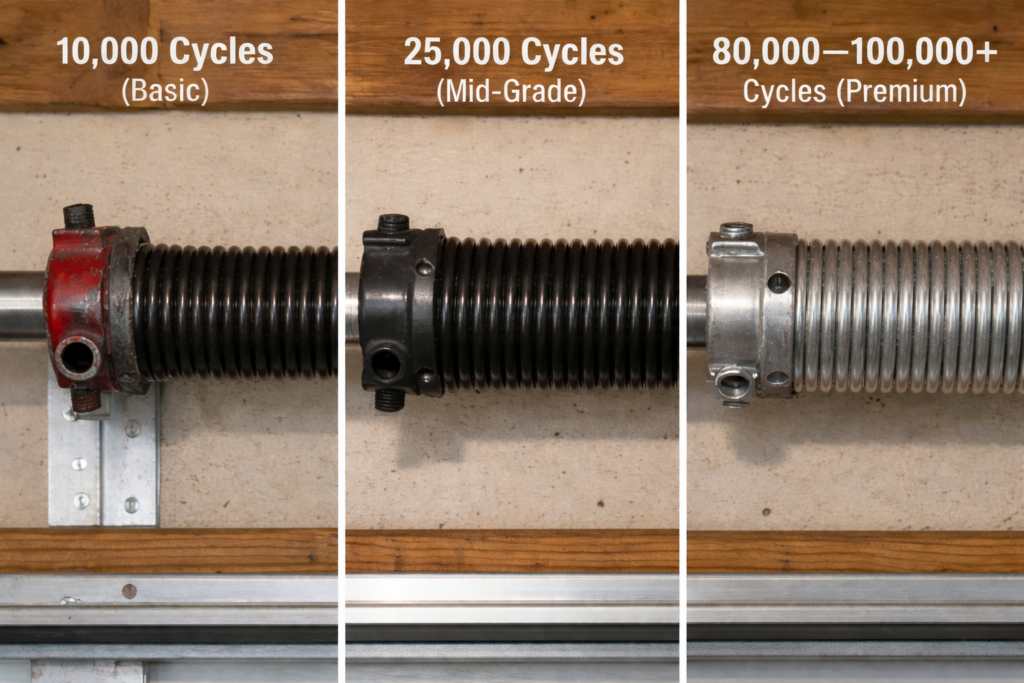
- 10,000 cycles (basic)
- 25,000 cycles (mid-grade)
- 80,000–100,000+ cycles (premium)
A1 Pro Tip:
A busy family may use the garage 10–15 times per day.
That means a busy family may put their garage door through 3,650-5,475 cycles per year. That means a 10,000-cycle spring could wear out in two to three years.
Cost vs Value: The Biggest Mistake Homeowners Make
Many homeowners choose the cheapest option when it comes to garage springs.
That often costs them more later.
At A1, our experienced techs like to say, “Buy once, cry once… it’s really the cheapest in the long run.”
For Example:
- Cheap spring: replace every few years
- Premium spring: replace once in a decade or more
You also avoid:
- Service calls
- Missed work
- Breakdowns
When a Cheap Spring Actually Makes Sense
There are times, however, when a basic spring makes sense. This is true when:
- You rarely use the door
- You’re moving soon
- The door is old and temporary
When You Should Upgrade to High-Cycle Springs
Upgrade if:
- You have a busy household
- You use the garage daily
- You plan to stay long-term
Ask yourself:
How often do you want to see your garage door technician?
DIY vs Professional: Should You Choose Your Own Springs?
Short answer: No. Springs are dangerous and precise.
Even experienced technicians can be surprised and hurt when a garage door spring snaps.
Readers of these guides have heard us say that garage door springs are under tremendous tension. NEVER try to work on them yourself.
A trained professional should:
- Weigh the door multiple times
- Use proper tools
- Calculate correct IPT
- Explain your options
Common Mistakes to Avoid
- Choosing the cheapest option every time
- Not asking about cycle life
- Trusting old springs as reference
- Skipping proper measurements
- Ignoring how often you use your door
FAQs about Choosing the Right Garage Door Springs.
Q: How long do garage door springs last?
A: Typically 7–10 years, depending on cycle rating and usage.
Q: Are all garage door springs the same?
A: No. Size, wire, and cycle rating all affect performance and lifespan.
Q: Can wrong springs damage my opener?
A: Yes. Incorrect springs can strain and break your opener.
Q: What is a good cycle rating?
A: 25,000+ cycles is ideal for most families.
Q: Should I replace both springs at once?
A: Yes. This keeps the system balanced and prevents future issues.
In One Minute (Quick Recap)
- Springs do the lifting, not the opener
- Wrong springs cause damage and safety risks
- Proper sizing requires real measurements
- Cycle life determines how long springs last
- Cheap now often means expensive later
- Best choice depends on your usage and plans
Don’t wait until your garage door fails. Let A1 help you choose the right spring the first time, so you save money and avoid stress.
Want to learn more about this topic from the A1 experts? Watch A1’s podcast, “The Garage Authority,” below: