



Blog | GARAGE DOORS
How Your Garage Door Affects Home Insurance (What Homeowners Need to Know)
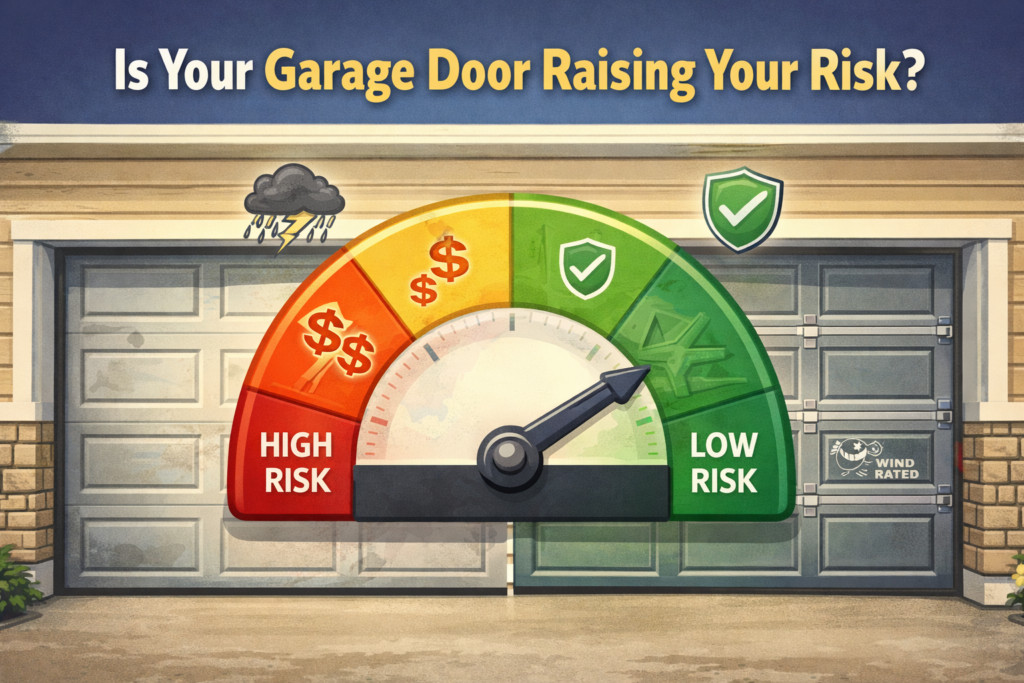
Does your insurance company care about your garage door? Could a better garage door lower your monthly premiums, or could an outdated door increase your risk and costs?
Most homeowners never think about their garage door when reviewing their insurance policy. But insurers do. Because from an underwriting perspective, your garage door is often the largest moving opening in your home and a critical point of failure during storms, break-ins, and property damaging events.
In this A1 guide, you’ll learn how insurers evaluate garage doors, which features can reduce risk, and how to talk to your insurance provider about possible savings. We’ll cover impact resistance, wind ratings, safety features, smart technology, and practical steps homeowners can take without making claims that can’t be proven.
Why Insurance Companies Pay Attention to Garage Doors
When homeowners take in their garage door, they are naturally considering its looks and how the door adds to the home’s aesthetic. Insurance carriers, on the other hand, assess risk, not appearance.
When an insurance company analyzes a home’s garage door, they’re looking exclusively at whether that door might lead to financial loss. Insurance companies evaluate whether a door will:
- Fail during storms and allow wind or water into the home
- Be a common entry point for break-ins
- Affect structural integrity during severe weather events
- Influence claim frequency and severity
 A1 Pro Insurance Fact:
According to the Insurance Institute for Business & Home Safety (IBHS), garage door failure is one of the most common causes of wind entering a home during storms, which can dramatically increase damage costs. This is because when a garage door fails, internal pressure can build and contribute to roof and structural damage.
How Garage Door Strength and Impact Resistance Affect Insurance
Many insurance companies consider whether a garage door is wind-rated, impact-rated (where applicable), and properly reinforced and compliant with local building codes.
In hurricane and storm-prone regions such as Florida, impact-rated doors may qualify homeowners for insurance credits or discounts, depending on the carrier and state regulations.
Qualifying for Potential Insurance Discounts
Some insurers offer discounts for garage doors with documented storm-mitigation features, including impact-rated and wind-rated doors that are designed to reduce storm-related damage.
Why?
If, in the eyes of an insurance carrier, a garage door’s structure helps reduce the probability of costly damage to the home, it potentially lowers the insurers’ risk exposure. Therefore, the insurer can offer the same coverage for a lower premium compared with a home with a less-fortified garage door.
A1 Pro Insurance Insight:
Organizations such as FEMA and IBHS recognize reinforced openings, including garage doors, as part of effective home-hardening strategies.
This recognition can lead to potential discounts on home insurance. However, discounts vary by insurer and location. They are never automatic.
Do Garage Door Safety Features Matter to Insurers?
While a garage door’s cosmetic upgrades rarely affect insurance premiums, its safety and loss-prevention features can.
Garage safety features that insurers may consider include:
- Auto-reverse safety systems
- Modern opener technology with rolling-code security
- Doors that meet updated safety standards
Because these features help reduce injury claims, property damage, and liability exposure, they may help homeowners lock down lower insurance premiums.
A1 Pro Insurance Insight:
According to the Insurance Information Institute (III), risk-reducing home features—especially those tied to injury prevention—can positively influence underwriting decisions. Garage doors can qualify as a risk-reducing home feature.
Can Smart Garage Door Technology Affect Insurance?
Smart garage door technology doesn’t guarantee a premium insurance discount, but it can support risk reduction, which insurers care deeply about.
Potential smart technology benefits insurers recognize in garages include:
- Remote monitoring and alerts
- Ability to confirm door status when away
- Reduced likelihood of prolonged open-door exposure
Some insurance providers already offer discounts for smart home devices such as security systems or water-leak detectors. Garage door technology may complement those programs, especially when bundled into a broader home security profile.
A1 Pro Insurance Tip:
It never hurts to ask about insurance discounts. If you have smart technology or other risk-deterring garage door features, document them and ask your insurance carrier if they qualify you for a discount on your coverage.
Real-World Cost Savings: What’s Realistic?
At A1 Garage Door Service, we believe in being transparent, precise, and honest with our customers about everything related to their garage door, including advice on potential insurance discounts.
Here is what we can say and stand behind in this guide:
Some homeowners qualify for discounts after installing impact-rated or wind-rated garage doors. Savings depend on location, insurer, and policy type. Documentation (product specs, installation records, permits) is almost always a requirement to qualify for any insurance-related discount.
What we can’t promise are guaranteed premium reductions and universal discounts across all insurers. Beware of any garage door company who makes these claims. They are likely not very experienced or (worse) they are not trustworthy.
A1 Pro Insurance Insight:
In our experience, we have often found that homeowners who proactively discuss mitigation features with their insurer are more likely to uncover potential savings.
How to Ask Your Insurance Company the Right Questions
When speaking with your insurer, be sure to ask:
- Do you offer discounts for wind-rated or impact-rated garage doors?
- What documentation is required to qualify?
- Do smart home or security features affect my policy?
- Are there mitigation credits available in my region?
- Would an upgraded garage door reduce my risk classification?
These specific and to-the-point questions shift the conversation from guessing to clarity.
Closing Summary: Why Your Garage Door Matters More for Your Insurance Than You Think
Your garage door isn’t just a convenience—it’s a risk factor insurers actively evaluate.
The right garage door:
- Can reduce storm and security risks
- May qualify for insurance credits
- Helps protect your home and long-term costs
The wrong door—or a neglected one—can do the opposite. Before you file a claim, renew a policy, or upgrade your home, make sure your garage door is working for you…not against you.
In One Minute: Key Garage Doors & Home Insurance Takeaways
- Insurance companies care about your garage door because it’s one of the largest openings and highest-risk failure points in your home.
- Wind-rated and impact-rated garage doors can reduce storm damage and may qualify for insurance credits in certain regions.
- A failed garage door can allow wind, water, or intruders into the home, significantly increasing claim severity.
- Smart garage door technology can support risk reduction through monitoring and alerts, though discounts vary by insurer.
- Insurance savings are not automatic—they depend on location, carrier, and proper documentation.
- The smartest move is to ask your insurer directly what garage door features they recognize for mitigation or discounts.
The right garage door won’t just protect your home, it may also help protect your insurance costs over time. If you’d like to learn more about how your garage might affect your homeowner’s insurance, give us a call at A1 Garage, and let’s see if we can get you on the way to lower monthly premiums with a more fortified garage door.
FAQs about Garage Doors and Home Insurance
Do insurance companies care about my garage door?
Yes. Insurance companies evaluate garage doors because they are often the largest moving opening in a home and a common point of failure during storms, break-ins, and property damage events. A failed garage door can significantly increase the severity of a claim.
Can a new garage door lower my home insurance premiums?
In some cases, yes—but it depends on your insurer, location, and door specifications. Impact-rated or wind-rated garage doors may qualify for mitigation credits or discounts in certain regions, especially in storm-prone areas. Discounts are not automatic and must be verified with your insurance provider.
What garage door features do insurers look for most?
Insurers typically focus on risk-reduction features such as wind resistance, impact ratings, proper reinforcement, and compliance with local building codes. Safety features and modern security systems may also be considered when evaluating overall risk.
Are impact-rated garage doors worth it for insurance purposes?
Impact-rated garage doors can be worth the investment in regions prone to hurricanes or severe storms. Organizations like IBHS and FEMA recognize reinforced openings as a key part of home protection, and some insurers offer credits for these upgrades when properly documented.
Does smart garage door technology affect insurance rates?
Smart garage door technology does not guarantee a discount, but it can support risk reduction by allowing homeowners to monitor and control door access remotely. Some insurers consider smart security features as part of broader home safety programs.
Can an old or damaged garage door increase insurance risk?
Yes. An outdated, poorly maintained, or damaged garage door can increase the likelihood of property damage during storms or unauthorized entry, which may contribute to higher risk assessments or claim severity.
What documentation do insurers require for garage door discounts?
Insurers may request proof such as manufacturer specifications, wind or impact ratings, installation records, permits, or inspection reports. Requirements vary by carrier and state.
How should homeowners ask their insurer about garage door–related savings?
Homeowners should ask whether their insurer offers mitigation credits for wind-rated or impact-rated garage doors, what documentation is required, and whether smart security features factor into policy discounts. Clear, direct questions help uncover potential savings.