



Blog | GARAGE DOORS
Garage Door Warranty Guide: How to Choose the Best Coverage
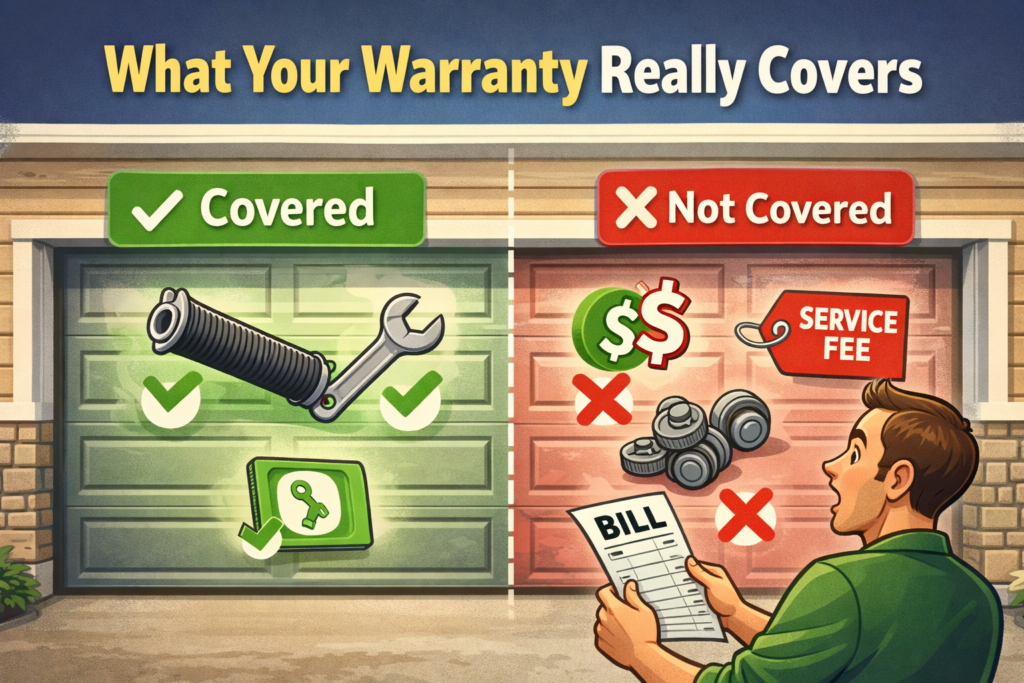
Do you really know what your garage door warranty covers? Could hidden exclusions cost you hundreds or thousands of dollars later?
Most homeowners assume a garage door warranty means full protection. That, however, is rarely true. Many warranties cover parts only, not labor, wear and tear, or maintenance-related issues. When a problem happens, homeowners often discover they are still responsible for most of the repair bill.
In this guide, the experts at A1 Garage Door Service explain how to choose the best garage door company warranty. You will learn what coverage matters, what exclusions to watch for, and how to compare warranties confidently.
By the end, you will know how to protect the investment you’ve made in your garage door and avoid surprise repair bills.
What Is a Garage Door Warranty?
A garage door warranty is a written promise from a manufacturer or service company.
It explains what parts or labor the company will repair or replace, and for how long.
Warranties vary widely by company. Some protect homeowners for years. Others leave major gaps.
 A1 Pro Insight:
A good garage door warranty clearly defines parts coverage, labor coverage, length, exclusions, and homeowner responsibilities.
What Every Garage Door Warranty Should Include
Not all warranties meet the same standard for coverage. At a minimum, homeowners evaluating garage door warranties should look for these essentials:
Clear Coverage Terms
The warranty should list covered parts by name. Vague language is a red flag.
Defined Timeframes
Coverage should state exact time periods. “Limited lifetime” without details is not enough.
Parts and Labor Details
Parts coverage alone does not equal full protection. Labor costs often surprise homeowners.
Transferability
Some warranties transfer to new homeowners. This can add resale value.
Written Documentation
Verbal promises do not count. Always ask for written terms.
How Long Should a Garage Door Warranty Last?
There is no single correct length for a garage door warranty, but there are clear benchmarks.
Common Warranty Lengths
- Springs: Often limited, based on cycle count
- Openers: Manufacturer-based terms
- Panels and sections: Varies by material
- Labor: Often shorter than parts coverage
What to Watch Out For
Short labor warranties are something to watch out for because labor is often the most expensive part of a garage door repair. When labor coverage ends quickly, homeowners may be left paying for service calls and installation costs even when parts are still covered, turning a “good” warranty into an unexpected out-of-pocket expense.
A1 Pro Tip:
When evaluating a garage door warranty, look for balanced coverage, not just long parts warranties. A long parts warranty can look impressive, but it often leaves homeowners paying out of pocket for labor, service calls, and exclusions. A balanced warranty that covers both parts and labor provides real protection and prevents surprise repair costs when something fails.
Parts vs. Labor Coverage: Why This Matters
This is where homeowners often get burned. In many warranties, parts may be covered. However, the labor to diagnose, remove, and install those parts often is not. When a failure happens, the “free” part still comes with a service bill that can cost hundreds of dollars.
Parts Coverage
Warranties with parts coverage covers replacement components only. You may still be on the hook to pay for service, removal, and installation.
Labor Coverage
These warranties cover the technician’s work. Homeowners must realize that labor can be the most expensive part of a repair.
Real-World Example
Suppose you have a part coverage warranty and a spring fails. In this case, the replacement part is free. The labor to install the replaced part is not. That repair bill comes out of your pocket and will likely cost a lot more than the part itself.
A1 Pro Insight:
The best warranties explain the coverage details clearly and equally.
Common Garage Door Warranty Exclusions
Exclusions define what a warranty does NOT cover. This is the part of the warranty where companies limit responsibility and shift costs back to the homeowner.
Here are common garage door warranty exclusions that homeowners should understand:
Normal Wear and Tear
Many warranties exclude wear-related failures. Springs often fall into this category.
Lack of Maintenance
Missed service can void coverage. Some warranties require annual checkups.
Environmental Damage
Heat, moisture, or corrosion may be excluded. This matters in extreme climates.
Improper Use
Misuse or modification of your garage door can void protection.
A1 Pro Tip:
Homeowners have every right to ask the company providing their warranty, “What would void this warranty?” If the answer is unclear, walk away.
How Warranties Vary by Garage Door Company
Not all companies structure warranties the same way. Here are the most common warranty structures to understand:
Manufacturer vs. Service Company
Manufacturers cover defects, meaning problems that happen because a part was made incorrectly or assembled improperly. This can include issues such as warped panels, faulty springs from the factory, or opener components that fail under normal use, but it usually does not cover wear and tear, installation errors, or damage from lack of maintenance.
Service companies, on the other hand, cover installation and labor-related issues such as workmanship defects, adjustments, and callbacks if the system was installed incorrectly or goes out of alignment due to an installation error.
In-House vs. Subcontracted Work
In-house teams often provide clearer labor coverage because the same company controls the installers, the work standards, and the warranty responsibility. With subcontracted work, labor claims can get complicated since responsibility may be shifted between the service company and the subcontractor, leaving homeowners stuck in the middle.
Local vs. National Providers
Local companies often offer more flexible warranty terms because they control their own service teams and can make case-by-case decisions to keep customers satisfied. National companies tend to rely on strict manufacturer policies and standardized rules, which can limit flexibility and leave homeowners with fewer options when a claim falls into a gray area.
A1 Pro Tip:
Always compare warranties side by side, line by line. Ask questions. Get answers. A reputable and trustworthy service company will not apply pressure or show irritation to customer questions.
Your A1-Approved Garage Door Warranty Checklist
Use this A1 checklist before signing any garage door warranty.
- Are parts and labor both covered?
- How long does each type of coverage last?
- What exclusions apply?
- Is maintenance required?
- Is the warranty transferable?
- Who handles claims?
- Is everything in writing?
A1 Pro Tip:
If a company hesitates to answer, that is your answer. Walk away without signing.
DIY Repairs and Warranty Risk
Many homeowners try to save money with DIY fixes. This can backfire by voiding warranty coverage and leaving homeowners with hefty repair bills.
Why DIY Can Void Coverage
DIY repairs can void warranty coverage because improper adjustments can damage parts or throw the system out of balance. Working on a garage door also creates serious safety risks and using non-approved or aftermarket parts often violates warranty terms.
When to Call a Pro
You should call a professional for any work involving springs, cables, or tracks because these components are under extreme tension. Attempting to adjust or repair them without proper training can lead to serious injury or major damage.
A1 Best Practice:
Protect your warranty by using qualified professionals.
Cost Factors Warranties Do Not Always Cover
Even good warranties have limits, and it is important to understand what they do NOT cover.
Common uncovered costs include:
- Emergency service fees
- After-hours labor
- Cosmetic damage
- Preventive maintenance
Knowing these gaps upfront helps homeowners avoid frustration and unexpected costs later.
Local Climate and Warranty Relevance
Climate impacts wear and tear. Hot regions stress springs and openers. Cold regions affect seals and balance.
Homeowners should understand that a warranty that makes sense in one climate might not be ideal for another.
A1 Pro Tip:
Ask how your local climate affects coverage. A warranty should make sense where you live.
In One Minute: Warranty Takeaways
- Not all warranties protect equally
- Parts-only coverage is limited
- Labor coverage matters most
- Exclusions define real value
- Written terms are critical
- Comparison prevents regret
A garage door warranty can be your safety net if anything on your door fails. The key lies in choosing your warranty wisely.
Ask hard questions. Compare carefully. Get everything in writing. That is how you protect your garage door and your wallet.
If you need an experienced advisor to help you understand your options, so you choose the best warranty for you or understand the warranty you currently have, give us a call at A1 Garage Door Service. That’s why we’re here.
Frequently Asked Questions About Garage Door Warranties
What is the best garage door warranty?
The best warranty balances parts and labor, has clear terms, and minimal exclusions.
Do lifetime warranties really last forever?
Usually no. They often apply only to specific parts under certain conditions.
Can a warranty be voided?
Yes. Poor maintenance, misuse, or unauthorized repairs can void coverage.
Is labor usually included?
Often not. Always verify labor coverage separately.