



Blog | GARAGE DOORS
Garage Door Design Trends for 2026: Redefining the Portal to Modern Living

There was a time when garage doors followed the home’s design.
In 2026, that relationship has flipped.
Today’s homes—especially those designed around flexibility, wellness, and lifestyle—are increasingly shaped by how the garage functions. And at the center of that shift is the garage door. No longer a background element, it’s become a defining architectural feature. A source of light. A tool for adaptability. A daily interaction point.
In this new landscape, the garage door isn’t catching up to design trends.
It’s setting them.
The Rise of Full-View and Glass Garage Doors
Few trends capture the shift toward lifestyle-driven design more clearly than the rise of full-view garage doors.
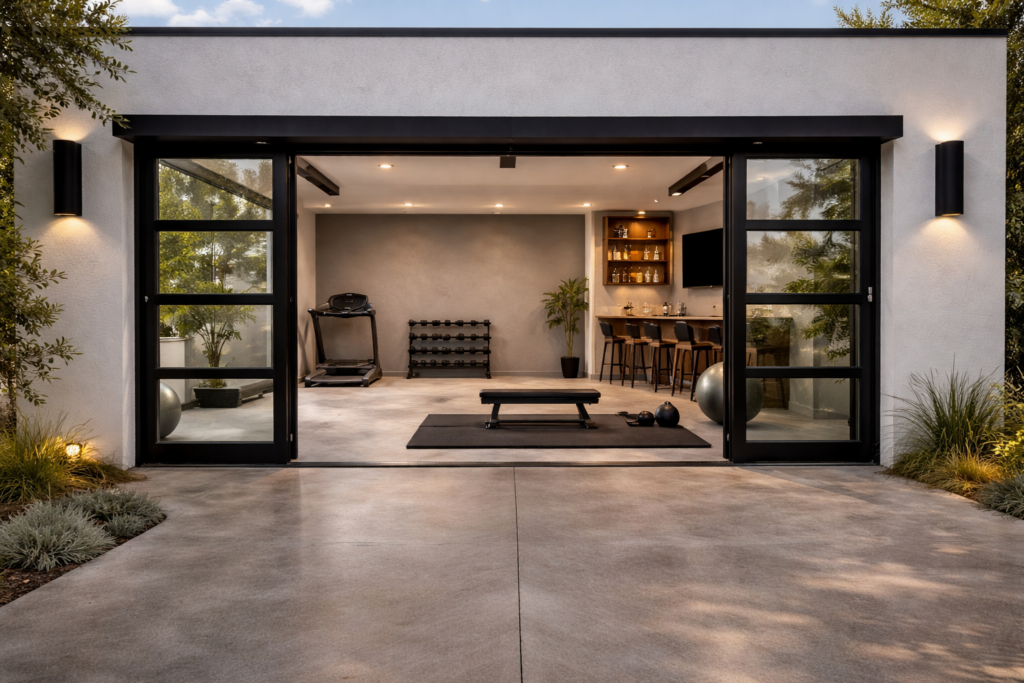
Framed in black, bronze, or anodized aluminum, these glass-panel doors blur the line between inside and out. They invite natural light into the garage, transforming what was once a dim storage area into a bright, usable space.
For homeowners using their garages as gyms, studios, or entertainment zones, this isn’t just an aesthetic upgrade. It’s a functional one. The door becomes a movable wall, opening the space to fresh air and expanding its purpose.
 A1 Pro Insight: Real-World Outcome
Homeowners who install glass garage doors tend to use their garages more often and more creatively. The trade-off is planning—privacy, insulation, and sun exposure need to be addressed to make the space comfortable year-round.
Warm Minimalism—Blending Modern and Natural Materials
Minimalism in 2026 feels different than it did a decade ago.
It’s no longer stark or cold. Instead, it’s warm, layered, and tactile.
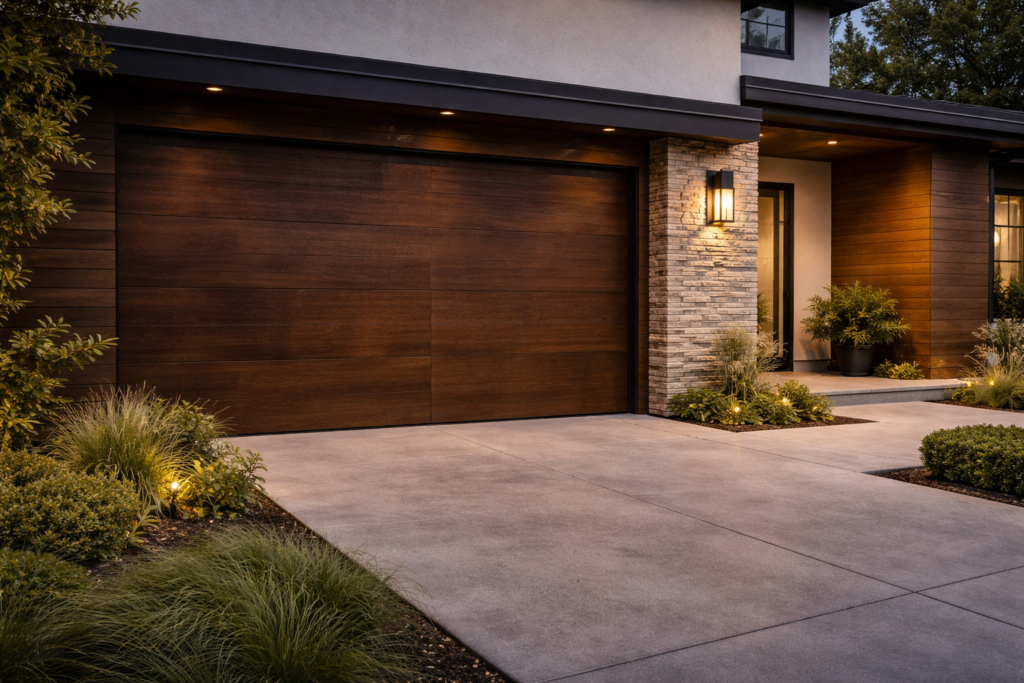
Garage doors are reflecting this shift through the use of mixed materials—clean steel or aluminum frames paired with wood tones or wood-look finishes. The result is a balance between precision and comfort.
This approach works especially well in transitional homes, where modern lines meet traditional materials. It softens the look without sacrificing structure.
 A1 Pro Insight: Good / Better / Best Materials
- Good: Wood-look steel that mimics natural grain
- Better: Composite materials with realistic texture and improved durability
- Best: Custom wood integrated into modern framing systems for a true architectural statement
Dark Tones and High-Contrast Design
In 2026, contrast is doing more of the visual work.
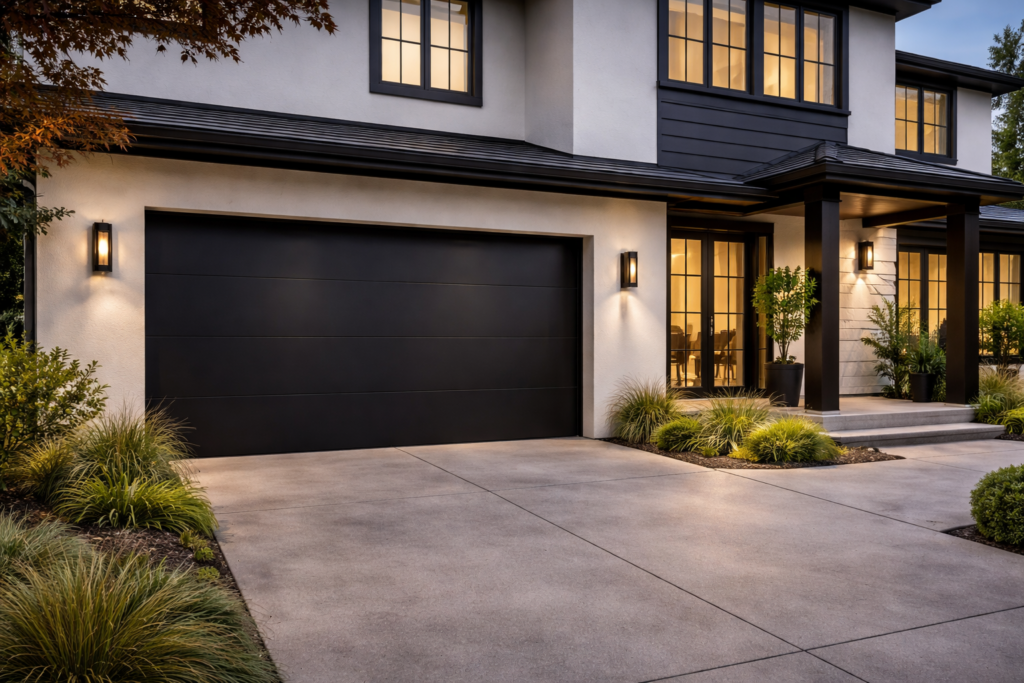
Garage doors in black, charcoal, and deep bronze are becoming a go-to choice for homeowners looking to define their home’s architecture. Against lighter exteriors, these darker tones create sharp lines and a sense of depth.
The effect is subtle but powerful. The garage door anchors the façade, giving the home a more intentional, designed feel.
A1 Pro Insight: Best-For Recommendations
- Best for modern homes: matte black or charcoal finishes
- Best for transitional homes: deep bronze or espresso tones
- In warmer climates, consider how darker colors absorb heat and pair them with insulated door systems
Seamless Integration and “Hidden” Garage Doors
At the opposite end of contrast is another growing trend: invisibility.
Flush-panel garage doors designed to match surrounding materials—wood cladding, siding, or even stone patterns—are gaining traction in high-end builds. These doors don’t compete with the architecture. They disappear into it.
Minimal hardware, concealed tracks, and uninterrupted surfaces create a clean, continuous look across the home’s exterior.
A1 Pro Insight: Common Mistake
Attempting to “hide” a garage door without fully aligning materials, scale, and proportions often backfires. Instead of disappearing, the door subtly stands out in all the wrong ways.
Oversized Doors and Statement Scale
Bigger is becoming more intentional.
In new builds and major renovations, oversized garage doors—both wider and taller—are being used to create presence. These larger openings allow more light, improve accessibility, and enhance the sense of openness inside the garage.
Visually, they also shift the balance of the home’s façade, making the garage feel integrated rather than secondary.
A1 Pro Insight: Cost & Value Context
Larger doors require structural adjustments and increased material costs. But they also deliver significant returns in both usability and curb appeal—especially in homes designed around flexible living spaces.
Smart Technology and Quiet Performance as Standard
In 2026, performance isn’t a feature—it’s an expectation.
Smart garage door systems now integrate seamlessly with home automation platforms, allowing homeowners to control access, monitor activity, and schedule operation from anywhere. But beyond connectivity, the real shift is in how doors feel to use.
Quiet operation, smooth motion, and reliable performance are no longer luxuries. They’re baseline requirements—especially in garages used for work, fitness, or relaxation.
A1 Pro Insight: Real-World Outcome
In lifestyle-focused garages, noisy or inconsistent operation quickly becomes a daily frustration. High-performance systems enhance not just convenience, but the overall experience of the space.
Customization as the New Baseline
What used to be considered “custom” is quickly becoming standard.
Homeowners in 2026 expect the ability to tailor their garage doors—color, material, window layout, finish—to match their home precisely. Off-the-shelf solutions are giving way to design-driven decisions made earlier in the building process.
The result is better alignment, fewer compromises, and a more cohesive final product.
A1 Pro Insight: Cost vs Value Reality
Customization increases upfront cost, but it often prevents expensive redesigns or replacements later. More importantly, it ensures the garage door enhances the home rather than detracting from it.
Sustainability and Long-Term Materials
Durability is now part of design.
Homeowners are paying closer attention to how materials perform over time—how they resist weather, retain color, and reduce maintenance. Insulated doors improve energy efficiency, especially for attached garages, while composite materials offer longevity without sacrificing appearance.
Sustainability isn’t just about environmental impact. It’s about choosing materials that support long-term ownership.
A1 Pro Insight: Durability Insight
Composite and insulated steel doors provide strong performance with minimal upkeep. Natural wood offers unmatched beauty, but requires a commitment to ongoing maintenance.
Designing for Lifestyle First
Perhaps the most important trend in 2026 isn’t visual—it’s philosophical.
Garage doors are no longer chosen based solely on how they look. They’re chosen based on how the space will be used.
A glass door for entertaining. An insulated door for a home gym. A custom wood door for a warm, multi-use extension of the home.
The design follows the lifestyle.
Conclusion: Trends That Reflect a Shift in How We Live
The trends shaping garage door design in 2026 aren’t just about style—they’re about intention.
They reflect a broader shift toward homes that are more flexible, more personalized, and more connected to daily life. And within that shift, the garage door has become a central player.
The most successful designs don’t chase trends for their own sake. They use them as tools—to create spaces that feel better, function better, and support the way people actually live.
Because in the end, the best garage door isn’t the most modern or the most expensive.
It’s the one that works—beautifully—as the portal to your life.
Stay Ahead by Designing with Purpose
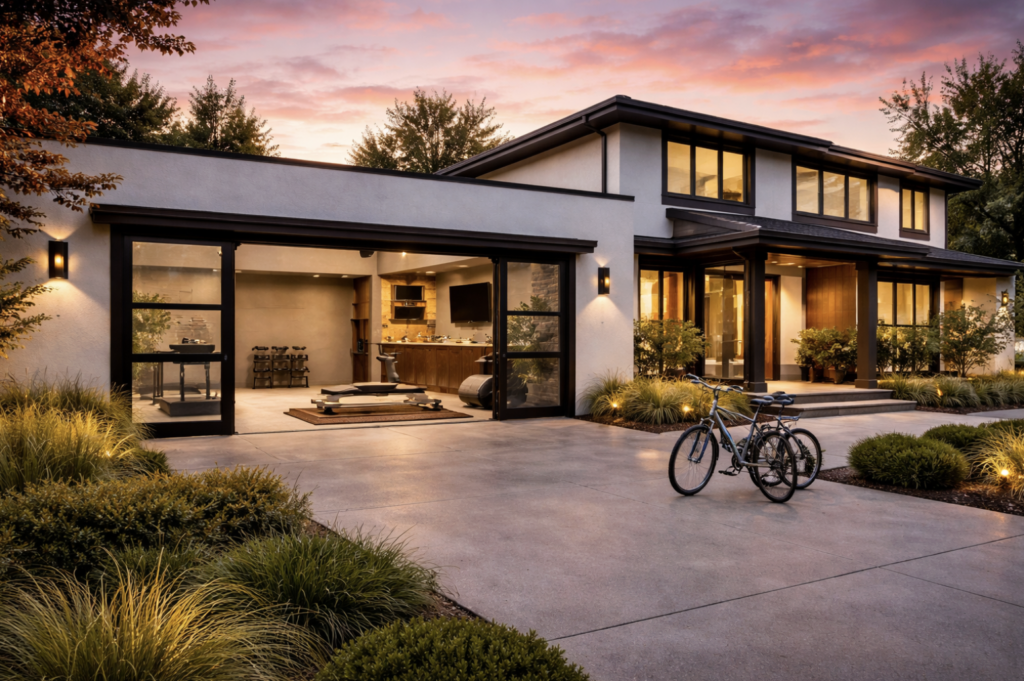
If your garage door feels outdated or underwhelming, it may be limiting more than just your home’s appearance—it may be limiting how your space functions.
A1 Garage Door Service stays at the forefront of design, materials, and performance—helping homeowners navigate trends with clarity and confidence. Whether you’re drawn to modern glass, warm minimalism, or fully custom solutions, the goal is the same: alignment between design and lifestyle.
If you’re ready to explore what’s possible, start with a professional consultation.
The next generation of garage design doesn’t start with trends.
It starts with the right portal.