



Blog | GARAGE DOORS
Custom Garage Door Styles for Unique Homes: Designing the Portal That Defines the Space
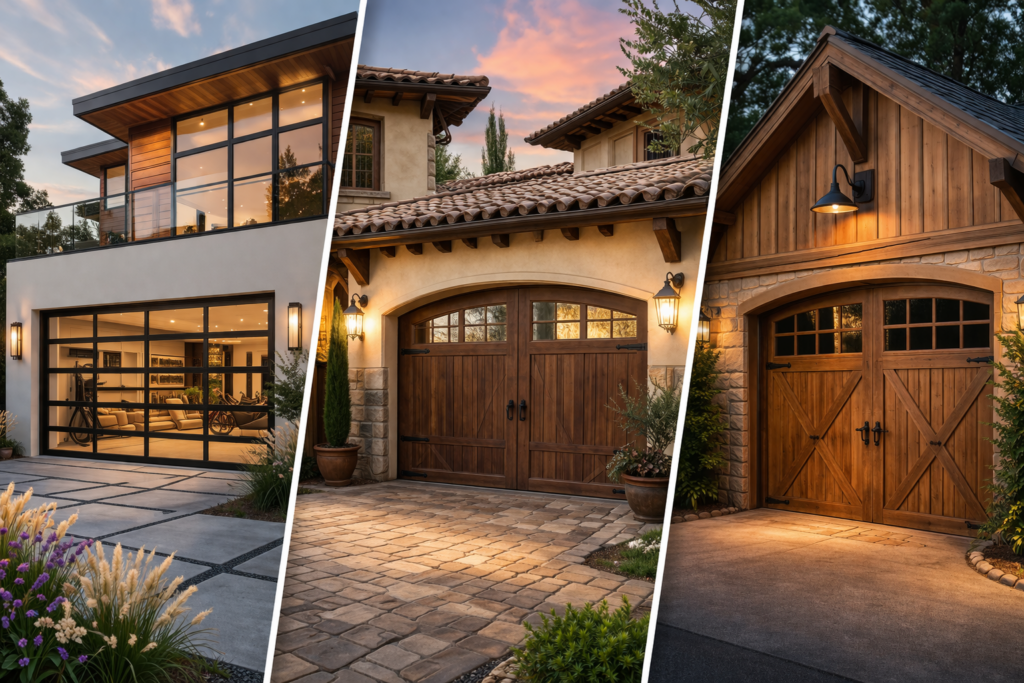
Some home designs follow a blueprint. Others tell a unique story.
If your home leans toward the latter with custom architecture, intentional materials, or a distinctive layout, then a standard garage door can subtly undermine everything you’ve built. What should feel like a seamless extension of your home instead becomes a visual interruption.
In today’s landscape of evolving homes, the garage is no longer just a place to mark the end of the driveway. It’s a gym, a workshop, a creative studio, or a flexible living space. And at the center of that transformation is the garage door, the portal that defines how the space looks, feels, and performs.
For unique homes, that portal should never be generic.
The Problem with One-Size-Fits-All Garage Doors
Walk through any eclectic neighborhood, and you’ll eventually notice it: beautifully designed homes paired with builder-grade garage doors that don’t quite belong.
The issue isn’t just aesthetic. It’s an architectural mismatch. Standard doors often ignore proportion, material harmony, and the visual rhythm of the home. A sleek modern house with a traditional raised-panel door. A rustic farmhouse with thin, metallic finishes. These inconsistencies subtly dilute the home’s true identity.
But the problem goes deeper than curb appeal. A poorly chosen garage door can limit how the space is used, reducing comfort, restricting light, and ultimately keeping the garage stuck in its original, underutilized role.
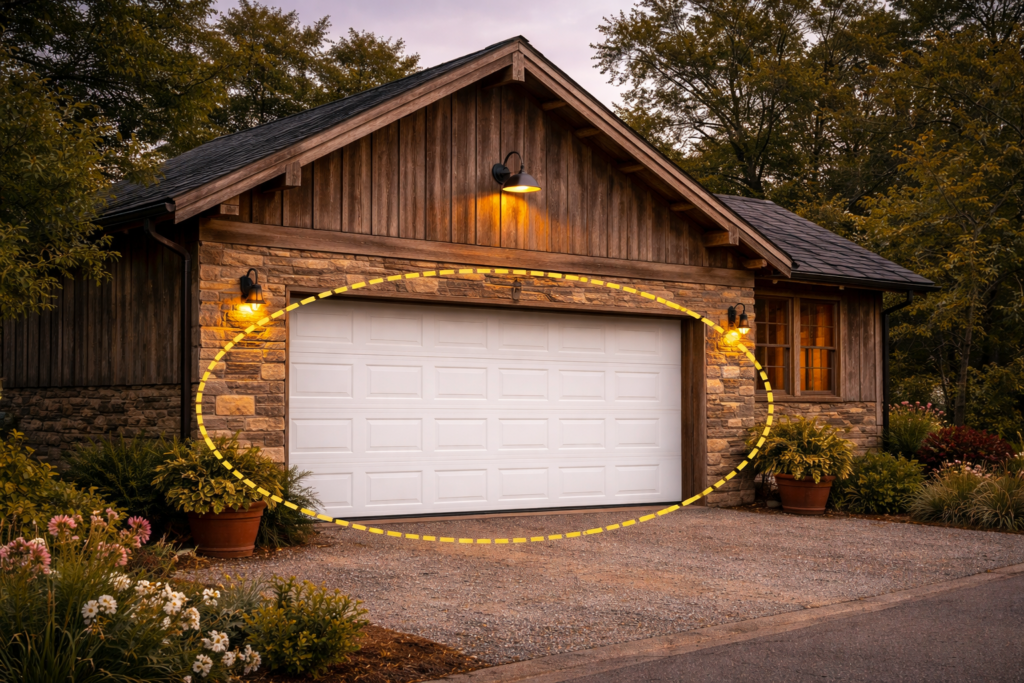
 A1 Pro Insight: Common Design Mistake
Many homeowners choose a garage door based on what’s popular or readily available, not what complements their home. The result is a door that feels “added on” instead of integrated, impacting both perceived value and daily enjoyment.
Architectural Harmony—Matching Door Style to Home Identity
A custom garage door doesn’t just match a home. It reinforces its character.
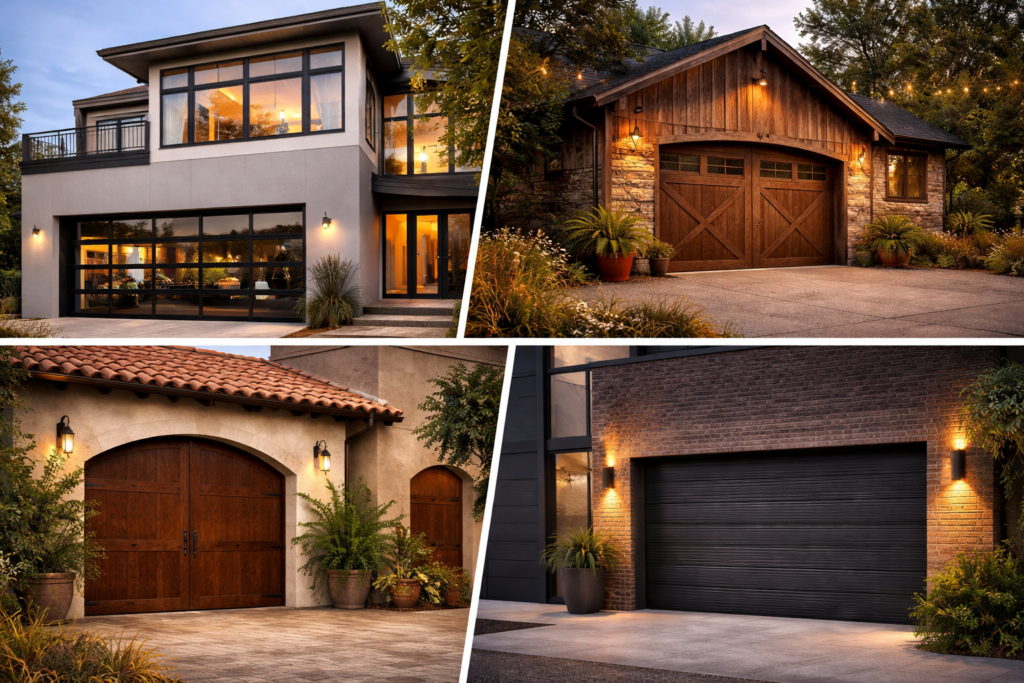
Modern homes benefit from full-view glass doors with aluminum frames, creating clean lines and inviting natural light into the space. In contrast, farmhouse or rustic designs come alive with carriage-style doors, textured finishes, and wood tones that add warmth and depth.
Mediterranean and Spanish-style homes often call for softer edges—arched designs, decorative overlays, and earthy hues that echo the rest of the structure. Meanwhile, industrial or urban homes thrive with minimalism: steel surfaces, dark finishes, and understated paneling.
The goal isn’t to make the garage door stand out. It’s to make it belong so naturally that it elevates everything around it.
A1 Pro Insight: Good / Better / Best Comparison
- Good: Standard steel doors with cosmetic upgrades that mimic higher-end styles
- Better: Insulated steel doors with overlays that add dimension and customization
- Best: Fully custom architectural doors designed to match your home’s exact proportions, materials, and vision
Customization That Goes Beyond Aesthetics
Customization isn’t just about appearance—it’s about how the door performs within your daily life.
Material selection plays a major role. Wood offers unmatched character but requires upkeep. Steel delivers durability and efficiency. Aluminum and glass create openness and light, while composite materials strike a balance between beauty and longevity.
Window placement can transform the experience inside the garage—bringing in natural light while maintaining privacy. Color matching ensures the door feels cohesive with the home’s exterior palette, while hardware choices subtly influence both style and operation.
Even the track system and opening mechanism matter. A well-designed system operates smoothly, quietly, and reliably, enhancing the experience every time the door moves.
A1 Pro Insight: Cost & Value Transparency
- Standard upgraded doors: ~$1,500–$4,000
- Semi-custom designs: ~$4,000–$8,000
- Fully custom architectural doors: $8,000–$20,000+
While custom doors require a higher upfront investment, they often deliver strong returns through improved curb appeal, increased home differentiation, and a more usable, enjoyable space.
Performance Matters: Why Function Must Match Form
A beautiful garage door that underperforms quickly becomes a frustration for the homeowner.
Insulation is one of the most important factors, especially for garages used as living or activity spaces. A well-insulated door stabilizes temperatures, making the space comfortable year-round. It also reduces energy loss when the garage is attached to the home.
Noise reduction is another overlooked benefit. High-quality doors with proper insulation and hardware operate more quietly. This is an important factor, especially if the garage doubles as a workspace or early-morning gym.
Durability, wind resistance, and sealing systems all contribute to long-term reliability. Modern smart openers add convenience, allowing homeowners to control and monitor access with ease.
A1 Pro Insight: Real-World Outcome
Homeowners who invest in insulated, high-performance garage doors consistently use their garages more often and for more purposes. Without those upgrades, the space tends to remain limited to storage rather than becoming part of daily life.
Designing for Lifestyle: How Custom Doors Shape Daily Living
The right garage door doesn’t just change how your home looks. It changes how you live in it.
A full-view glass door can turn a garage into an indoor-outdoor lounge, opening the space to fresh air and natural light. An insulated solid door creates a quiet, controlled environment for focused work or fitness. A carriage-style door adds warmth and makes the space feel like an extension of the home rather than a separate utility area.
These choices influence daily rituals. Opening the door in the morning to let in light. Closing it in the evening to create privacy and comfort. Adapting the space depending on the moment, whether it’s for exercise, work, relaxation, or gathering.
A1 Pro Insight: Best-For Recommendations
- Best for entertaining: Full-view glass doors that blur indoor and outdoor boundaries
- Best for year-round comfort: Insulated steel or composite doors
- Best for standout design: Fully custom wood or architectural builds
Avoiding Pitfalls in Custom Garage Door Projects
Customization brings opportunity but also risk if not approached thoughtfully.
Over-designing a door without considering performance can lead to discomfort or inefficiency. Ignoring insulation (especially in warm climates) can make the space unusable for much of the year. Choosing high-maintenance materials without a plan for upkeep can turn a beautiful feature into a burden.
Scale is another common issue. A door that’s too small, too large, or poorly proportioned can disrupt the home’s entire visual balance.
A1 Pro Insight: Durability & Maintenance Reality
- Wood doors require ongoing sealing or refinishing to maintain their appearance
- Glass and aluminum offer low maintenance but need proper insulation pairing
- Composite materials provide a durable, lower-maintenance alternative with strong visual appeal
Conclusion: A Door That Reflects the Way You Live
In a unique home, every detail matters. And few elements have the impact or the responsibility of the garage door.
It’s not just an entry point. It’s a defining feature that shapes how the space is used, how the home is perceived, and how daily life unfolds within it.
When design and performance align, the garage transforms from an overlooked area into a purposeful, adaptable environment that supports how you actually live.
The right door doesn’t just complete the space. It unlocks it.
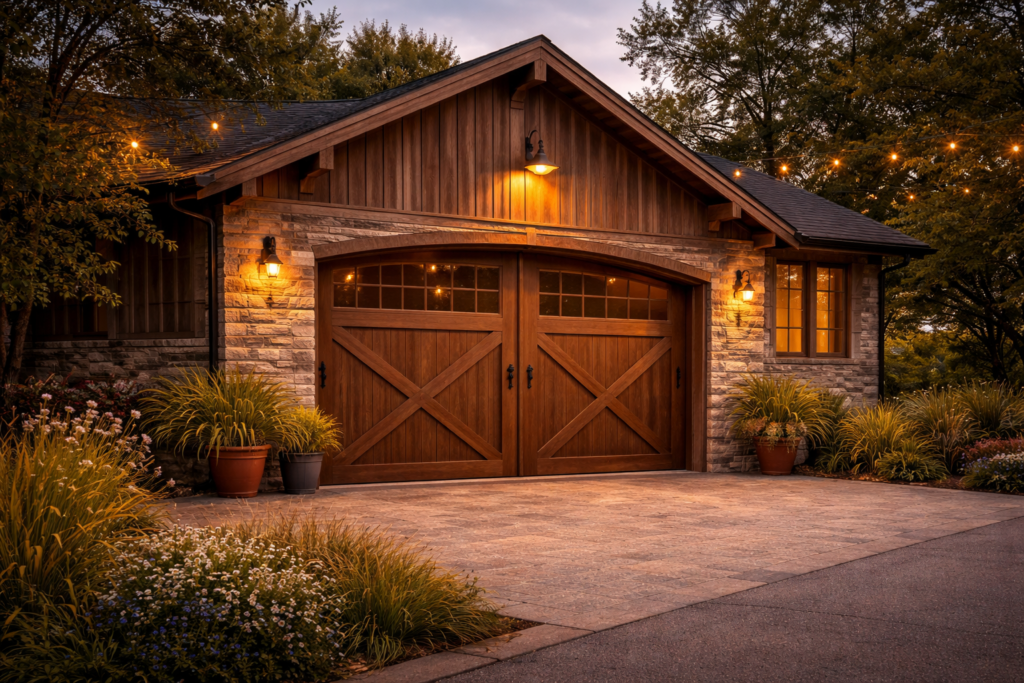
Design the Right Portal for Your Home
If your garage door feels like an afterthought, it may be limiting more than just your home’s appearance. It may be restricting how you use your space.
A1 Garage Door Service approaches every project as a balance of design, performance, and lifestyle. From architectural alignment to insulation and durability, the goal is to help you choose a door that works as beautifully as it looks.
If you’re considering a custom garage door or wondering what’s possible for your space, start with a professional evaluation. The right guidance can turn your garage into something more than functional.
It can turn it into a space you actually live in, starting with the smile of the home that makes it all possible.