



Blog | GARAGE DOORS
How to Know If Your Garage Door Opener Is Failing (7 Warning Signs)
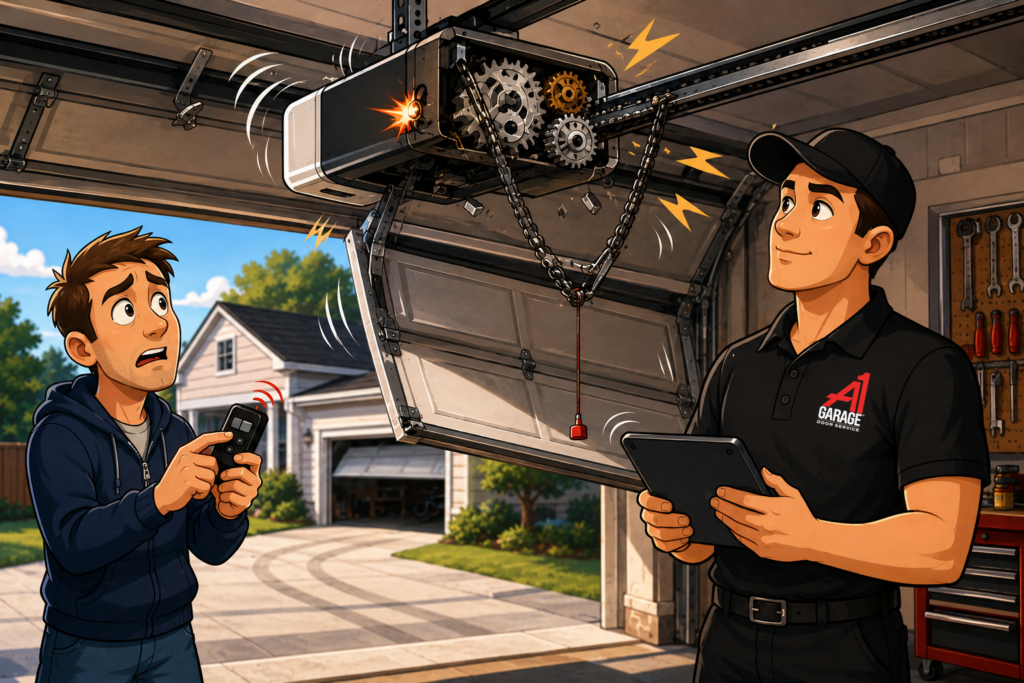
Before we dive in, here’s the fast version of what A1 Garage Door Service wants every homeowner to know about potentially failing openers:
- If your door opens or closes randomly, your opener may be failing or experiencing signal interference.
- If your remote works inconsistently, the receiver or electronics could be going bad.
- If you hear clicking, grinding, or jolting, internal gears may be worn out.
- If the chain or belt is loose or sagging, your opener is under stress and could fail soon.
- If your door feels heavy or struggles, the problem may actually be the springs, not the opener.
- If your opener suddenly sounds quiet but nothing moves, the motor is running, but the system has failed.
- If you keep replacing parts, it may be cheaper and safer to replace the entire opener.
- Modern openers solve many of these problems with better technology and smart features.
Have you ever hit your garage door remote… and nothing happened? Or worse, come home and find your garage door wide open even though no one has been home?
These are not random issues. They are warning signs.
In this guide, A1 Garage Door Service walks you through the exact signs your opener is failing, what causes them, and what to do next.
By the end, you will know how to spot problems early and avoid getting stuck inside or outside your home.
The Most Common Signs Your Garage Door Opener Is Failing
-
Intermittent Opening and Closing
This is often the first warning sign.
Your door may:
- Open on its own
- Fail to close completely
- Work sometimes, but not always
This is not normal behavior.
 A1 Pro Insight:
At A1 Garage Door Service, we see this as a clear signal that something is breaking down inside the system. It could be electrical, mechanical, or even interference.
What it means:
Your opener is losing reliability and could fail completely soon.
-
Your Remote Stops Working Consistently
If you find yourself:
- Clicking the remote multiple times
- Holding it at strange angles
- Standing closer and closer to the door
There is a problem. This usually points to a failing receiver module or signal issue.
In many cases, older systems no longer have replacement parts available. That means repair may not be an option.
What it means:
Your opener is aging out, and replacement is often the smarter move.
Loose or Sagging Chain or Belt
Take a look at your opener rail.
If you see:
- A hanging chain
- A loose belt
- Slack in the system
This is not just wear and tear. It is a warning.
A loose system means internal components are under stress. Over time, this leads to gear failure.
What it means:
Your opener is working harder than it should and getting closer to breaking.
-
Clicking, Grinding, or Jolting Sounds
Your garage door should not sound aggressive or unstable.
Watch and listen for:
- Clicking noises
- Grinding sounds
- Jerky or uneven movement
These sounds usually come from worn gears inside the opener. When gears wear down, they begin to slip. That creates noise and inconsistent movement.
What it means:
Internal components are failing and will eventually stop working.
-
The Door Feels Heavy or Struggles
Here is something most homeowners miss. Sometimes the opener is not the real problem.
If your door:
- Moves slowly
- Feels heavy
- Struggles to open
The issue may be your springs, not the opener. When springs wear out, the opener has to lift more weight than it was designed for.
At A1 Garage Door Service, we often see this chain reaction:
- Springs weaken
- Opener works harder
- Gears wear out faster
- System fails
What it means:
Fixing the door system early can prevent opener failure.
-
The Opener Runs… But Nothing Moves
This is one of the clearest failure signs.
You press the button:
- The motor runs
- It sounds quieter than usual
- But the door does not move
This means the motor is working, but the internal drive system has failed.
What it means:
Your opener is no longer functional and needs repair or replacement.
The Hidden Danger: When an Opener Fails
A failing opener is not just inconvenient. It can be dangerous.
Garage doors can weigh:
- 150 to 250 pounds
- Up to 600+ pounds for larger doors
If a key component breaks during operation, the door can drop suddenly.
That creates a serious risk to:
- Vehicles
- Pets
- Children
A1 Pro Safety Tip:
This is why A1 Garage Door Service always recommends addressing early warning signs with garage door openers.
What Causes Garage Door Opener Failure?
Normal Wear and Tear
Every opener has a lifespan. Daily use slowly wears down parts.
Poor Maintenance
Lack of lubrication and inspections speeds up failure.
Signal Interference
Older openers rely on radio frequency signals.
These can be disrupted by:
- LED lights
- Neighbor electronics
- Baby monitors
- Nearby towers
Electrical Issues
Power problems can damage internal components.
Heavy or Unbalanced Doors
When the door system is off, the opener takes the strain.
Repair vs Replace: What’s the Right Move?
When Repair Makes Sense
- Minor part failure
- Newer opener
- No major wear
When Replacement Is Smarter
- Multiple failing parts
- Intermittent issues
- Outdated technology
- Receiver module failure
A1 Pro Tip:
A1 Garage Door Service often sees homeowners spend more money fixing old systems than replacing them.
Modern Openers Solve These Problems
Today’s openers are built differently.
They offer:
- Smart app control
- Real-time door status
- Built-in cameras
- More reliable communication systems
This eliminates many of the issues seen in older units.
Step-by-Step: What To Do If You Notice These Signs
- Observe the behavior
Look for patterns like noise or inconsistency. - Check visible components
Chain, belt, and rail condition. - Test your remote and wall button
Compare performance. - Listen carefully
Sounds often reveal the issue. - Call a professional
Especially for anything involving springs or internal parts.
Common Mistakes Homeowners Make
- Ignoring early warning signs
- Replacing parts one at a time
- Trying DIY fixes on high-tension systems
- Keeping outdated openers too long
These choices often lead to higher costs later.
FAQ: Garage Door Opener Problems
How long does a garage door opener last?
Most last 10–15 years, depending on use and maintenance.
Why does my garage door open by itself?
This can be caused by signal interference or failing electronics.
Is it better to repair or replace an opener?
If the unit is older or has multiple issues, replacement is usually better.
Can I fix a garage door opener myself?
Basic checks are fine, but internal repairs should be handled by professionals.
What is the most common failure point?
Worn gears and failing receiver modules are very common.
In One Minute: Key Takeaways
- Intermittent operation is an early warning sign.
- Noise often means internal wear.
- Loose chains or belts signal stress.
- Remote issues point to electrical failure.
- Heavy doors damage openers over time.
- Replacement is often smarter than repeated repairs.
Final Thoughts
Your garage door opener is something you rely on every day. When it starts to fail, it rarely happens all at once. The signs show up early.
The key is knowing what to look for.
At A1 Garage Door Service, we believe informed homeowners make better decisions. Whether it is a simple fix or a full upgrade, catching the issue early saves time, money, and stress.
Think your opener might be failing? Schedule a professional inspection with A1 Garage Door Service today and get clear answers before a breakdown happens.
Want to learn more about this topic from the A1 experts? Watch A1’s podcast, “The Garage Authority,” below: