



Blog | GARAGE DOORS
Garage Door Safety for Kids and Pets: What Every Family Must Know
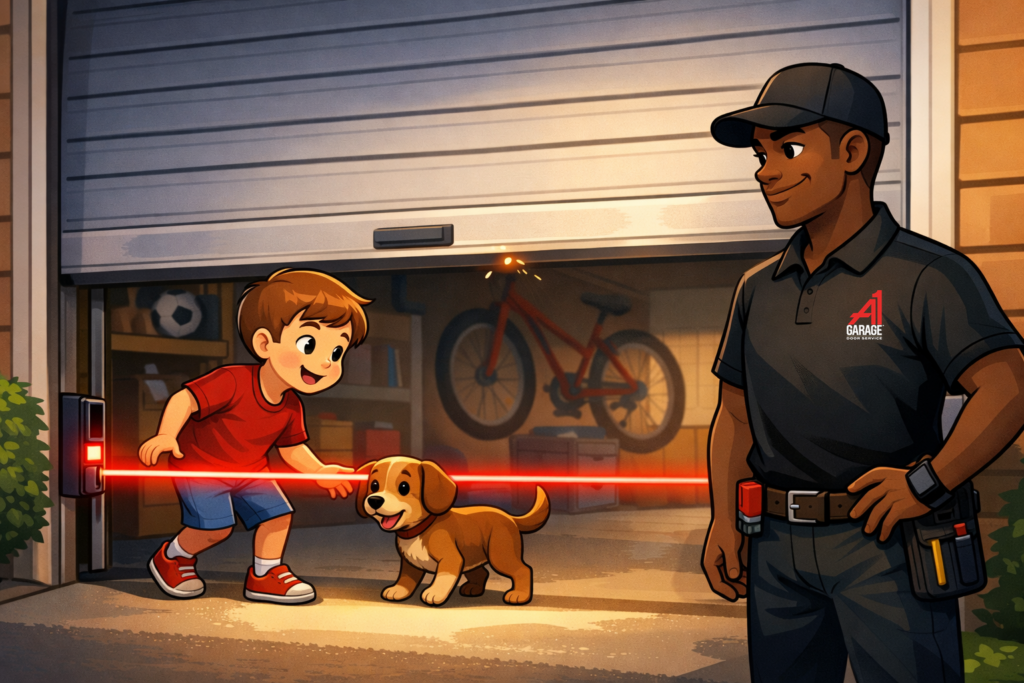
Do your kids and pets like to spend time in the garage? Is your garage door a potential danger to your family hiding in plain sight?
Convenient as they are, garage doors are complicated machines that often weigh more than two hundred pounds. Most have intricate parts and hardware that can be extremely dangerous if played with or mishandled.
At A1 Garage Door Service, we too often see this mistake. Families forget that their garage door is not a toy and can be very harmful to kids and pets.
In this guide, we share real safety risks, proven habits, and essential features every parent needs to ensure their garage door functions properly, and their families remain safe. These steps help prevent accidents, injuries, and close calls.
Why Garage Doors Are Dangerous for Kids and Pets
Garage doors move faster than you think and carry tremendous force. Children and pets do not understand the risk they take when they play in the garage.
They especially don’t realize that when safety features fail, garage doors do not stop. They fall down and bring their force with them.
Children often try to grab a closing door only to put themselves at risk of serious injury without realizing the danger until it’s too late. Pets can naively wander underneath a falling door just as easy as they can step into a busy street without looking for traffic first.
That is how accidents happen.
The Most Important Safety Feature: Photo Eyes
What Are Garage Door Safety Eyes?
Safety eyes, also called photo eyes, are sensors near the floor. They send an invisible beam across the garage opening. If anything breaks that beam, the door must reverse.
Garage door safety eyes are designed to protect what moves under the door such as kids, pets, bikes, scooters, and strollers. Under the door is where most garage door accidents take place.
A1 Pro Insight:
A garage door without safety eyes is not only unsafe, but it is also against code.
Where Safety Eyes Should Be Installed
Modern garage door codes require safety eyes to be:
- Mounted 2 to 6 inches off the floor
- Installed on both sides of the door
- Aimed directly across the opening
A1 Pro Safety Tip:
Mounting safety eyes near the motor is not compliant and is considered unsafe. If a previous homeowner or installer moved them to avoid sunlight issues, they created a hidden hazard.
Why Safety Eyes Fail More Often Than You Think
According to A1 technicians, safety eye issues account for a large share of daily service calls. Most of the time, safety eyes fail because they have been bumped out of alignment.
Kids move through the garage constantly. Bikes, scooters, balls, trash bins, and lawn tools hit the sensors.
Even a small bump can knock the eyes out of alignment. When that happens, the safety system stops working, leaving kids and pets at risk.
How to Check If Your Safety Eyes Are Working
This is a simple monthly check every parent should perform to ensure their garage door’s safety eyes are doing their job.
Step-by-Step Safety Eye Test
- Close the garage door.
- Wave an object through the opening.
- The door should reverse immediately.
Next, look at the sensors. Most systems show:
- A solid light when aligned
- A flashing light when misaligned
If the light flickers, the system is unreliable.
 A1 Pro Safety Tip:
Once aligned, gently wiggle the track. If the light stays solid, the sensors are set correctly.
Safety Habits Every Family Should Teach Kids
Here are a few A1-approved rules and habits we feel every family with a garage door should adopt.
Essential Rules for Kids
- Never race the garage door.
- Never jump under a closing door.
- Never play on an open or closed garage door.
- Never touch safety eyes.
- Tell an adult if the door does not close properly.
A1 Pro Safety Tip:
At A1 Garage Door Service, we teach this easy-to-follow rule: kids get two tries to close the door. If it fails to close both times, they must get an adult for help.
No exceptions. This habit alone prevents many potential injuries.
Why Pets Are at Risk, too
Pets do not understand garage doors. They follow instincts and routines, not rules.
Dogs and cats often slip under doors at the last second. If safety eyes fail, the door will not stop and the pet can get pinned or crushed.
A1 Pro True Customer Story from the Field:
Recently, an A1 technician aligned a customer’s photo eyes so they worked properly. A week later, the customer texted and said that her dog was off leash after a walk and darted for the yard after seeing a squirrel. The problem was that the garage door was closing. The customer yelled the dog’s name and the pup froze, but he was under the door as it was closing! Thankfully, the phot eyes did their job. As soon as the dog’s paws broke the beam, the door reversed. Everyone was ok, including the dog…and the squirrel.
Smart Technology Adds Another Layer of Protection
Smart garage door technology adds a critical layer of safety for families, especially when kids and pets are constantly moving in and out of the garage. Systems such as myQ allow parents to see, monitor, and control the garage door in real time, even when they are not home.
If the door fails to close, reverses unexpectedly, or is blocked by a bike, scooter, or pet, myQ sends instant notifications. This early warning helps parents stop unsafe situations before a child tries to touch the door or a pet wanders underneath it.
Seeing Problems Before They Become Accidents
myQ also improves safety through visibility and control. With integrated cameras and remote access, parents can confirm that the garage is clear before closing the door and communicate with family members without anyone needing to touch the wall button. Instead of kids racing the door or trying to fix a problem themselves, an adult can safely manage the door from their phone.
A1 Pro Endorsement:
For busy households, myQ technology reduces risky behavior and turns the garage door from a blind spot into a monitored, controlled space designed to protect the whole family.
Common Garage Door Accidents Families Can Avoid
Most garage door accidents have a single trait in common. They could have been prevented with a little foresight.
Here is a quick list of the most common mistakes we see homeowners make with their garage doors that can lead to an accident and or injury:
- Ignoring monthly safety checks
- Letting kids play on or near the door
- Misaligned or missing safety eyes
- Relying only on the wall button
- Skipping professional inspections
How Often Should Families Check Garage Door Safety?
At A1, we recommend:
- Monthly safety eye tests
- Annual professional inspections
Electrical issues, age, and phical wear matter when it comes to garage door safety. That’s because safety components do not last forever. Checking them costs nothing. Ignoring them, which can lead to injuries to family and pets, costs much more.
DIY Checks vs. Professional Inspections
What Homeowners Can Do themselves
- Test safety eyes monthly.
- Watch for flashing sensor lights.
- Listen for unusual sounds.
- Keep the sensor area clear.
When to Call a Pro
- Door does not reverse
- Sensors will not stay aligned
- Door closes unevenly
- Alerts show repeated failures
Professionals test more than sensors. They check balance, force settings, and hardware stress.
A1 Pro Insight:
Don’t touch the electrical outlet. Look both ways before you cross the road. Don’t take candy from strangers. Parents do not wait for accidents to teach their children crucial lessons on staying safe. Garage door safety should be no different.
In One Minute: Key Takeaways
- Garage doors weigh over 200 pounds
- Safety eyes protect kids and pets
- Sensors must sit 2–6 inches off the floor
- Monthly checks prevent accidents
- Smart systems add visibility and control
Garage doors are powerful machines. Safety habits protect what matters most.
If you have kids or pets, do not jeopardize their safety or well-being. Schedule a professional garage door safety inspection with A1 Garage Door Service.
FAQs About Garage Door Safety for Families
Do all garage doors have safety eyes?
Doors made after 1993 should. Older doors may not.
Can pets trigger safety eyes?
Yes. When the eyes are properly aligned.
How often should safety eyes be tested?
At least once a month.
Are smart garage systems required?
No, but they add protection and visibility.
Can A1 inspect safety systems during a tune-up?
Yes. Safety checks are part of every A-1 inspection.