



Blog | GARAGE DOORS
Why Is My Garage Door Making Noise? What Common Sounds Mean (And When to Call a Pro)
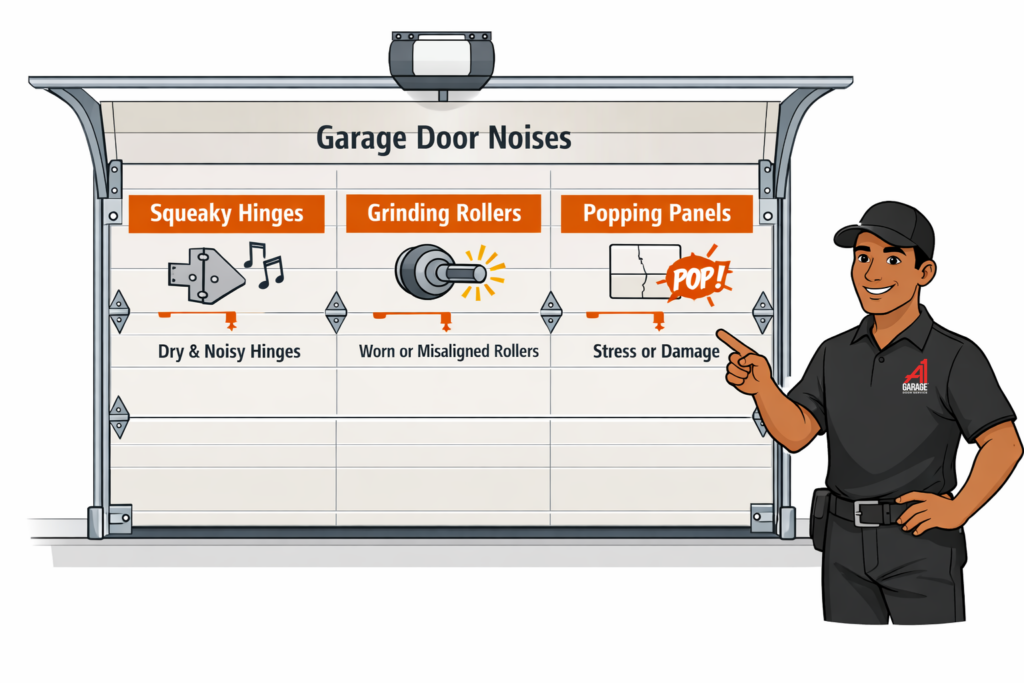
Is your garage door trying to tell you something? Is the squeaking when it opens, the grinding when it closes, and the random popping and shaking a language your garage door uses to tell you how it feels?
At A1 garage, we often get asked, “What does this sound mean with my garage door?” The truth is every noise your garage door makes is a message that shouldn’t be ignored.
In this guide, we’re going to explore what the most common garage door noises indicate, what you can safely check yourself, and when it’s time to call a professional before a small issue becomes a major problem.
By the end, you’ll understand why it’s important to keep your ears open to noises your garage door makes so you can take action and avoid expensive damage, safety risks, or total door failure.
Every Garage Door Noise Is a Message
Garage door noises are usually signs of wear, friction, misalignment, or lack of maintenance. These issues rarely fix themselves. They usually get worse with time.
As many of our A1 technicians say, if your garage door is making noise, something is probably already wrong and needs attention. Unfortunately, far too many homeowners ignore the audible warning signs their garage door makes, which leads to problems that could have been avoided with maintenance.
Why Garage Door Maintenance Gets Ignored
As a homeowner, you regularly maintain your HVAC system, waters heaters, plumbing, and landscaping. But how often do you perform any work to maintain your garage door?
Sadly at A1, we not only see homeowners fail to maintain their doors, but they also tell us that the reason they neglected their doors is because they didn’t know that garage doors had to be maintained.
Not surprisingly, the results are predictable. Small issues fester quietly for years until something fails. And when garage doors fail, they fail big.
Let’s explore the most common garage door noises, what they mean, and what you can do to help prevent major problems and expensive repairs.
Common Garage Door Noises and What They Signal
Squeaking or Screeching
These noises often happen due to:
- Dry hinges
- Dry rollers
- Lack of lubrication
 A1 Pro Tip:
Proper lubrication (not WD-40!) can quiet a noise, but it may also mask a deeper problem. If the noise comes back within a few weeks, call a professional to help identify and solve the real problem.
Grinding or Dragging Sounds
Grinding is serious. It often means:
- Rollers are not spinning.
- Rollers are dragging inside the track.
- Bearings are failing.
Bearings seize and rollers can disintegrate. These are very dangerous problems when the door is open.
A1 Pro Safety Tip:
Rollers are the only things holding hundreds of pounds of garage door above your head when the door is open. If they’re making odd noises, they may be on the verge of failing. Call a certified expert garage door company to help.
Popping or Snapping Noises
These noises often mean your door is experiencing structural stress. Possible causes include:
- Weak or cracked door panels
- Door sections flexing under load
- Struts missing or failing
The “pop” is a weak spot in a panel. It can be reinforced if caught early. If it’s ignored for too long, however, a door replacement may be the only option.
Rattling or Vibrating
These noises typically point to:
- Loose hardware
- Door shifting as the home settles
- Track alignment issues
Garage doors are balanced systems. When homes shift (and homes shift over time) garage door parts rub against each other, which makes noise.
Noise means friction. Friction causes wear. Wear leads to failure.
What Homeowners Can Safely Check Right Now
You do not need to be a technician to spot red flags.
1. Listen Carefully
New noises matter. Changes matter. If your garage door does not sound the way it did the previous month, pay attention and take the proper action.
2. Watch the Rollers
Push the button and watch. Are rollers spinning smoothly? Or are they dragging through the track? Drag marks are a warning.
3. Try a Balance Test (Carefully)
With the door closed:
- Pull the emergency release.
- Lift the door by hand.
If it feels heavier than five pounds, it is unsafe. Heavy doors stress motors and can crash down if parts fail.
4. Look at the Wood Above the Springs
Check the mounting area for cracks, splits, and separation near center plates.
5. Inspect Cables and Bottom Brackets (Visually Only)
Look for fraying, rubbing, and wear marks.
Wear marks are visible signs that parts of your garage door are rubbing where they shouldn’t. They often look like shiny metal streaks, dark scuff lines, scratches, or grooves on the inside of the track or along door hardware.
On rollers and hinges, wear marks may appear as flattened spots, rough edges, or metal dust collecting below the area. These marks mean friction is happening, and friction is an early warning that parts are wearing out and need attention
A1 Pro Safety Tip:
Garge door cables and the bottom bracket are under tremendous tension and can cause serious injury if mishandled. Do not touch these parts. Ever.
What Homeowners Can Do Themselves (And What Not to Do)
Safe DIY Maintenance
Every 3–4 months:
- Use garage door–specific lubricant (Not WD-40. Garage door lube.)
- Spray:
- Hinges
- Roller stems
- Bearings (if exposed)
You can also:
- Tighten face hardware gently.
- Use hand tools only.
What Never to Touch
- Springs
- Bottom brackets
- Red hardware
- Spring pads
A1 Pro Safety Tip:
Red means danger. Hospital bills cost more than maintenance.
A Dangerous Habit to Avoid at All Costs
Never override safety systems.
A1 Pro Real Customer Story:
A homeowner’s garage door had been popping for months. Frustrated at the sound, the homeowner held the button down to bypass the system’s safety features. Big mistake. The springs ended up failing and had to be replaced, when they could have simply been lubricated.
The door was warning the homeowner, but the cries for help went unnoticed.
A1 Pro Tip:
Safety systems exist for a reason. If they stop the door, listen.
How Often Garage Doors Need Maintenance
- Standard doors: once per year
- Heavy or wood overlay doors: twice per year
Think of garage door maintenance as if it’s a doctor’s checkup. Don’t wait until it’s too late.
In One Minute: What Garage Door Noises Mean
- Noises are warnings, not quirks.
- Squeaks often mean dry or worn parts.
- Grinding means dangerous friction.
- Popping suggests panel stress.
- Lubrication helps, but doesn’t fix everything.
- If a noise returns quickly, call a pro.
- Annual maintenance prevents disasters.
Your garage door is one of the heaviest moving systems in your home. Contact A1 Garage Door Service to inspect, maintain, and protect it before it fails.