



Blog | GARAGE DOORS
Garage Door Making Noise? Here’s What Each Sound Means
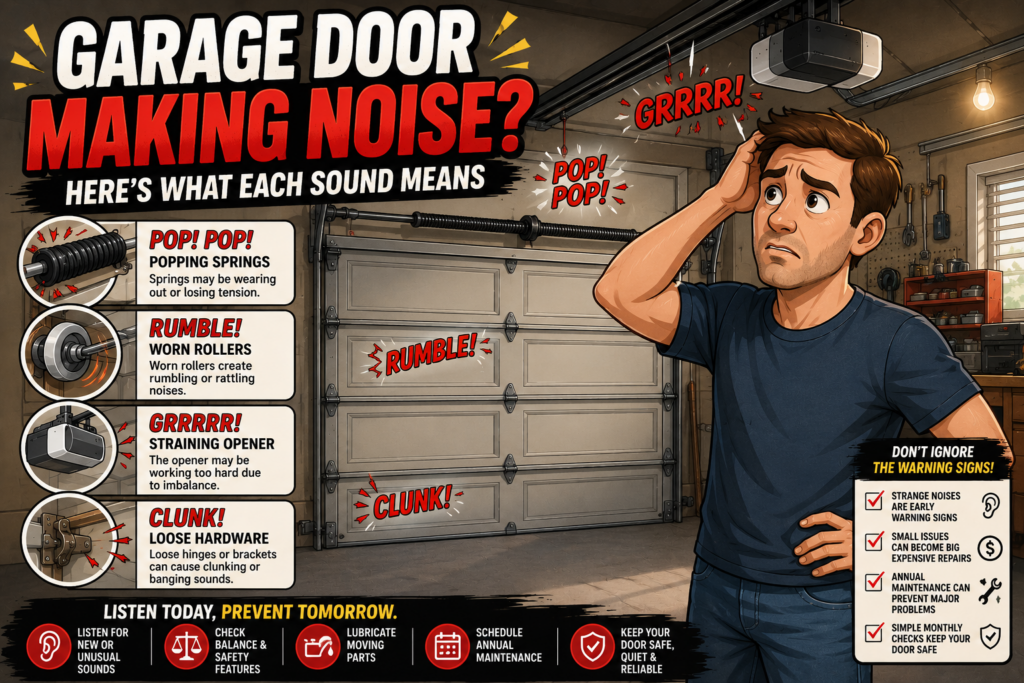
If your garage door is making new or unusual noises, don’t ignore them. Your garage door is often warning you before a major problem occurs.
Here’s what you need to know:
- Popping springs, grinding rollers, and loud rattling are warning signs.
- Most garage door problems start small and become expensive when ignored.
- A yearly professional maintenance visit can prevent many major repairs.
- Homeowners can safely perform simple monthly checks like a balance test, reversing test, and visual inspection.
- Proper lubrication helps extend the life of your garage door.
- Strange noises don’t always mean replacement—but they almost always mean it’s time for an inspection.
The sooner you address unusual sounds, the more likely you’ll avoid a costly repair.
Why Is Your Garage Door Making Noise?
Have you noticed your garage door getting louder lately? Does it squeak, pop, grind, or sound like an old wooden roller coaster every time it opens?
If so, your garage door is trying to tell you something.
At A1 Garage Door Service, we tell homeowners that garage doors almost never fail without warning. Long before a spring breaks or an opener burns out, the system usually starts communicating through sounds, movement, and changes in performance.
The problem is that most homeowners don’t recognize those warning signs until the garage door stops working completely.
This guide explains what your garage door may be telling you, which noises should never be ignored, and the simple habits that can help you avoid expensive repairs.
The Direct Answer
What does it mean when a garage door starts making noise?
In most cases, a noisy garage door indicates worn parts, lack of lubrication, loose hardware, aging rollers, spring wear, or an opener that is working harder than it should. While some noises are minor, others can signal developing safety issues that should be inspected by a professional before they become larger problems.
The Sounds You Should Never Ignore
Every garage door makes some noise. The question is whether it sounds different than it did a few months ago.
Here are some of the sounds we at A1 Garage Door Service believe deserve attention.
Popping or Chattering Springs
Garage door springs carry almost all of the door’s weight. As springs age or begin wearing unevenly, they may produce popping or chattering sounds during operation.
While lubrication with proper lubricants can sometimes reduce minor noise, recurring popping often indicates the springs should be inspected before they fail completely.
Rollers That Sound Like a Wooden Roller Coaster
One of the easiest sounds to recognize is the loud rumbling or rattling of worn rollers.
Many homeowners describe it as sounding like an old wooden roller coaster climbing the first hill.
That noise usually means the rollers are no longer moving smoothly through the tracks.
Left alone, worn rollers place additional strain on hinges, tracks, springs, and the opener.
A Motor That Sounds Like It’s Working Too Hard
Your opener shouldn’t sound like it’s struggling every time it lifts the door.
If the motor seems louder than normal or sounds like it’s straining, the real problem may not be the opener at all.
An unbalanced garage door forces the opener to do work the springs should be handling.
Over time, that extra workload shortens the life of the opener and increases the chance of a breakdown.
A Real Story from an A1 Garage Door Service Technician
One homeowner called A1 Garage Door Service because her garage door suddenly refused to close. She assumed something major had broken.
After inspecting the system, the problem turned out to be surprisingly simple.
The night before, a raccoon had torn apart a garbage bag near the garage. Part of the bag ended up directly in front of the garage door’s safety sensors.
The sensors correctly detected an obstruction and refused to allow the door to close.
Once the debris was removed, the door worked normally.
It’s a perfect reminder that not every garage door problem is mechanical. However, every problem deserves investigation before forcing the door to operate.
The Biggest Myth About Garage Doors
One of the biggest misconceptions homeowners have is simple: “It’s just a garage door.”
In reality, your garage door is the largest moving object in your home. It opens and closes thousands of times over its lifetime. It relies on springs under extreme tension. It contains multiple safety systems designed to protect your family and your property.
Like your vehicle, it needs regular maintenance to continue operating safely. Many homeowners assume that if the door still opens and closes, everything must be fine.
Unfortunately, that’s often not true.
A garage door may continue operating while:
- Springs are losing tension.
- Cables are beginning to fray.
- Rollers are wearing out.
- Bearings are drying up.
- The opener is slowly being overworked.
 A1 Pro Tip:
Waiting until something breaks almost always leads to a more expensive repair.
What Can You Check Yourself?
Not every garage door inspection requires a technician. Homeowners can safely perform several simple monthly checks.
-
Listen
Stand inside your garage. Operate the door once.
Ask yourself:
- Does it sound louder?
- Is it vibrating?
- Does it move smoothly?
- Is anything scraping?
If anything feels different, it’s worth scheduling an inspection.
-
Perform a Balance Test
An unbalanced garage door places unnecessary strain on the opener. If your door suddenly feels much heavier than it used to when disconnected from the opener, the springs may no longer be doing their job correctly.
A professional can verify whether the system is properly balanced.
-
Test the Auto-Reverse Feature
Place a 2×4 board flat on the floor beneath the closing garage door. When the door contacts the board, it should immediately reverse direction.
If it continues pushing against the board, stop using the opener and schedule service immediately.
This safety feature helps protect people, pets, and vehicles.
-
Check the Safety Sensors
Wave a broom or another object through the sensor beam while the door is closing.The garage door should immediately reverse.
If it doesn’t, have the system inspected before continuing to use it.
-
Lubricate Moving Parts
Proper lubrication helps reduce friction and wear.
Homeowners can safely lubricate:
- Hinges
- Rollers
- Bearings
- Springs (using products designed for garage doors)
Avoid household oils that attract dirt and debris.
A1 Pro Tip:
If you’re unsure what product to use, ask your garage door professional for a recommendation.
The Best Habit That Saves Homeowners Money
If there is one recommendation A1 Garage Door Service makes more than any other, it’s this:
Schedule professional garage door maintenance once every year.
Annual maintenance helps identify worn components before they become emergency repairs.
It also keeps the entire system operating smoothly while extending the life of:
- Springs
- Rollers
- Hinges
- Bearings
- Cables
- Garage door openers
A1 Pro Tip:
Think of it like changing the oil in your vehicle. Small maintenance today prevents much larger expenses tomorrow.
DIY vs. Calling a Professional
Some maintenance tasks are perfectly safe for homeowners to perform.
These include:
- Listening for unusual sounds
- Testing safety features
- Performing visual inspections
- Lubricating approved moving parts
However, repairs involving springs, cables, drums, or torsion systems should always be left to trained professionals.
These components operate under significant tension and can cause serious injury if handled improperly.
When Does a Noisy Garage Door Mean It’s Time to Replace It?
Not every noisy garage door needs replacement.
If the door is relatively new, maintenance or replacing worn parts is often enough.
However, if the system is older, has recurring issues, or multiple major components are worn, replacement may be the better long-term investment.
Frequently Asked Questions about Garage Door Noises
Why is my garage door making popping noises?
Popping often indicates spring wear or components moving under excess stress. It should be inspected before the problem worsens.
Why does my garage door sound like a roller coaster?
Worn rollers or insufficient lubrication commonly create loud rumbling noises similar to an old wooden roller coaster.
Should I lubricate my garage door?
Yes. Proper lubrication helps reduce friction and extends the life of many moving parts. Use products specifically designed for garage doors.
How often should a garage door be serviced?
A1 Garage Door Service recommends professional maintenance at least once every 12 months.
Is a noisy garage door dangerous?
Not always—but new or worsening noises are often early warning signs that shouldn’t be ignored.
In One Minute
If your garage door is talking, listen.
Remember these simple habits:
- Schedule annual maintenance.
- Listen for new sounds.
- Test your safety features monthly.
- Keep moving parts lubricated.
- Never ignore unusual operation.
- Address small issues before they become expensive repairs.
Your garage door works hard every day. A little attention today can help it last for years.
Not Sure What Your Garage Door Is Telling You?
If your garage door has started making noises you’ve never heard before, don’t wait until it stops working.
A professional inspection can identify worn parts before they become major repairs and help you avoid unexpected breakdowns.
Schedule a garage door inspection with A1 Garage Door Service and let our team help keep your system running safely and quietly.
Want to learn more about this topic from the A1 experts? Watch A1’s podcast, “The Garage Authority,” below: