



Blog | GARAGE DOORS
From Parking to Personal Best: Converting a 2-Car Garage into a Climate-Controlled Home Gym
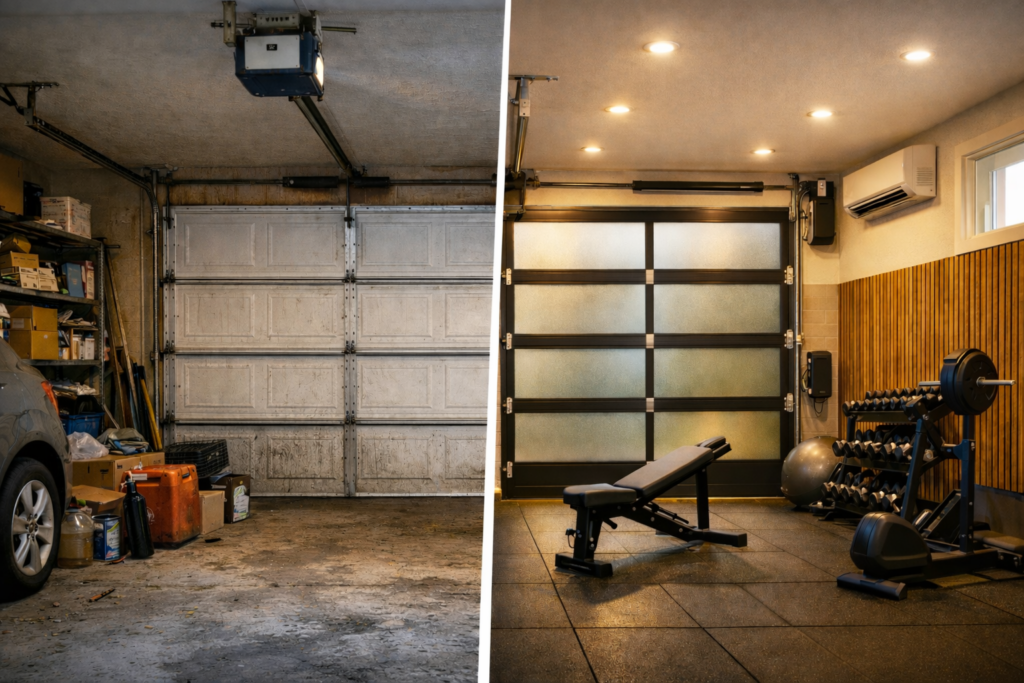
Not long ago, the two-car garage was little more than a holding zone for cars, clutter exiled from the home, and maybe a dusty set of weights pushed against the wall. But in 2026, homeowners are looking at that square footage differently.
The garage has become a blank canvas for wellness, productivity, and personal lifestyle upgrades. Done right, it becomes something more than a converted space. It becomes a destination for personal fulfillment.
At the center of this transformation is the garage door. It’s the largest opening in the room, the biggest influence on comfort, and the architectural feature that determines whether your home gym feels like a basement afterthought or a light-filled performance studio.
When the door works as a true portal, the garage stops being utilitarian and starts supporting your best habits.
The Before: Why a Standard 2-Car Garage Falls Short
Most garages begin with the same set of problems, especially when fitness is the goal.
Temperature is often the biggest issue. Uninsulated walls, exposed ceilings, and thin steel garage doors turn the space into a freezer in winter and a heat trap in summer. Humidity lingers, air circulation is poor, and any serious workout can feel like it’s taking place in prison instead of the home.
Acoustics are another challenge. Concrete floors and bare drywall amplify sound, making early-morning workouts echo through the house or out into the neighborhood. Visually, the space rarely connects to the rest of the home, making it hard to feel motivated or physically attuned to the environment.
The garage door itself can also be a barrier to spatial transformation. Traditional doors are designed for vehicles, not for people. They leak air, rattle during movement, and block natural light. Left unchanged, they undermine every other improvement you make.
 A1 Pro Insight on Common Garage Gym Mistakes:
The most common issues we see come from skipping insulation upgrades, underestimating electrical needs, or keeping a low-performance garage door. These shortcuts often lead to uncomfortable temperatures, excessive noise, and costly retrofits later.
The Transformation: What It Takes to Build a Real Workout Room
Turning a garage into a climate-controlled gym isn’t about one upgrade. It’s about layering smart systems that work together.
Climate Control Starts with Insulation
The foundation of comfort is proper insulation. Walls and ceilings are typically upgraded with either closed-cell spray foam or high-density rigid foam boards. These materials seal air leaks, regulate temperature, and control moisture, which is critical in a space where sweat and heat are part of daily use.
To manage heating and cooling efficiently, many homeowners install a ductless mini-split HVAC system. These units are quiet, energy-efficient, and allow precise temperature control without tying into the home’s main system.
A1 Pro Insight on Insulation and Climate-Control Price:
Results will vary depending on choices, but expect insulation and climate upgrades to fall in the $4,000–$9,000 range, depending on square footage and climate.
Flooring Built for Performance
Concrete may be durable, but it’s unforgiving. A proper gym floor introduces shock absorption, thermal insulation, and sound control. Rubber tiles remain a favorite for strength training zones, while cushioned luxury vinyl planks offer a softer, more design-forward look for multipurpose fitness rooms.
A1 Pro Insight on Flooring Price:
A high-quality flooring system typically ranges from $2,500–$6,000, depending on material choice and installation complexity.
Electrical, Lighting, and Power Planning
Technology powers modern workouts. Treadmills, bikes, mirrors, and screens all require dedicated electrical circuits. Lighting is equally important. Layered LED systems featuring bright overhead lighting combined with wall washes and dimmable accent fixtures allow the room to seamlessly shift from high-energy training to recovery mode.
A1 Pro Insight on Electrical and Lighting Prices:
Electrical and lighting upgrades usually land between $2,000–$5,000, but they dramatically elevate the experience.
Sound Control and Privacy
Sound-dampening drywall, acoustic wall panels, and insulated interior doors help keep workouts sonically contained. The result is a room that feels immersive rather than disruptive, and one that can be used any time of day without compromise or fear of affecting family and/or neighbors.
A1 Pro Insight on Durability & Maintenance:
Home gyms introduce higher humidity and more frequent door use than traditional garages. Choosing corrosion-resistant hardware, sealed door edges, and commercial-grade tracks helps ensure smooth operation and reduces maintenance over time
Choosing the Right Garage Door for a Home Gym
No single element impacts the finished space more than the garage door.
For fitness-focused conversions, highly insulated steel or aluminum doors with strong R-values are essential. They stabilize indoor temperatures and reduce outside noise. Many homeowners opt for frosted or smoked glass panel doors, which allow natural daylight to flood the room without sacrificing privacy or creating glare on screens and mirrors.
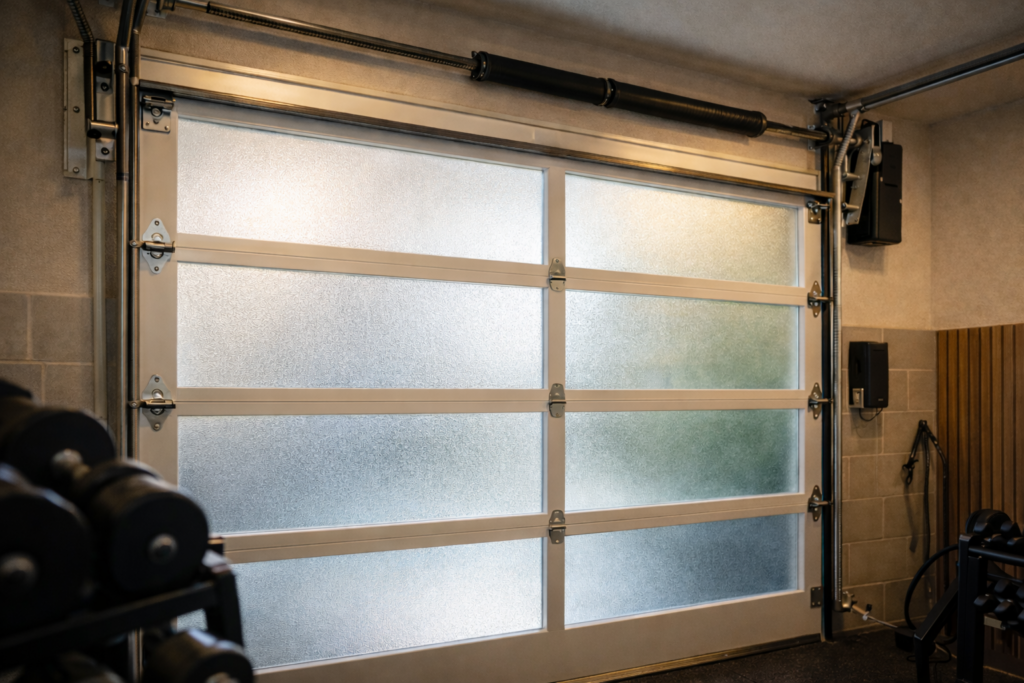
Design matters, too. Flush panels or modern horizontal plank styles visually align the gym with the rest of the home, inside and out. When closed, the door seals the environment. When open, it connects the workout room to fresh air and the outdoors—an instant mood boost.
The right garage door doesn’t just close a space; it completes it.
A1 Pro Insight: Standard Garage Door vs. Performance Door for Home Gyms:
A builder-grade, non-insulated door may cost less upfront, but it can undermine temperature control, sound containment, and energy efficiency. Performance-rated insulated doors with glass panels cost more initially, but they dramatically improve comfort, lighting, and long-term usability.
Smart Technology and the Ideal Opener for a Fitness Space
A modern home gym should respond as intuitively as your favorite app.
Smart thermostats allow you to pre-set “Workout,” “Cooldown,” or “Recovery” modes. Lighting systems can shift brightness and color temperature based on activity. Voice assistants or wall-mounted controls let you adjust everything hands-free mid-session.
The garage door opener plays a surprisingly important role here. Side-mounted (wall-mounted) openers are the top choice for converted gyms. By removing bulky overhead hardware, they free up ceiling space for lighting, fans, or suspension training systems. They’re also quieter with no vibrations overhead during yoga, stretching, or recovery sessions.
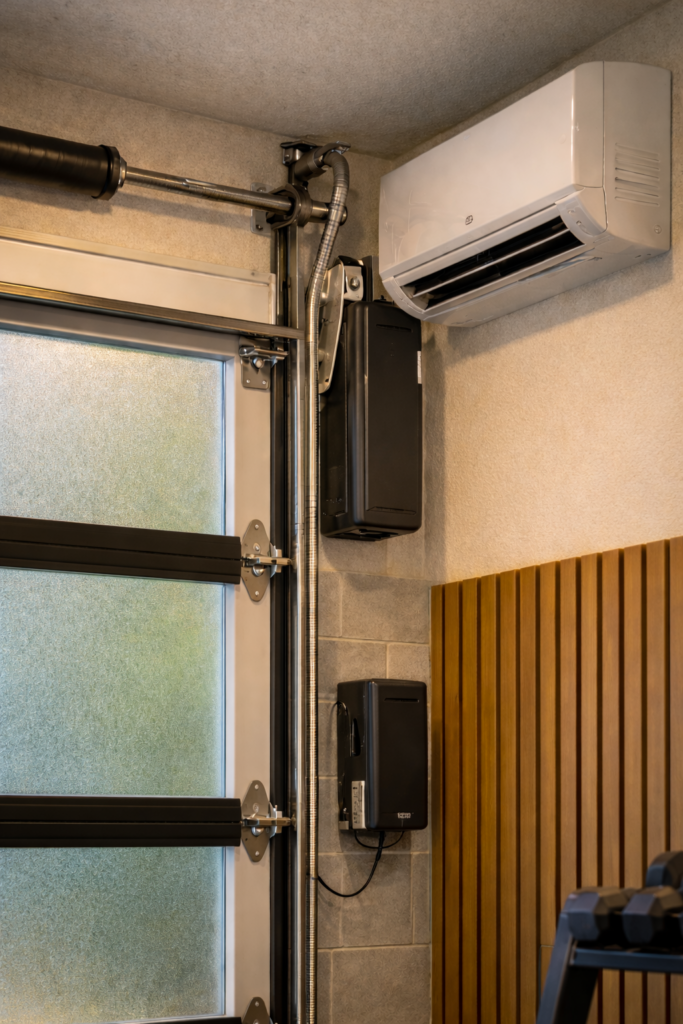
Pairing the opener with a DC motor belt or direct-drive system ensures smooth, nearly silent operation. Smart connectivity allows homeowners to monitor, schedule, and control door movement remotely, making the space feel fully integrated into the home’s ecosystem.
A1 Pro Insight on Best Garage Door Opener for Converted Home Gyms:
For fitness-focused garages, wall-mounted openers are the best choice. They eliminate overhead noise, preserve ceiling height for equipment, and integrate seamlessly with smart home systems—making them ideal for daily, people-focused use rather than vehicle storage.
The After: A Garage That Supports Your Lifestyle
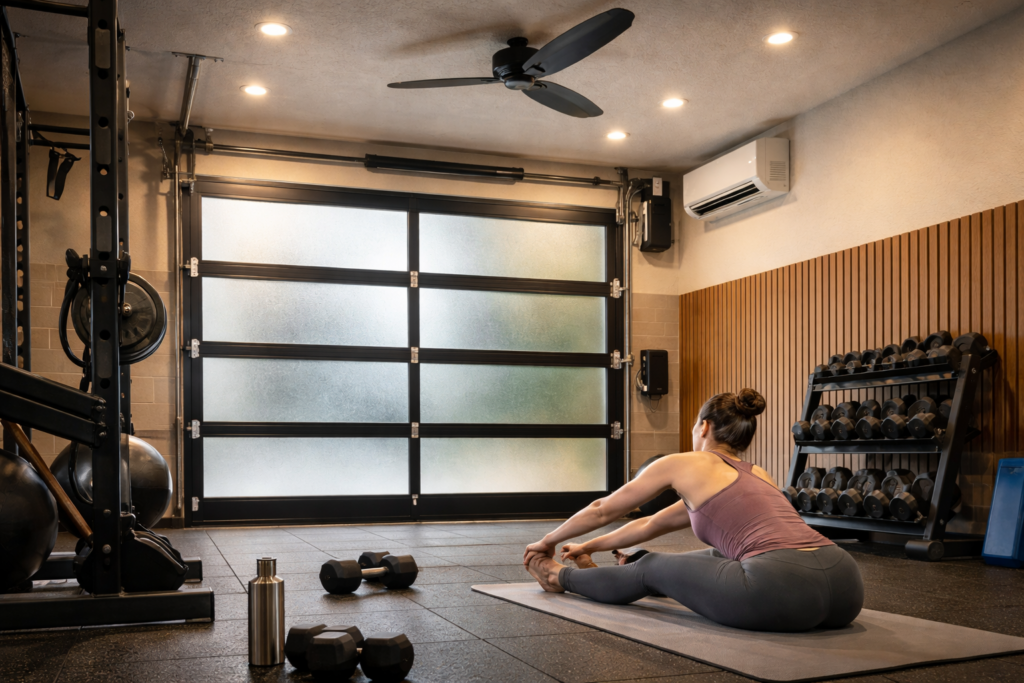
Once complete, the transformation is dramatic. The space is comfortable year-round, visually refined, and acoustically controlled. It no longer feels like a repurposed garage. It feels intentional.
The garage door becomes a daily ritual. Open it for morning light and airflow. Close it for insulated focus and climate control. The room adapts to your energy, your schedule, and your goals.
Beyond daily use, there’s long-term value. Wellness-focused spaces are increasingly attractive to buyers, and a thoughtfully converted garage adds both function and design credibility to the home.
Conclusion: The Garage Door as the Gateway to Better Living
A climate-controlled workout room isn’t just about fitness—it’s about consistency, comfort, and motivation. When insulation, materials, smart technology, and the right garage door work together, the garage becomes more than extra square footage. It becomes a gateway to better habits and better living.
In the end, the most successful conversions don’t hide their origins. They elevate them. And it all begins at the door.
Your Next Step: Design the Right Door for Your Lifestyle
A garage gym only works when the fundamentals are right—and no element matters more than the garage door itself. Insulation, sound control, light, safety, and smooth daily operation all start at the opening you use most.
At A1 Garage Door Service, we help homeowners rethink their garage doors not just as equipment, but as lifestyle features. Our team can evaluate your existing door, recommend performance-driven upgrades, and design solutions that support climate control, smart technology, and modern aesthetics—whether you’re planning a full conversion or refining a space you already use.
If you’re considering turning your garage into a true extension of your home, start with a professional consultation. The right door doesn’t just finish the room—it makes everything else work better.
Explore your options with A1 Garage Door Service and see how the right garage door can unlock your next level of living.