



Blog | GARAGE DOORS
How Much Does Garage Door Opener Installation Cost? (2026)
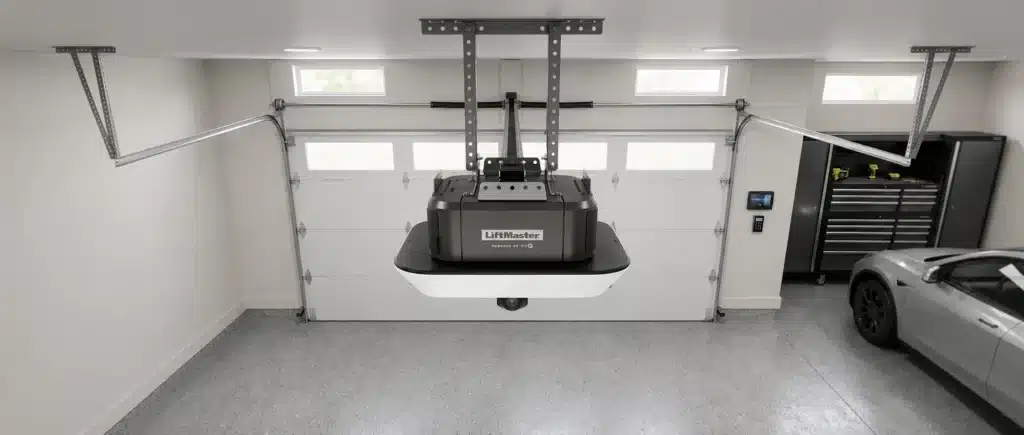
Shopping for a new garage door opener with no idea what you’re looking at? Our data analysts pulled our job data to share our dealer-installed prices for garage door installation jobs with you. Keep in mind that many homeowners choose add-ons like roller replacements and/or torsion spring replacements, prices may vary. What we found was that half of all garage door opener installations range between $523 and $1,369. Most customers are choosing models that run around $996, and market level medians currently range cluster near $612 and $1,683. Final pricing will depend on the door size and installation requirements — including the opener, installation, additional remotes, wireless keypads, wall controls, cameras, and programming.
If you call and get a surprisingly low quote, ensure the quote includes the features and add-ons you may install. Don’t fall victim to quote bloat, use this guide to get the most accurate info on the garage door openers you’re shopping for.
Why do opener installation quotes vary so much?
Five things move the price: the unit tier, the drive type, trolley versus wall-mount design, whether the old unit needs to come down, and smart features. The unit you pick is usually the single biggest variable, which is good news, because it’s the variable you control.
Here is what the invoice data shows:
| What A1’s invoices show (2021–2025) | Amount | |
|---|---|---|
| Median installed opener, parts and labor | $996 | |
| Typical range (middle 50% of jobs) | $523–$1,369 | |
| Range of market averages (all markets) | $612–$1,683 | |
| Remote, keypad, or accessory work only | $150 median ($112–$170 typical) |
These are historical typical costs from completed jobs, not quotes. Your number depends on your door, your unit, and your market.
The other drivers stack on top of the unit price. Wall-mount designs cost more to buy and more to fit than rail units. Taking down and hauling away an old opener adds labor that some quotes include and some bill separately. Smart features add money twice, once in the unit tier and once in setup time. None of these is a red flag on its own; the red flag is a quote that won’t say which ones it covers.
Geography matters more than most buyers expect. Labor rates, housing stock, and even typical ceiling heights differ from metro to metro, which is how the same company’s median can sit near $534 in one market and $1,683 in another. A fair local quote is one that makes sense against local numbers, and for context, the median A1 job of any type ran $640 across all of our jobs from 2021 to 2026.
How does drive type change the cost?
Chain drives sit at the bottom of the unit price ladder, belt drives and screw drives in the middle, and wall-mount units at the top. Installed totals generally follow the same order, since a pricier unit raises the whole ticket.
A quick mechanical picture helps. Chain, belt, and screw openers all drag the door along an overhead rail, like pulling a wagon by its handle. A wall-mount opener (also called a jackshaft) skips the rail entirely and turns the spring shaft beside the door directly, the way a hand crank turns a pasta roller.
| Drive type | How it moves the door | Noise level | Best fit |
|---|---|---|---|
| Chain | Metal chain pulls a trolley on a rail | Loudest | Detached garages, budget builds |
| Belt | Reinforced belt pulls the trolley | Quietest of the rail types | Bedrooms above or beside the garage |
| Screw | Threaded rod rotates to move the trolley | Moderate | Wide temperature swings, fewer models sold today |
| Wall-mount | Motor turns the torsion bar directly | Very quiet, frees ceiling space | High or cluttered ceilings, premium builds |
You’ll notice this table has no dollar column for the units. That’s deliberate. Manufacturer list prices from LiftMaster, Chamberlain, and Genie change often and vary by retailer, so any number printed here would be stale within a season. Check current list prices before you compare quotes, and use our buying guide to opener types to narrow the field first. Smart features (Wi-Fi control, camera, battery backup) add real money at every tier, so decide which ones you’ll actually use.
Should you repair your old opener or replace it?
Repair usually wins when the fix is small and the opener is under ten years old. Replacement usually wins when the motor or logic board fails out of warranty, or when the unit predates modern safety standards.
The cheap fixes are genuinely cheap. Across 2026 invoices, remote, keypad, and accessory work ran a median of $140, with the typical job between $92 and $160. If your door runs fine from the wall button but ignores the remote, you are likely in that category, not shopping for an opener.
The safety line is firmer. Federal rules have required photo-eye auto-reverse sensors on openers since 1993, per the U.S. Consumer Product Safety Commission. If your opener is old enough to lack them, replace it regardless of whether it still runs.
In between, our technicians consistently see 15-year-old openers come in for one repair, then another within a couple of years, as gears, capacitors, and circuit boards age together. When repair visits start stacking up on a unit that old, the math tilts toward a new opener with a fresh warranty. If that’s where you land, start with our tested picks in the best garage door openers of 2026.
What does professional installation actually include?
A full-service installation covers much more than hanging a motor, and scope is where cheap quotes hide their gaps. Industry practice splits roughly into two tiers, and knowing which one you’re being quoted explains a lot of price differences.
A full-service install typically includes removing and hauling away the old unit, assembling and mounting the new rail and motor, wiring the wall console, aligning and testing the safety sensors, setting force and travel limits, programming remotes and keypads, connecting the smart app, and running a complete reversal test before the truck leaves. A bare-bones “mount and plug” install may skip removal, sensor rework, and calibration, leaving those to you.
One step matters more than the rest: a competent installer tests the door’s balance before mounting anything. An opener is a convenience motor, sized to guide a door the springs are already lifting. Bolting a new opener onto an unbalanced door burns out the new motor early and hides a spring problem that will resurface. If an installer skips the balance check, that discount is costing you money.
How do you read an opener installation quote?
Read a quote for what’s in it, not just the number at the bottom. Before anyone schedules work, you should be able to answer six questions from the paperwork alone:
- Is the price a written, lump-sum figure for the whole job?
- Which exact unit and model number is being installed?
- Is removal and haul-away of the old opener included?
- Are sensors, rails, brackets, and a wall console included, or billed as extras?
- What is the warranty on the unit, and separately, on the labor?
- Was the door’s balance checked and noted?
When you compare two quotes, compare them on the same unit and the same scope before you compare them on price. A mount-and-plug quote and a full-service quote on the same model describe two different jobs, whatever the gap between their bottom lines. Ask the cheaper bidder what it would cost to match the fuller scope, and the real difference usually shrinks.
When should you call us?
A handy homeowner with a standard swap, a healthy door, and a free afternoon can install a rail-type opener from the box instructions. If that’s not you, call us if:
- You would rather have someone else do it.
- The door is heavy, drifts, or won’t stay put when you lift it halfway and let go with the opener disconnected. That is a balance or spring problem, and springs under tension are not a DIY repair.
- You’re converting from a rail opener to a wall-mount unit, which involves the torsion assembly.
- There’s no grounded outlet or safe wiring path at the mounting point.
- The old unit predates photo-eye sensors, since the sensor wiring run is where most DIY installs go sideways.
Set expectations realistically either way: a straightforward professional install is typically done in a single trip, and the reversal test at the end is the part you should insist on watching.
Frequently asked questions
How much does garage door opener installation cost?
Across 2026 invoices, the median professionally installed opener cost $996, and the middle half of jobs ran $523 to $1,369. Those are historical typicals, not quotes. Unit tier, drive type, old-unit removal, smart features, and your market explain most of the difference.
Garage door opener repair vs replacement — which is better?
Repair is better for small failures on units under about ten years old, especially remotes, keypads, and sensors. Replacement is better when the motor or logic board fails out of warranty, when repairs start repeating, or when the opener predates 1993 safety-sensor requirements. A new unit resets both reliability and warranty.
Is there garage door opener replacement service near me?
A1 Garage Door Service operates in 37 markets across the country, and the invoice data in this guide comes from those markets. If you’re outside our area, the quote checklist above works with any reputable local installer.
What if I just need a new remote or keypad?
That’s an accessory job, not an opener replacement, and it’s priced accordingly. 2026 invoices show that remote, keypad, and accessory work ran a median of $150, with most jobs between $112 and $170. Try fresh batteries and re-pairing first; the fix is sometimes free.
How do I choose a garage door opener for my home?
Match the drive type to your garage layout and noise tolerance, then pick horsepower for your door’s size and weight, then add only the smart features you’ll use. Our opener types buying guide walks through the full decision, and the 2026 opener rankings compare specific models.
Your next step costs nothing: pull your opener’s model number and manufacture date off the motor housing, and run the half-open balance test with the trolley disconnected. Those two facts turn any conversation with any installer from guesswork into specifics. And if you’d rather have exact numbers for your door and your market, we’ll put a written, lump-sum quote in front of you before any work begins — schedule an opener installation visit here.