



Blog | GARAGE DOORS
How to Make Your Garage Door Last 20+ Years: A1 Pro Tips for Homeowners
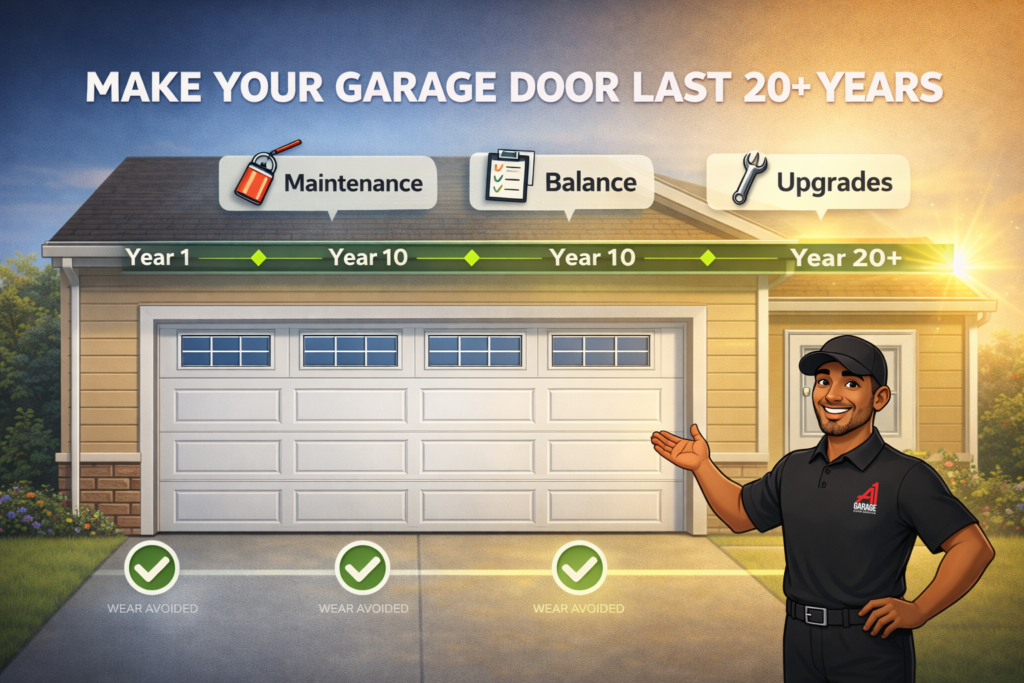
You just bought your forever home.
But will your garage door last as long as you plan to live there?
Most homeowners don’t think about their garage door’s reliability until the door breaks. The truth is, many garage doors fail early because of simple habits, climate stress, and skipped maintenance that homeowners never knew mattered.
In this guide, we break down exactly what determines how long a garage door lasts, using real insights from A1 professionals who see these systems fail every day. By the end, you’ll know what shortens a garage door’s lifespan, what extends it, and how to protect your investment for the next 20 years or more.
What Is the Typical Lifespan of a Garage Door?
This is an important question for homeowners. The A1 honest answer? It depends.
Metal is metal, after all. Properly cared for, steel doors can last decades. But a garage door system is about more than just the door.
Springs, rollers, hinges, tracks, and the opener all wear over time. Most homeowners who say they have a “30-year-old door” have already replaced several components along the way.
It helps to think of your garage door as if it were a car. While you can keep the same body for decades, tires, sparkplugs, breaks, transmissions, and even engines get replaced to extend the car’s life.
Garage doors are similar. The door itself may be a part of your home for decades, but parts must be maintained and replaced over time to ensure the door’s long-term health.
Why Maintenance Matters More Than the Door Itself
In how climates such as Arizona, Texas, and Florida, annual maintenance on your garage door may be enough to keep it running strong for years. In cold places like Detroit, twice a year is better to improve the door’s lifespan.
Extreme temperature swings cause metal to expand and contract. Lubrication and inspection help parts move freely despite those changes.
Without maintenance:
- Springs wear faster
- Rollers bind
- Hinges seize
- Openers work harder than they should
All of these issues will eventually shorten the life of the entire garage door system.
Steel vs. Wood Garage Doors: Longevity Differences
At A1, customers often ask us if wood doors are more durable than metal doors. Just like any question we get from our customers, we don’t sugarcoat the answer.
Wood doors are heavier than steel doors. Wood doors absorb moisture. They also lose moisture. That weight change affects balance.
In fact, we’ve seen wood doors gain or lose 20 to 60 pounds depending on the season. That creates strain on springs, openers, and hardware.
In comparison, steel doors:
- Are lighter
- Hold balance better
- Require less frequent upkeep
Wood doors can last for a long time, but only with consistent sealing and regular maintenance.
The Habits that Shorten Garage Door Life the Fastest
The reason most homeowners experience durability problems with their garage door often falls into one category: Lack of maintenance.
Common mistakes include:
- Never lubricating hinges and rollers
- Ignoring balance checks
- Letting the opener compensate for a heavy door
- Waiting until something breaks
These habits don’t cause instant failure. They cause slow damage that eventually lead to sudden breakdowns that are costly to fix.
The Garage Door Balance Test Every Homeowner Should Know
Here is a simple test homeowners can safely perform to check if their garage door is balanced.
- Close the door
- Pull the emergency release
- Lift the door by hand
The door should feel light and balance itself as it moves through the curved track.
If it feels heavy, the springs are wearing out. Most homeowners never notice that their door is out of balance because the opener hides the problem until either the springs break or the opener fails.
A Safe DIY Tip That Helps Hinges
At A1, we are adamant about parts on a garage door homeowners should NEVER touch or attempt to work on because they are extremely dangerous, even for untrained professionals.
Homeowners should never, ever touch:
- Springs
- Bottom brackets
- Torsion systems
These parts are under tremendous tension and can cause serious injury if they snap and strike someone. Here is one A-1 approved task DIY task we strongly recommend for customers who want to take on a safely DIY maintenance task.
Freeing Up Hinges
When it comes to maintaining garage door hinges, many homeowners simply spray lubricant on them and walk away. That helps eventually.
 A1 Pro Tip:
Take a few extra minutes and try this A1-approved maintenance tip.
- Lubricate the hinge.
- Gently work it back and forth with pliers or a vice grip.
- Free the movement manually.
This simple and safe process reduces strain on the rest of the system and extends component life.
How Climate Affects Garage Door Lifespan
AI technicians operate nationwide. Not only do we get to see the country, we also see the toll different climates take on homeowners’ garage doors.
Here is an A1-approved quick list of how various climates can reek havoc on garage doors.
- Extreme heat dries out plastic parts faster.
- Cold climates cause expansion and contraction.
- Coastal areas see faster corrosion from salt.
- Snowy regions rust bottom panels from road salt.
A1 Pro Insight
In extremely hot climate states such as Arizona, our A1 technicians have noticed a surprising way the scorching temperatures affect garage doors.
In Phoenix for example, black-colored bottom seals absorb heat and shrink, allowing pests and moisture to enter garages. A1 switched to gray seals, because they survive better in intense sun.
Upgrades That Improve Garage Door Longevity
A great question A1 techs get asked is, what type of garage door would you install on your mother’s house? Great, heartfelt question. Here is our A1 answer.
For our own mothers, we would install:
- Sealed, high-cycle rollers
- Lifetime-rated springs
- A modern opener with current safety features
- A solid steel opener rail
- A properly fitted bottom seal
These upgrades reduce friction, strain, and failure points. They don’t, however, eliminate maintenance. They reduce long-term repair costs.
Why DIY Opener Installs Can Shorten Door Life
You can buy a garage door opener at a big-box retail store. Be aware, however, because those kits often include hollow, sectional rails and lower-grade components
If the door is even slightly heavy, those rails will likely bend or break. Professional installs usually include solid steel rails built to handle real-world conditions. This is a job that a certified, professional should handle.
A1’s Final Advice to Homeowners
Garage doors fail at the worst times. They never seem to falter when it’s convenient.
Our top advice:
- Free up hinges properly
- Test door balance regularly
- Respect your DIY limits
Garage doors are heavy, powerful systems. Knowing when to stop DIY maintenance and call a professional can mean the difference between a quality repair that keeps your door running for years or a trip to the emergency room.
In One Minute: Key Takeaways
- Maintenance matters more than door age
- Balance is critical to system health
- Climate accelerates wear
- Smart upgrades extend lifespan
- DIY has limits
If you want your garage door to last as long as your home, start with a professional inspection.
A1 Garage Door Service can help you build a maintenance and upgrade plan that fits your climate, usage, and long-term goals.
FAQs About Garage Door Lifespan
Can a garage door last 20–30 years?
Yes, with proper maintenance and component upgrades.
Does climate affect lifespan?
Absolutely. Heat, cold, salt, and moisture all play a role.
Are wood doors bad?
No, but they require more diligence and maintenance than steel doors.
Is annual maintenance enough?
It depends on climate and usage.