



Blog | GARAGE DOORS
Moisture, Condensation & Air Quality in Garage Conversions

For many homeowners, the dream garage conversion starts with visible upgrades: polished floors, modern lighting, a home gym setup, a creative studio, or a comfortable lounge space that finally gives the home more room to breathe.
But the garage has one major challenge that kitchens, bedrooms, and living rooms were designed to avoid from the beginning: environmental instability.
Garages experience bigger temperature swings, more outside air infiltration, higher humidity exposure, and more direct contact with concrete than almost any other space in the home. That means even beautiful garage conversions can quietly develop problems beneath the surface — musty odors, condensation, warped flooring, rusting equipment, and unhealthy air quality — if moisture control was never properly addressed.
The good news is that these issues are preventable when the garage is treated as a performance-driven environment instead of simply a finished room.
And at the center of that performance is one feature many homeowners underestimate: the garage door.
More than any other opening in the space, the garage door influences humidity intrusion, insulation stability, airflow, condensation risk, and overall comfort. When properly sealed and insulated, it becomes the environmental “portal” that allows the garage to function more like a true extension of the home.
Why Garage Conversions Face Unique Moisture Challenges
Most garages were originally built as semi-exterior utility spaces rather than conditioned living environments. Even attached garages often lack the environmental controls found elsewhere in the home.
That creates several hidden vulnerabilities the moment homeowners begin adding lifestyle-focused upgrades.
Concrete slabs continuously absorb and release moisture over time. Garage doors commonly leak outdoor air around their perimeter. Temperature fluctuations create condensation on metal surfaces, flooring systems, and even walls. In humid climates, warm air entering a cooler garage can quickly create damp conditions without a single visible leak.
For garages being transformed into home gyms, offices, wellness spaces, or creative studios, those issues become even more noticeable because people are now spending extended time inside the space.
A home gym, for example, generates additional humidity through breathing and perspiration. A garage office requires stable temperatures and clean air for daily comfort. Entertainment spaces and lounges depend on controlling odors, dampness, and stale airflow to remain inviting year-round.
 A1 Pro Insight
Many homeowners assume visible water leaks are the primary moisture threat in garage conversions. In reality, slow-moving humidity and uncontrolled air infiltration are often the bigger long-term problems.
The Concrete Slab Beneath the Garage Matters More Than Most Finishes
One of the most overlooked parts of a garage conversion is also the largest surface in the room: the slab itself.
Concrete is porous, which means moisture vapor can continue moving through it for years. That movement may be invisible, but once flooring systems, mats, cabinets, or insulation are added above the slab, trapped moisture can begin creating problems underneath finished surfaces.
This is why professional slab moisture testing is such an important first step before installing:
- Luxury vinyl plank flooring
- Epoxy coatings
- Rubber gym flooring
- Engineered wood products
- Adhesive-based flooring systems
Without proper testing, homeowners may unknowingly seal moisture beneath the surface where it can weaken adhesives, encourage mildew growth, and shorten the lifespan of the entire conversion.
Signs of hidden slab moisture often include:
- Bubbling or lifting the flooring
- Damp smells after rain
- Condensation beneath mats
- Persistent humidity despite air conditioning
- White mineral deposits on concrete
Different flooring materials also tolerate moisture differently. Sealed concrete and tile generally handle moisture more effectively than adhesive-heavy flooring systems, while rubber fitness flooring can sometimes trap moisture against the slab if airflow and vapor management are ignored.
A1 Pro Insight
Installing finished flooring over an untested garage slab can lead to mold growth, flooring failure, and expensive remediation work just a few years later.
Why Vapor Barriers and Insulation Can Either Help or Hurt
Many garage conversions run into trouble because insulation is added without fully understanding how moisture moves through the space.
Air naturally carries moisture. When warm, humid air contacts cooler surfaces, condensation forms. If vapor barriers, insulation, and airflow systems are installed incorrectly, moisture can become trapped inside walls, ceilings, and flooring assemblies where damage develops slowly and invisibly.
This is one reason partially upgraded garages sometimes perform worse than untouched garages.
For example:
- Insulating walls while leaving the garage door unsealed can increase condensation
- Tightening the space without humidity control can trap stale moisture indoors
- Installing impermeable flooring over damp slabs can force vapor into surrounding materials
- Oversized air conditioning systems may cool the space quickly without properly removing humidity
The goal is not simply to “seal everything.” The goal is to create balanced environmental control.
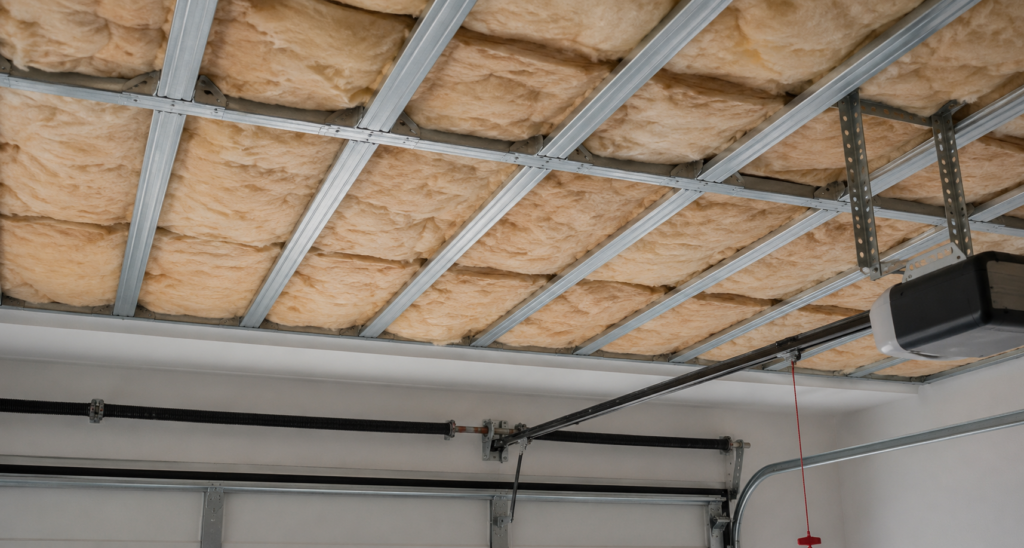
Closed-cell insulation systems generally provide stronger moisture resistance than traditional fiberglass in garages exposed to humidity swings, but the right solution depends heavily on climate conditions, garage usage, and ventilation strategy.
Ceiling insulation also becomes critical in garage conversions beneath hot attics, where heat transfer can intensify humidity and condensation cycles throughout the day.
A1 Pro Insight
Condensation problems often appear after a garage becomes more insulated because temperature differences between surfaces become greater while moisture intrusion remains unresolved.
The Garage Door Is One of the Most Important Moisture-Control Systems in the Entire Space
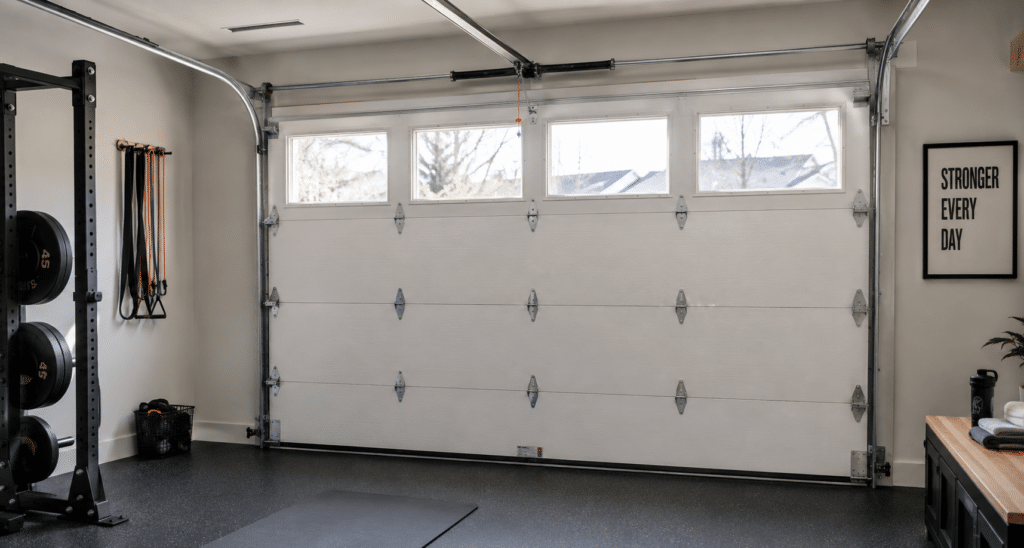
In most garage conversions, the garage door is the single largest opening connected to the outdoors. That means its performance dramatically affects the comfort, air quality, and durability of the entire room.
Yet many homeowners invest heavily in flooring, furniture, lighting, and climate systems while keeping an aging builder-grade garage door with worn seals and poor insulation.
That mismatch can undermine the entire project.
Poorly sealed garage doors allow humid outdoor air to continuously infiltrate the space around the perimeter and beneath the door itself. Over time, even small gaps can destabilize indoor humidity levels, increase condensation risk, and force HVAC systems to work harder.
Modern garage door systems improve environmental performance through:
- Insulated door panels
- Full perimeter weather sealing
- Bottom weatherstripping systems
- Threshold sealing
- Improved thermal breaks
- Better panel construction and fitment
These upgrades do more than improve energy efficiency. They help stabilize the garage environment itself.
For homeowners using the space as a gym or wellness studio, this can mean less moisture buildup and more comfortable workouts. For offices and entertainment spaces, it often translates into better sound control, fewer drafts, cleaner air, and more consistent temperatures throughout the day.
Garage door windows also play a role. Poorly insulated glass can create condensation points during major temperature swings, while modern insulated glazing systems help reduce surface moisture and improve comfort near the door.
A1 Pro Insight
Bottom weatherstripping is frequently the first garage-door sealing component to fail because it experiences constant friction, water exposure, slab movement, and temperature cycling.
A1 Pro Insight
Even small perimeter gaps around a garage door can continuously pull humid outdoor air into a conditioned garage conversion, especially during summer months in humid climates.
Dehumidifiers and Air Quality Systems Are Often the Difference Between “Finished” and Truly Comfortable
Temperature control alone does not solve humidity problems.
A garage can feel cool while still holding enough moisture to create condensation, odors, or uncomfortable air quality. That is why dedicated humidity management is often necessary in lifestyle-focused garage conversions.
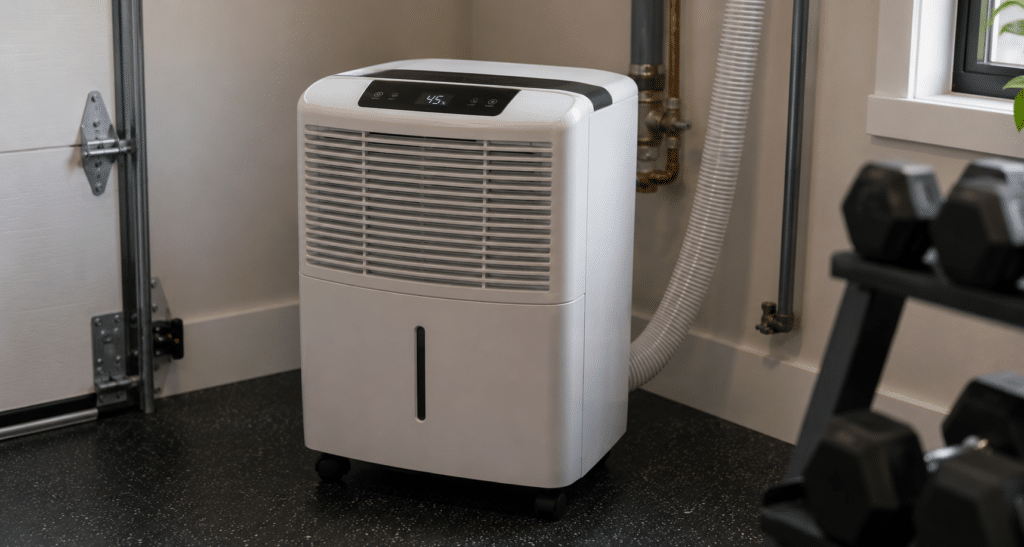
Portable dehumidifiers may work for smaller or lightly used spaces, but larger garage conversions often benefit from integrated systems designed to maintain stable humidity levels consistently.
Mini-split systems are especially popular because they provide both heating and cooling while offering improved humidity control compared to some traditional HVAC approaches.
Ventilation also matters.
As garages become more insulated and airtight, stale indoor air can become trapped without proper airflow management. Systems like energy recovery ventilators (ERVs), filtered fresh-air systems, and smart humidity monitoring can help maintain healthier indoor conditions over time.
Different lifestyle uses also create different environmental demands.
A home gym may require stronger moisture removal and airflow because of perspiration and elevated activity levels. A garage office or studio benefits from quieter humidity management and improved filtration for comfort during long work sessions. Entertainment spaces often need flexible airflow and comfort balancing for larger groups of people.
A1 Pro Insight
A garage conversion that feels “cold and damp” usually has a humidity problem, not simply a temperature problem.
Small Moisture Trials Become Expensive Durability Problems
Moisture damage rarely begins dramatically.
More often, it develops quietly over time:
- Flooring adhesives weaken
- Metal components corrode
- Insulation loses effectiveness
- Mold develops behind walls
- Seal systems deteriorate
- Furniture and electronics absorb moisture
Even garage fitness equipment can begin rusting prematurely when humidity remains uncontrolled for long periods.
Garage doors themselves are also affected. Persistent moisture exposure can shorten the lifespan of weather seals, metal hardware, rollers, and insulation systems if environmental conditions remain unstable.
The financial impact of ignoring moisture management often far exceeds the cost of preventing problems in the first place.
Depending on the garage and climate, homeowners may invest in:
- Slab moisture testing
- Vapor mitigation systems
- Insulated garage door upgrades
- Seal replacements
- Threshold systems
- Dedicated dehumidifiers
- Ventilation improvements
While these systems add upfront cost, they help protect every other investment made inside the garage conversion.
A1 Pro Insight
Many garage conversion moisture failures remain hidden behind finished flooring and walls until odors, staining, or visible deterioration finally appear. \
The Best Garage Conversions Feel Stable, Healthy, and Comfortable Every Day
The most successful garage conversions are not simply attractive spaces. They are spaces that perform reliably in everyday life.
They stay comfortable during humid afternoons. They resist damp odors after storms. They protect flooring, equipment, furniture, and electronics from hidden moisture damage. They feel healthy to spend time in — whether the space is used for workouts, focused work, creative projects, or gathering with friends and family.
And in nearly every case, that performance begins with controlling how outside air, humidity, and temperature enter the garage in the first place.
That is why the garage door matters so much.
When properly insulated and sealed, the garage door becomes more than an exterior feature. It becomes the environmental foundation that allows the entire conversion to function as a true extension of the home.
Build a Garage Conversion That Performs as Well as It Looks
A1 Garage Door Service helps homeowners evaluate the environmental performance of their garage through:
- Garage door insulation assessments
- Perimeter sealing evaluations
- Bottom weatherstripping inspections
- Air leakage identification
- Upgrade recommendations for comfort-focused garage conversions
Before investing in finishes, flooring, furniture, or climate systems, it is worth evaluating the feature that controls how the entire garage interacts with the outdoors every single day.
Because the difference between a garage that merely looks finished and one that genuinely feels livable often comes down to moisture control, air quality, and the performance of the garage door itself.