



Blog | GARAGE DOORS
Vinyl vs Aluminum vs Steel vs Wood Garage Doors: Which Is Best for Your Home and Climate?
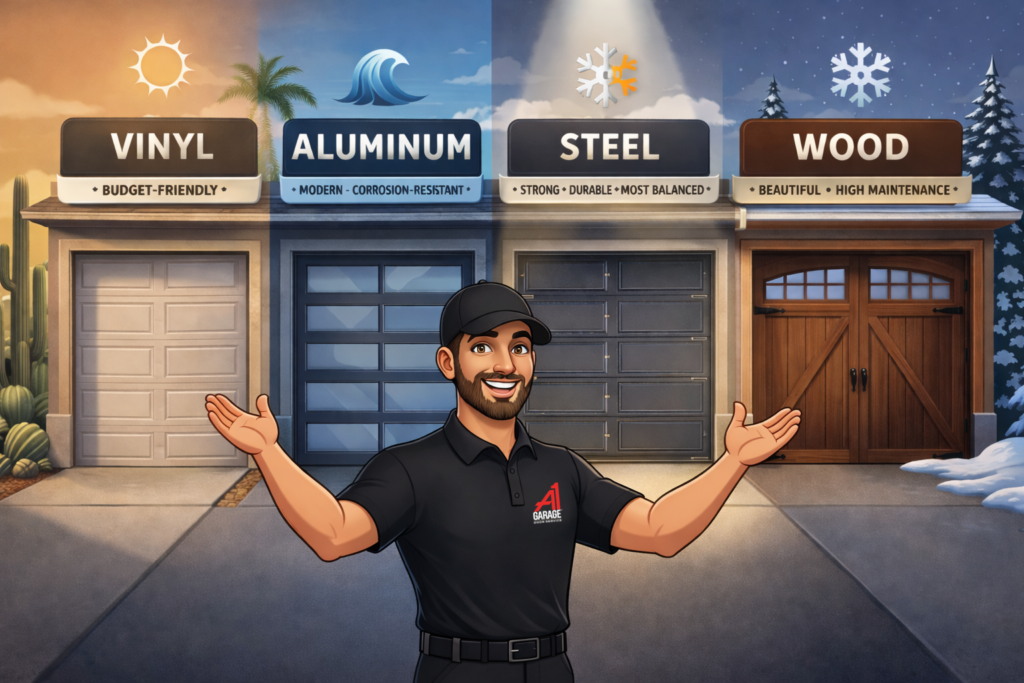
Should you choose vinyl, aluminum, steel, or wood for your garage door?
Which material works best for your home and your climate over time?
At A1 Garage Door Service, this is one of the most common questions we hear from homeowners. Everyone wants the “best” garage door material, but the truth is, the right choice depends on where you live, how you use your garage, and what you want to spend.
In this guide, A1 experts compare vinyl, aluminum, steel, and wood garage doors side by side. We break down how each material performs in different climates, what it really costs to own, and who each option makes sense for. By the end, you will know which garage door material is the best fit for your home, your climate, and your lifestyle.
The Short Answer Most Homeowners Want
If we had a dime every time a customer asked us which is the definitive best garage door material, we might not be rich. But we sure could buy a lot of candy.
The truth is, there is no single “best” garage door material. The right choice depends on climate, budget, maintenance tolerance, and how you use your garage.
Vinyl Garage Doors: Budget-Friendly but Limited
Why Homeowners Choose Vinyl
Vinyl-backed garage doors are often chosen because they offer an affordable way to replace an old door while adding some insulation. For homeowners on a tight budget, vinyl provides a step up from a bare steel pan door without the cost of a fully insulated system.
The insulation inside a vinyl-backed door is typically Styrofoam. While it does not deliver high thermal performance, it does help reduce direct heat and cold transfer compared with a non-insulated door. This makes vinyl a practical middle-ground option for homeowners who want modest temperature improvement without a major price increase.
In short, vinyl doors appeal to homeowners who want better-than-basic performance at a lower cost, with realistic expectations about insulation and long-term durability.
Pros of Vinyl Garage Doors
- Lower upfront cost
- Better than no insulation at all
- Works for basic garage use
Cons of Vinyl Garage Doors
- Styrofoam insulation can squeak
- Lower durability over time
- Minimal temperature control
Best Climate for Vinyl
Vinyl garage doors work best in mild, low-stress climates. While they are designed to be a budget-friendly upgrade from non-insulated doors, vinyl does not provide a high-performance insulation solution.
In extreme heat or cold, vinyl-backed doors lose effectiveness quickly. The Styrofoam insulation inside does very little to control temperature swings.
For example, in hot climates such as Arizona, Texas, and Florida, vinyl can help slow down outside heat and cold from entering the garage compared with a bare pan door. In hot climates, a vinyl door may reduce some radiant heat, but it will not keep the garage cool.
 A1 Pro Advice:
At A1, sales pressure is not our style. We’ve found that having an open discussion about the customer’s price point goes a long way toward helping them choose the best door for their garage.
Aluminum Garage Doors: Modern and Corrosion-Resistant
Why Aluminum Has Grown in Popularity
Aluminum doors have become more popular over the last 15 years, largely because they allow for modern designs and custom looks. Unlike stamped steel, aluminum can be shaped and styled, giving homeowners more design flexibility, allowing modern, custom-looking garage doors that match the home instead of settling for a generic stamped pattern.
Pros of Aluminum Garage Doors
- Lightweight
- Modern and contemporary designs
- Resists rust, especially near the coast
- Often powder coated for protection
Cons of Aluminum Garage Doors
- Higher cost than basic steel
- Can dent easier than steel
- Less traditional styling
Best Climate for Aluminum
Aluminum garage doors are best suited for coastal and high-moisture environments. They hold up well in areas where salt air, humidity, and frequent moisture quickly damage other materials.
Unlike steel, aluminum does not rust through when exposed to salty air. Many aluminum doors are also powder-coated, which adds an extra layer of protection against corrosion and surface wear.
For example, in coastal regions such as Southern and Northern California, aluminum doors tend to outlast steel options.
A1 Pro Advice:
Aluminum is often the smarter long-term choice near the ocean because it resists corrosion and maintains its appearance with less maintenance.
Steel Garage Doors: The Most Common Choice
Why Steel Is the Industry Standard
Steel doors can be insulated or non-insulated. They offer the best balance of cost and durability in the garage door industry.
Steel garage doors perform well in almost every climate, which is why they are the most common choice for homeowners. They offer a strong balance of durability, insulation options, and cost across a wide range of regions.
Pros of Steel Garage Doors
- Strong and durable
- Wide range of insulation options
- Lower maintenance than wood
- Works in hot and cold regions
Cons of Steel Garage Doors
- Can rust if water reaches bare metal
- Needs proper seals and weatherstripping
Best Climate for Steel
In wet, snowy, or humid climates, proper sealing is critical. Steel itself is durable, but when water reaches exposed metal, rust can form over time. Quality bottom seals, perimeter weatherstripping, and correct installation help prevent moisture from contacting the steel.
For example, in the Midwest and Northeast, insulated steel doors with well-maintained seals handle cold temperatures, snow, and ice effectively.
A1 Pro Insight:
Steel works nearly everywhere as long as homeowners pay attention to weather protection and routine maintenance.
Wood Garage Doors: Beautiful but High Maintenance
Why Wood Doors Are Rare Today
There is no denying the beauty of a real wood garage door. Solid wood offers a rich, natural look that many homeowners still love, especially on custom or luxury homes.
However, that beauty comes with trade-offs. Solid wood doors require significant ongoing maintenance to keep them looking good and working properly. Regular sealing, staining, and repairs are necessary to protect the door from moisture, sun exposure, and warping.
Wood doors are also heavier than most modern materials. That extra weight puts more strain on springs, rollers, and openers, which leads to more frequent service calls and higher long-term costs.
Pros of Wood Garage Doors
- Natural insulation
- High-end appearance
- Custom craftsmanship
Cons of Wood Garage Doors
- Very expensive
- Heavy, which wears out springs
- Requires regular sealing
- Poor performance in wet climates
Best Climate for Wood
Wood garage doors are best suited for dry, low-moisture climates. They can perform well in areas with limited rainfall and minimal humidity, where exposure to water is rare.
In snowy, rainy, or humid regions, wood performs poorly. Moisture soaks into the panels, leading to warping, swelling, rot, and added weight. That extra weight puts strain on springs, hardware, and openers, increasing the need for repairs.
For example, in the Northeast and other snow-heavy regions, A1 strongly advises against wood doors. Snow and moisture can waterlog the door, shorten spring life, and result in frequent service calls and ongoing maintenance.
Because of the high maintenance demands, added weight, and rising cost of skilled craftsmanship, solid wood doors have become largely obsolete. Today, many homeowners choose steel or aluminum doors with wood-look finishes that deliver the same visual appeal with far less upkeep and better long-term performance.
A1 Pro Insight:
Wood performs poorly in snow and moisture. This is why A1 tends to advise against wood garage doors in the Northeast US. The material is much better suited in dry climates so long as the homeowner is prepared to put in the required maintenance work.
Cost Comparison by Material
From lowest to highest cost, most doors follow this order:
- Pan or vinyl-backed doors
- Steel doors
- Aluminum doors
- Custom wood doors
A1 Pro Insight:
As insulation and customization increase, cost increases.
How Climate Should Guide Your Choice
Hot Climates
- Insulated steel works best
- Vinyl offers limited relief
Coastal Areas
- Aluminum resists corrosion
- Powder-coated finishes matter
Cold and Snowy Regions
- Avoid wood
- Choose insulated steel
- Maintain weather seals
Common Homeowner Mistakes
- Choosing style over climate
- Ignoring maintenance needs
- Underestimating insulation value
- Not sealing doors properly
A1 Pro Tip:
Garage door material selection impacts years of performance. A trained garage door professional is best equipped to match the material for your door that is best for your home and climate.
In One Minute: Key Takeaways
- There is no single best garage door material.
- Climate matters more than looks.
- Steel fits most homes.
- Aluminum suits modern and coastal homes.
- Wood looks great but costs more in the long-term.
Choosing the right garage door material protects your investment. Talk to an A1 professional before making a final decision.
Frequently Asked Questions
What is the most durable garage door material?
Steel offers the best long-term durability for most homes.
Is aluminum better than steel?
Aluminum resists rust but costs more and dents easier than steel.
Are vinyl garage doors worth it?
They work for tight budgets but have limited lifespan.
Do wood garage doors insulate well?
Yes, but maintenance and cost are very high.