



Blog | GARAGE DOORS
Are Garage Door Bottom Brackets Dangerous? What Homeowners Need to Know
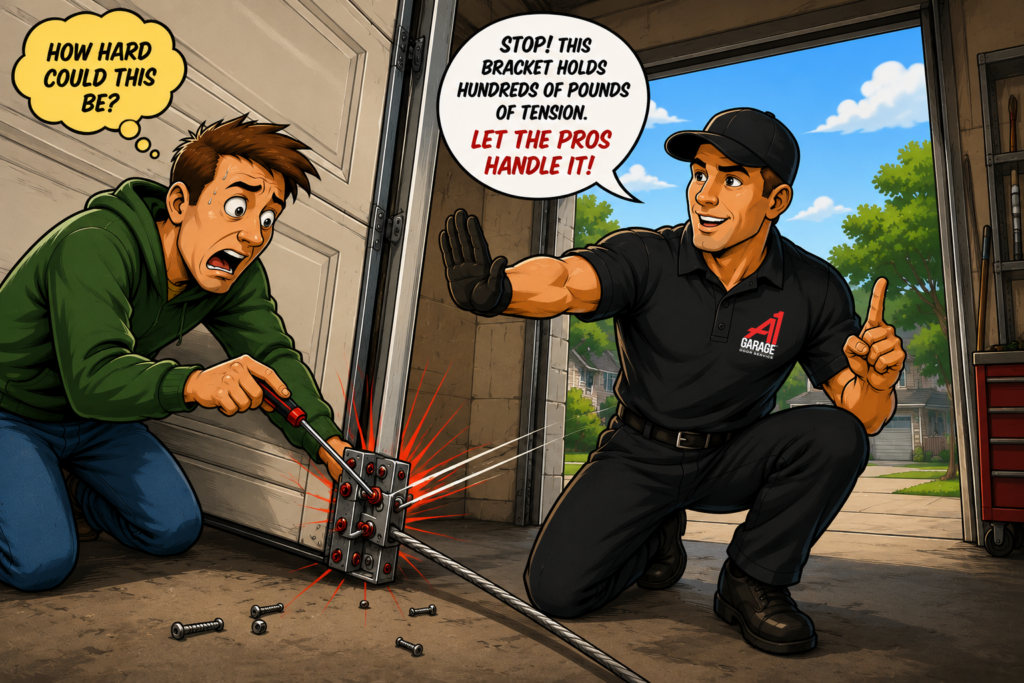
Before we dive in, here are the biggest takeaways homeowners need to know about garage door brackets:
- Top garage door brackets help seal the door and guide rollers.
- Bottom brackets hold extreme spring tension through the lift cables.
- Bottom brackets should never be removed by homeowners.
- Red screws on garage doors usually mean “do not touch.”
- Loose or damaged brackets can cause doors to bind, shift sideways, or collapse.
- Missing screws and rusted brackets are serious warning signs.
- Low-headroom garage doors often use special outside pickup brackets.
- DIY repairs on bottom brackets can lead to severe injuries.
- Professional inspections help prevent cable failures and unsafe door movement.
Have you ever looked at your garage door and wondered which parts are actually dangerous to touch? Have you seen red screws or cables near the bottom brackets and thought, “How risky could it really be?”
The truth is, some garage door parts are simple to maintain. Others can send hundreds of pounds of stored tension flying in seconds if handled incorrectly. And unfortunately, many homeowners don’t realize the difference until someone gets hurt.
In this guide, A1 Garage Door Service explains what garage door brackets actually do, the difference between top and bottom brackets, warning signs homeowners should watch for, and why certain repairs should always be left to trained professionals.
By the end, you’ll know how to spot bracket problems early, avoid dangerous DIY mistakes, and keep your garage door operating safely for years to come.
What Are Garage Door Brackets?
Garage door brackets are metal mounting points attached to the corners of your garage door.
Their job is to:
- Hold rollers in place.
- Guide the door through the track.
- Support cable systems.
- Help the door seal properly.
- Handle spring tension safely.
Most residential garage doors have:
- Two top brackets
- Two bottom brackets
While they may look similar, they do very different jobs. And one type is far more dangerous than the other.
Top Garage Door Brackets: What They Do
Top brackets sit on the upper corners of the garage door.
These brackets:
- Hold the top rollers
- Help the door travel smoothly
- Adjust the top seal against the frame
- Prevent dust, debris, and outside air from entering
 A1 Pro Tip:
If you see light coming through the top corners of your garage door, the top brackets may need adjustment.
In many cases, a small adjustment can tighten the seal and improve insulation.
Warning Signs of Top Bracket Problems
Homeowners should look for:
- Light gaps at the top corners
- Loose screws
- Bent brackets
- Door binding while opening
- Excessive flexing around the bracket
At A1 Garage Door Service, technicians are trained to ensure every mounting hole is properly secured. Missing screws may seem harmless, but they can allow the bracket to flex and pull away from the door over time.
That can eventually cause the door to bind or shift during operation.
The Real Danger: Bottom Garage Door Brackets
Here’s where things get serious. Bottom brackets do more than hold rollers.
They also anchor the garage door lift cables. Those cables connect directly to the spring system, which may hold hundreds of pounds of tension.
That means removing the wrong screw can release stored spring force instantly.
Why Bottom Brackets Are Dangerous
Bottom brackets are connected to:
- Torsion springs
- Lift cables
- Heavy door weight
- High-tension systems
Some garage doors weigh 150 to 300 pounds. Custom wood or insulated commercial-style doors can exceed 600 pounds. That tension is constantly pulling on the bottom bracket.
If the bracket fails or is removed improperly:
- Cables can whip loose.
- Metal parts can fly.
- Doors can collapse sideways.
- Severe injuries can happen instantly.
A1 Pro Tip:
At A1 Garage Door Service, we’ve seen homeowners require stitches and emergency room visits after attempting DIY bottom bracket repairs.
A Simple Rule Homeowners Should Remember:
If you see red hardware on your garage door, don’t touch it. Manufacturers often use red fasteners to identify high-tension components.
That includes bottom brackets.
An A1 True Customer Story From the Field
One homeowner tried replacing garage door rollers after watching online videos. Everything went smoothly until reaching the bottom bracket.
Thinking it worked like the upper hinges, he removed several screws while the spring system was still under tension.
The cable released instantly. The bracket snapped loose and sliced deeply across his wrist.
By the time A1 technicians arrived, the homeowner was already on the way to the hospital for stitches.
Unfortunately, situations like this happen more often than people realize.
Garage doors are the largest moving objects in most homes. They should be treated with the same caution as any heavy mechanical system.
Signs Your Garage Door Brackets Need Professional Attention
Look for These Warning Signs:
Rust or corrosion
Rust weakens the bracket structure over time.
Missing screws
Every mounting point matters.
Bent metal
Warped brackets create uneven door movement.
Cable rubbing
If the cable rubs the track or bracket, it can eventually shear through metal.
Door shifting sideways
This usually means uneven tension or bracket failure.
Loud popping or binding
This can indicate bracket misalignment.
If you notice any of these issues, stop operating the door and schedule an inspection.
Special Brackets for Low-Headroom Garage Doors
Some garages don’t have enough overhead space above the door.
This setup is called low headroom.
In these systems, technicians may install special outside pickup brackets.
These brackets:
- Route cables differently
- Move drums outside the track
- Reverse certain spring configurations
- Require specialized setup procedures
These systems can look confusing because many parts operate in reverse compared to standard doors.
That’s why low-headroom systems should always be serviced by trained professionals.
Can Homeowners Safely Adjust Anything?
In limited cases, homeowners may safely adjust top brackets slightly to improve sealing.
But even then, caution matters.
Never attempt to:
- Remove bottom brackets
- Disconnect lift cables
- Loosen torsion hardware
- Adjust springs yourself
A1 Pro Safety Tip:
Garage door spring systems are under extreme pressure. Even experienced technicians follow strict safety procedures.
DIY vs. Professional Garage Door Repairs
DIY Tasks That May Be Safe
- Lubricating hinges
- Cleaning tracks
- Replacing remote batteries
- Checking weather seals
Repairs Best Left to Professionals
- Bottom bracket replacement
- Cable repairs
- Spring adjustments
- Track realignment
- Low-headroom systems
- Torsion system work
When it comes to garage door brackets, especially bottom brackets, professional service is the safest choice.
How Much Does Garage Door Bracket Repair Cost?
Garage door bracket repair costs vary depending on:
- Door size
- Bracket type
- Cable damage
- Spring condition
- Labor complexity
In many cases, replacing a damaged bracket is relatively affordable compared to the cost of emergency repairs after a major failure.
A1 Pro Tip:
A professional inspection can often catch these problems early before they become dangerous.
FAQ: Garage Door Brackets
What does a garage door bottom bracket do?
The bottom bracket anchors the lift cable and helps carry spring tension during operation.
Can I replace a bottom garage door bracket myself?
No. Bottom brackets are attached to high-tension cable systems and can cause serious injury if removed improperly.
Why are garage door screws painted red?
Red hardware often identifies components under spring tension that should only be serviced by professionals.
What causes garage door brackets to fail?
Rust, missing screws, poor installation, cable rubbing, and excessive door weight can all damage brackets over time.
Can loose brackets cause garage door damage?
Yes. Loose brackets can cause doors to bind, shift sideways, or wear unevenly.
In One Minute: What Homeowners Need to Remember
- Top brackets help seal and guide the door.
- Bottom brackets hold dangerous cable tension.
- Red screws usually mean “do not touch.”
- Rust, missing screws, and cable rubbing are warning signs.
- DIY bottom bracket repairs can cause serious injuries.
- Professional inspections help prevent major failures.
Final Thoughts from A1 Garage Door Service
Garage door brackets may look small, but they play a massive role in safety and performance.
A loose top bracket might create gaps or noise. A damaged bottom bracket can create a dangerous situation in seconds.
At A1 Garage Door Service, we believe homeowners should understand how their garage door works without putting themselves at risk trying to repair dangerous components alone.
If your garage door looks uneven, sounds unusual, or shows signs of bracket wear, schedule a professional inspection before the problem gets worse.
Want to learn more about this topic from the A1 experts? Watch A1’s podcast “The Garage Authority” below: