



Blog | GARAGE DOORS
The Future of Smart Garage Technology: What Homeowners Should Expect Next
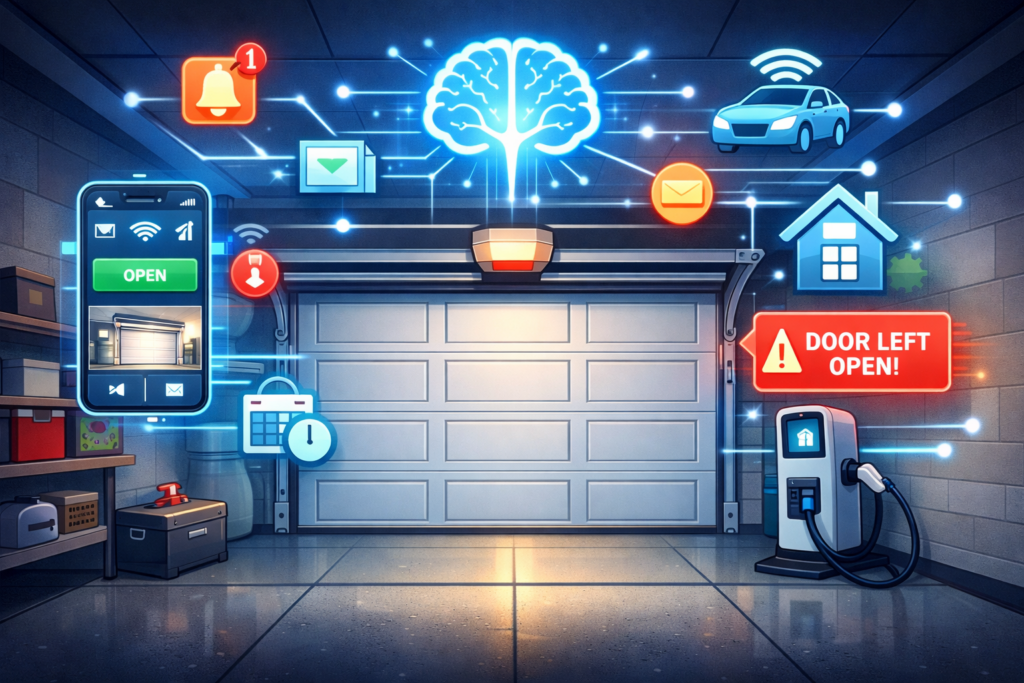
The Future of Smart Garage Technology (All Answers, Up Front)
Short on time? Here are the answers homeowners care about most.
- Smart garage technology already includes app control, cameras, alerts, and automation.
- AI will make garage doors predictive, not reactive.
- Garages will integrate deeply with cars and whole-home systems.
- Safety will shift from basic sensors to intelligent monitoring.
- In 10 years, the garage will act as a control hub, not just an entry point.
If you want the “why” behind each answer, keep reading.
Is your garage door already outdated? And could it soon be smarter than the car you drive every day?
Smart garage technology is changing faster than most homeowners realize. What used to be a simple door is fast becoming a connected system powered by automation, AI, and home integration.
In this guide, the experts at A1 break down where smart garage tech is today, what is coming next, and what matters most for homeowners. You will learn how future garages will improve safety, convenience, and control without falling for hype.
By the end, you will understand what the garage of tomorrow looks like and how to prepare for it today.
What Is the Current State of Smart Garage Technology?
Smart garage technology today focuses on awareness and control.
Most systems allow you to:
- Open and close the door from your phone
- Get alerts when the door opens or stays open
- Check door status remotely
- Add cameras or keypads for access control
This is helpful, but it is still reactive. In essence, this kind of system still waits for you to tell it what to do.
The garage door system of tomorrow anticipates your next moves and acts accordingly.
How AI Will Change Smart Garage Doors
AI will shift garage doors from human, manual control to automated decision-making. Instead of reacting, the system will anticipate.
Here is what that means for homeowners.
Predictive Maintenance
AI can learn how your garage door normally operates. When something changes, it can alert you early.
That might include:
- Springs wearing unevenly
- Motors drawing more power
- Doors moving slower than normal
This reduces surprise breakdowns.
Smarter Automation
AI can also connect your daily behavior to your garage door’s automated action.
Examples include:
- Closing automatically when you leave
- Locking when the house arms its security system
- Alerting you if the door opens at an unusual time
The garage becomes part of your home’s brain.
Garage Integration with Cars and Homes
This is where smart garage technology accelerates. Garages will not work alone.
They will talk to other machines, appliances, and devices that are already in your life. .
Car Integration
Future systems may recognize your vehicle.
That allows:
- Automatic opening when your car arrives
- Charging coordination for electric vehicles
- Security alerts if the car is accessed unexpectedly
The garage becomes part of your transportation system, a hub that automatically facilitates your coming and going.
Whole-Home Integration
Your garage already connects to your house’s locks. Soon, it will connect to your digitial systems, too.
Expect integration with:
- Security systems
- Lighting
- Climate control
- Voice assistants
When one system changes, the others respond.
The Big 5: What Homeowners Really Want to Know
1. Cost and Pricing
Smart garage technology costs vary widely. Basic smart openers are affordable upgrades.
Advanced systems cost more due to hardware and integration.
The real cost factor is not the device. It is the ecosystem you connect to.
2. Problems and Limitations
Smart systems depend on power and internet.
Common issues include:
- Wi-Fi reliability
- App compatibility over time
- Software updates
Smart does not mean maintenance-free.
3. Comparisons: Smart vs Traditional
Traditional doors work without connectivity. Smart doors add awareness and automation. The difference is not strength. It is information and control.
4. Best Features Emerging
Homeowners value features that reduce worry.
Top emerging priorities include:
- Intelligent alerts
- Automatic closing logic
- Camera-based verification
Convenience matters, but safety matters more.
5. Best Practices for Homeowners
Smart technology works best with good hardware.
That means:
- Balanced doors
- Properly rated springs
- Regular inspections
 A1 Pro Tip:
At A1, we must constantly remind homeowners that smart tech cannot fix problems resulting from mechanical neglect.
What New Safety Features Are Coming?
Safety is moving beyond tried-and-true photo-eye sensors.
Future features may include:
- Object recognition instead of beam interruption
- Movement pattern analysis
- Remote verification through cameras
The system of the future won’t just understand what is happening. It will understand why something is happening.
What Will Garages Look Like in 10 Years?
The garage will act like a control room.
It will manage:
- Entry and exit
- Vehicle interaction
- Security overlap
- Package access
It will no longer be a passive space. Tomorrow’s garage will become an active part of the home.
Mistakes Homeowners Will Make With Smart Tech
Technology moves faster than hardware.
Common mistakes include:
- Upgrading tech but ignoring the door itself
- Buying features without understanding compatibility
- Skipping professional setup
Smart systems work best when installed correctly.
DIY vs Professional Installation
Some smart devices are DIY-friendly. Full integration, however, usually is not.
Professional setup ensures:
- Proper safety configuration
- Correct automation logic
- Long-term reliability
Smart tech should reduce stress, not add it.
In One Minute: Key Takeaways
- Smart garage technology is already here.
- AI will make systems predictive and proactive.
- Integration with cars and homes is accelerating.
- Safety will move beyond simple sensors.
- The garage will become a connected hub.
Final Thoughts From A1
The garage is becoming a center of innovation.
It is smarter. It is safer. It is more connected than ever before.
This evolution is happening faster than most homeowners expect.
If you want to prepare your garage for what comes next, start with the basics.
Strong hardware plus smart technology is the winning formula.
Questions about the future of your garage and smart technology. Give us a call at A1 and we’ll give you a peek into our crystal ball*
*Crystal balls are not standard issue A1 equipment. A1 Techs, however, are qualified to discuss your garage’s unique future without one.
FAQs About the Future of Smart Garage Technology
What is smart garage technology?
Smart garage technology uses connected devices, apps, and automation to monitor and control your garage door. It allows homeowners to open, close, and receive alerts remotely while improving safety and convenience.
How will AI change garage doors in the future?
AI will help garage doors predict problems before they happen. Instead of reacting to failures, future systems will monitor performance, detect unusual behavior, and alert homeowners early.
Can smart garage doors integrate with cars?
Yes. Future smart garage systems are expected to integrate with vehicles. This may include automatic opening when you arrive, EV charging coordination, and added security monitoring.
Will smart garage technology improve safety?
Yes. New safety features go beyond basic sensors. Future systems may use cameras, object recognition, and behavior analysis to prevent accidents and improve home security.
Are smart garage doors more expensive than traditional ones?
Smart garage systems typically cost more upfront than traditional setups. However, they can reduce long-term costs by preventing breakdowns, improving efficiency, and reducing user error.
What are the biggest problems with smart garage systems?
The most common issues involve internet reliability, software updates, and compatibility between devices. Smart technology still requires proper installation and regular maintenance.
Do I need a professional to install smart garage technology?
Basic smart openers may be DIY-friendly. Full automation and integration usually work best when installed by a professional to ensure safety, reliability, and proper setup.
What will garages look like in 10 years?
In the next decade, garages are expected to function as connected hubs. They will manage access, security, vehicle interaction, and automation as part of the smart home ecosystem.