



Blog | GARAGE DOORS
Should You Become a Garage Door Technician? The Honest Pros, Cons, Pay, and Training Explained
Short on time? Here is what you need to know about becoming a garage door technician.
A garage door technician needs training, safety habits, people skills, and stamina.
The job can pay well, but income depends on skill, company, market, and effort.
The hardest parts are long days, heat, pressure, safety risks, and not always knowing when you will get home.
The best technicians are curious, calm, friendly, competitive, and willing to keep learning.
Do not enter this trade without real training. Garage doors use heavy parts and high-tension springs.
Should you become a garage door technician? How much can you make? Is the work dangerous? And what does it actually take to succeed in the garage door industry?
These are some of the most common questions people ask A1 Garage Door Service when exploring a career in garage door repair. The answers aren’t always what people expect.
While the industry can provide a rewarding career with strong earning potential and opportunities for growth, it also requires training, physical effort, people skills, and a commitment to safety.
In this guide, we’ll answer the biggest questions about the profession so you can make an informed decision before taking the next step.
What Does a Garage Door Technician Actually Do?
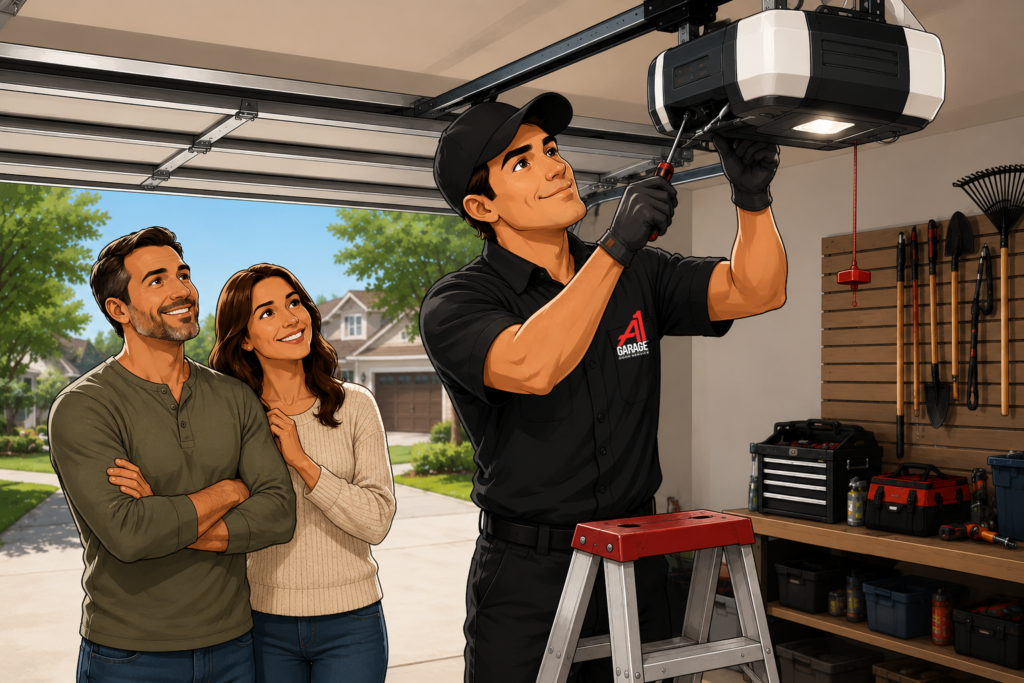
A garage door technician repairs, installs, and maintains garage door systems. That includes handling springs, rollers, tracks, openers, cables, panels, and safety sensors.
A1 Garage Door Service teaches that this job is not just about tools.
It is also about people.
Technicians walk into homes during stressful moments. A door may be stuck. A car may be trapped. A family may be late. The technician must fix the problem and calm the situation.
Is Garage Door Repair a Good Career?
Yes, it can be.
The skilled trades continue to offer strong career paths. The Bureau of Labor Statistics says installation, maintenance, and repair jobs are projected to grow faster than average from 2024 to 2034.
A1 Garage Door Service has seen technicians build strong careers in this field.
But there is a catch. You get out what you put in.
The job rewards people who care, train hard, stay safe, and treat customers well.
What People Ask Before Becoming a Technician
-
How Much Can a Garage Door Technician Make?
Pay varies by company, market, experience, and compensation plan. Some technicians are paid an hourly rate. Some earn commission. Some have blended pay.
A1’s advice is simple: ask clear questions before accepting the job.
Ask about:
- Training pay
- Average technician earnings
- Schedule expectations
- Weekend work
- Commission rules
- Benefits
- Company support
Do not choose a job on income claims alone. Choose the company that trains well and operates honestly.
What Problems Come With the Job?
This work can be hard.
You may work in hot garages. You may lift heavy parts. You may deal with stuck bolts, missing parts, and long days.
The biggest challenge is not always the repair in front of you. It is staying calm when the day fights back.
 A1 Pro Tip:
A1 Garage Door Service teaches that mental discipline matters. A great technician does not panic. They slow down, think, and keep working safely.
-
Garage Door Technician vs. Desk Job
This career is great for people who dislike sitting still.
You drive, meet people, solve problems, and work with your hands. The adventure of the day can be a huge benefit.
But it also means less routine. Some days end early. Some days run late. If you need the same schedule every day, this job may feel hard.
What Makes the Best Technicians Stand Out?
The best garage door technicians are not just mechanically inclined.
They are also:
- Friendly
- Safe
- Curious
- Coachable
- Organized
- Good listeners
- Calm under pressure
- Willing to learn daily
A1 Pro Insight:
A1 Garage Door Service believes soft skills can change the whole career. If you can make people feel heard, you have a major advantage.
-
What Is the Best Way to Start?
Start with training.
Garage doors can be dangerous when handled incorrectly. OSHA has noted that overhead doors without proper safety devices can create hazardous conditions.
Look for a company with structured training, ride-alongs, safety rules, and experienced mentors.
The International Door Association also offers education resources for door and access system professionals.
An A1 Real Customer Story: When Training Prevents Injury
A1 Garage Door Service has seen what happens when technicians enter the trade without enough training.
One technician, early in his career, was injured more than once during his first year. He dealt with spring-related danger, electrical shock, ladder falls, and serious near misses.
Those painful lessons shaped how A1 views training today.
The goal is not to “tough it out.” The goal is to prevent the injury before it happens.
That is why real training matters. A technician must understand spring tension, opener wiring, ladder safety, balance, tools, and documentation.
A1 Pro Safety Tip:
A great technician knows what to touch. A safer technician also knows what not to touch.
What Training Should Include
A strong garage door technician training program should cover:
- Spring systems
- Door balance
- Opener setup
- Safety sensors
- Track alignment
- Roller and hinge work
- Customer communication
- Estimates and documentation
- Financing basics, when offered
- Safe ladder and tool use
- Company software and forms
Many new technicians think the job is only mechanical. It is not.
A technician may also need to use a customer relationship management (CRM) system, write estimates, explain repair options, collect signatures, and document the work.
That back-end work protects the customer, technician, and company.
DIY vs. Professional Work
This section matters for homeowners, too. Some garage door tasks are simple.
Homeowners may be able to:
- Keep tracks clear
- Test safety sensors
- Listen for new noises
- Look for loose hardware
- Schedule regular tune-ups
But spring work, cable work, major opener issues, and door balance problems should be handled by a trained professional.
Garage doors are heavy. Springs store serious tension. Because injuries can and do happen, this is not a good place to guess.
Mistakes New Technicians Should Avoid
Skipping Safety Steps
Speed never beats safety. One careless move around springs, cables, or ladders can change everything.
Ignoring Customer Emotions
A customer may be stressed before the technician arrives. Do not take it personally. Be the calm part of their day.
Failing to Stay Organized
A messy truck slows everything down. Missing parts turn simple jobs into long jobs.
Thinking Training Ends
Garage door systems change. Great technicians keep learning.
Local Relevance
In hot markets such as Arizona, garages can become extremely hot. Extreme temperatures affect the technician and the equipment.
A1 Pro Tip:
A1 Garage Door Service recommends staying hydrated, preparing the truck, and respecting the heat.
In colder markets, weather seals, insulation, and stiff hardware can create different challenges. Every market teaches something new.
In One Minute: The Takeaways
- Garage door repair can be a strong trade career.
- Training matters more than confidence.
- Soft skills are just as important as tool skills.
- The work can be physical and unpredictable.
- Safety must come first.
- The best technicians keep learning.
- Homeowners should hire trained pros for high-risk repairs.
FAQs on Becoming a Garage Door Technician
Do you need experience to become a garage door technician?
Not always. Many companies train the right person. Attitude, safety, and people skills matter.
Is garage door repair dangerous?
It can be. Springs, cables, heavy doors, and electrical parts require training before a tech should handle them.
How long does it take to feel comfortable?
Many technicians need several months. Some need a year to feel fully confident.
Is this job good for people who like talking to customers?
Yes. Customer service is a major part of the job.
Should homeowners repair garage door springs themselves?
No. In fact, never. Spring work should be handled by trained professionals.
Thinking about a garage door career or need help from trained pros? Contact A1 Garage Door Service today.
Want to learn more about this topic from the A1 experts? Watch A1’s podcast “The Garage Authority” below: