


Blog | GARAGE DOORS
How to Get Your Garage Door Ready for Cold Weather: 5 Things to Check
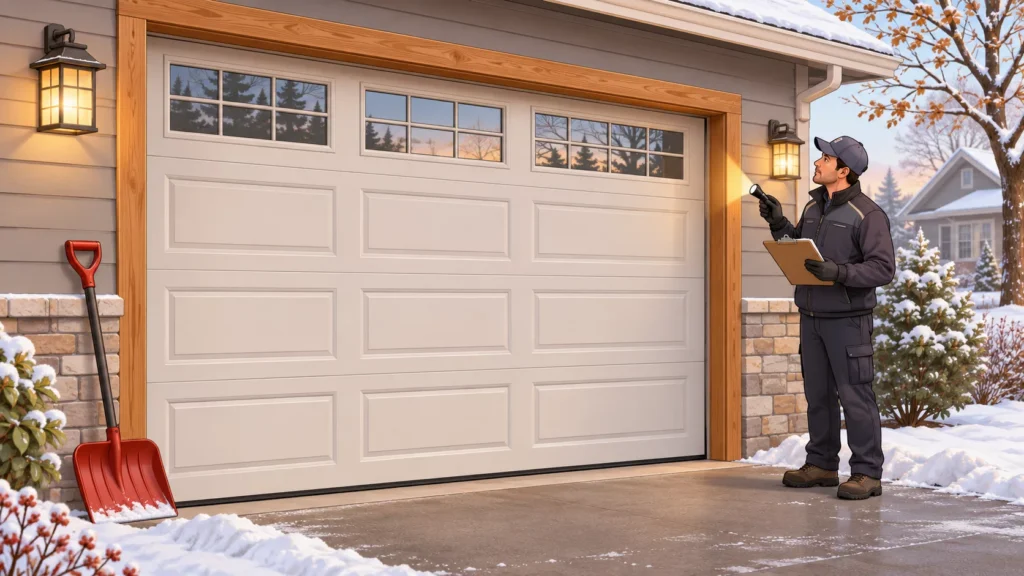
In one minute
- Clear snow and ice from the door’s path. A frozen door can strain the opener when it tries to move.
- Listen for new or high-pitched noises, especially with a heavy wood door.
- Look for visible rust, rot, warping, or damage around the door and its frame.
- Ask a professional to evaluate older extension-spring and one-piece door systems.
- Schedule a professional check before severe cold arrives. Leave spring and cable work to trained technicians.
How to Get Your Garage Door Ready for Cold Weather
Is your garage door ready for freezing temperatures? What should you check before snow and ice arrive? A door that has worked for years can show its age when the weather changes, and a frozen or damaged system may cause trouble at an inconvenient time.
Before cold weather sets in, clear the door’s path, listen for unusual sounds, look for visible damage or rust, and have an older system inspected. Here are five things to check and discuss with a garage door professional.
-
Clear snow and ice from the door’s path
In snowy climates, keep the area in front of the garage door clear. Snow or ice can freeze the bottom of the door to the ground. If the opener tries to lift a door that is stuck, it may pull against the obstruction instead of moving the door normally.
At A1, we see shoveling in front of the door as a simple cold-weather habit, even when a homeowner doesn’t use the garage every day. If the door appears frozen in place, don’t keep cycling the opener. Clear loose snow and ice from the opening and follow your opener’s instructions. If the door remains stuck or you notice damage, contact a professional.
-
Listen for new or high-pitched noises
A garage door that suddenly makes an unusual high-pitched sound may need attention. That can be especially noticeable with a heavy wood door, where the door’s weight and spring balance matter to how smoothly it moves.
One of our customers had a 26-year-old wood door with a warped bottom section. During a rainy service visit, the technician could see water collecting at the bottom rather than being kept out by the door. The homeowner had originally called about the bottom seal, but the condition of the wood affected what work could be done. It’s a reminder that the symptom you notice may be connected to the door’s broader condition.
 A1 Pro Tip:
Don’t try to diagnose a spring or force a noisy door to move. Note when the sound happens and share that with a technician.
-
Look for rust, rot, warping, or a damaged frame
Weather can expose problems that are easy to overlook during ordinary use. In the transcript, a technician described seeing rust on garage door components in a humid, older market. The discussion also highlighted wood doors that can warp or rot if their finish isn’t maintained according to the door’s care guidance.
From a safe distance, look for visible rust, splintering, water damage, or a warped door. Pay attention to the framing around the opening, too. Rot, water damage, or termite damage may affect the surfaces where door hardware is mounted.
One of our A1 technicians tells a story about a one-piece door whose arms had pulled away from damaged framing. The home’s layout also limited whether a conventional sectional door could fit without changing the room behind it. In that case, the options depended on the framing and the garage’s layout—not just the door itself.
-
Ask about older spring and one-piece door systems
Some homes still have older extension-spring systems or one-piece doors. They work differently from sectional doors that move along tracks. The source describes extension springs running along the sides of a door, while torsion springs sit on a shaft above the opening. One-piece doors pivot upward on arms.
Their age, condition, safety components, framing, and the way the home is built all matter. A technician who has inspected the system can explain whether maintenance, repair, or replacement is appropriate and why.
A visit to a roughly 50-year-old garage in Mesa led to a conversation about an extension-spring system and why the homeowner wished she had learned about its condition sooner. It’s a useful reason to ask questions during an inspection: What type of spring system do I have? What condition is it in? What are my options, and what are the tradeoffs?
A1 Pro Tip:
Don’t handle or adjust springs, cables, or lifting arms yourself. These parts can be under significant force. Ask a trained professional to inspect or repair them.
-
Schedule a professional check before the cold sets in
A seasonal inspection can help identify visible wear, corrosion, lubrication needs, and operation concerns before harsh weather makes a problem harder to manage. The transcript recommends a yearly professional tune-up and a check before freezing temperatures arrive. Follow the door and opener manufacturers’ care instructions, since maintenance needs can vary by equipment.
When a technician explains the findings, ask for options. A repair may make sense in one situation; in another, the condition of a wood door, its frame, or an older design may make replacement worth discussing. The right choice depends on what is damaged, whether the system can operate safely, and your garage’s layout. You should understand what each option addresses before deciding.
Tell the technician about recent changes: new noises, trouble opening after a freeze, visible rust, or water getting through at the bottom. If you store pool chemicals in the garage, mention that too; the transcript notes that chlorine can contribute to corrosion. Follow the product label for safe storage.
Get ahead of cold-weather garage door problems
A little preparation can help you spot concerns before cold weather arrives: keep the door’s path clear, notice changes in how it sounds or moves, and look for visible damage around the door and frame. If you have an older wood, extension-spring, or one-piece system, ask a garage door professional to explain its condition and your options.
A1 Garage Door Service can help you understand what a technician finds and what steps may make sense for your door. Contact A1 to schedule a professional evaluation.
FAQs About Prepping a Garage Door for Winter
Question: Should I open my garage door if it is frozen to the ground?
Answer: Clear loose snow and ice from the door’s path and follow the opener manufacturer’s instructions. If the door remains stuck, avoid repeatedly operating the opener and contact a garage door professional.
Question: What does a high-pitched noise from a wood garage door mean?
Answer: It may indicate that the door needs professional attention, particularly because wood doors can be heavy. A technician can inspect the door and its hardware to identify the cause.
Question: What is the difference between extension springs and torsion springs?
Answer: Extension springs run along the sides of the door and stretch as it moves. Torsion springs are mounted on a shaft above the opening and turn as the door moves. A professional can identify the system and assess its condition.
Question: How often should a garage door be professionally inspected?
Answer: The transcript recommends a yearly professional tune-up and a check before freezing weather. Follow the maintenance instructions for your specific door and opener.
Question: Can a damaged wood garage door be repaired?
Answer: It depends on the damage and the condition of the door and frame. A technician can explain whether repair is practical or whether replacement is a better option.
Question: Can I adjust a garage door spring myself?
Answer: Springs and related lifting components can be under significant force. Have a trained garage door professional inspect or adjust them.
Question: Can pool chemicals affect a garage door?
Answer: Chlorine can contribute to corrosion. Follow the chemical’s storage instructions and ask a technician about any visible rust or corrosion.