


Blog | GARAGE DOORS
Can You Become a Garage Door Technician Without Mechanical Experience?
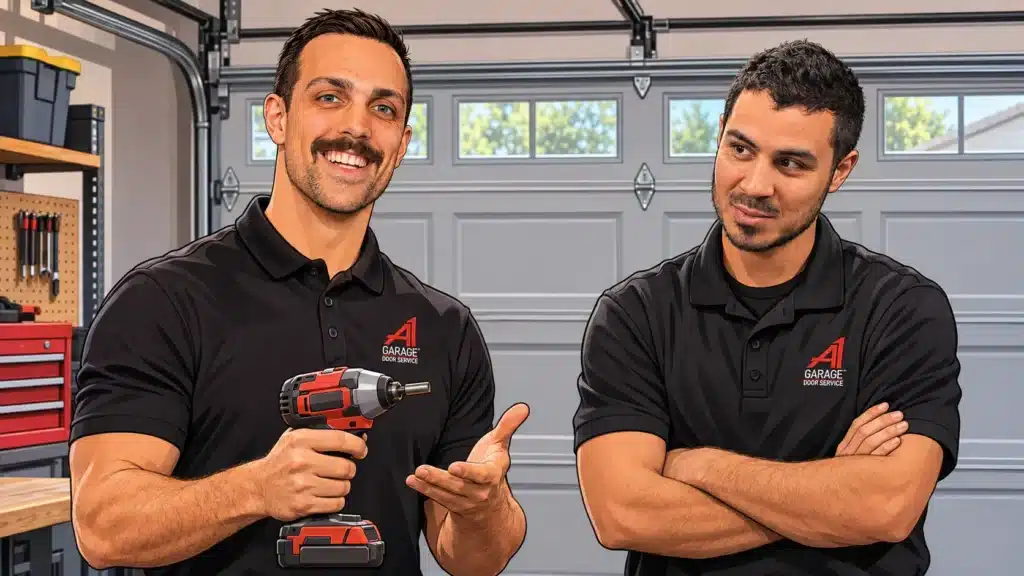
In one minute: what to know about a career as a garage door tech
- Yes, you can start a career as a garage door technician without a mechanical background. A1 technician Anthony Gonzalez said he had never used an impact driver before joining the field.
- His path began when an A1 technician came to repair his broken spring, noticed he was looking for a career change, and encouraged him to apply.
- Anthony’s first application didn’t lead to a job. After applying again, he took a ride-along with Cody Graham and then began training.
- He describes the work as physical and commission-based, with a learning curve and moments of frustration. His reported earnings are his personal experience, not a promise about what another technician will make.
- His story also shows that the job involves listening and building trust. Different markets, weather, home layouts, and customer expectations can change what a technician sees from one day to the next.
Can You Become a Garage Door Technician Without Mechanical Experience?
Do you need a mechanical background to become a garage door technician? What if you’ve never used power tools or repaired anything at home?
At A1 Garage Door Service, we understand that a career change can feel risky, especially when the role is hands-on and pay may be commission-based.
A1 technician Anthony Gonzalez’s experience shows that a person can enter the field without prior mechanical experience. It also shows that starting out takes training, persistence, and a willingness to accept coaching.
One employee’s path can’t guarantee another person’s results. It can, however, help you understand what to ask before you apply. In this A1 guide, we’ll learn why from Anthony’s story.
How did Anthony Gonzalez get started?
Before joining A1, Anthony worked in a corporate office role and drove for Uber and Lyft to supplement his income. During a difficult stretch in his personal life, his garage door spring broke. The A1 technician who came to his home, Matt Gilmer, noticed Anthony was looking for something different and asked if he had considered garage door work.
Anthony applied in November 2024 but wasn’t hired immediately. He later updated his resume, reached back to Matt, and applied again. Before making a decision, he went on a ride-along with Cody Graham. Anthony said he had never used an impact driver before that job. He began working in the field in June 2025.
That sequence matters: a customer visit sparked the conversation, but Anthony still had to apply again, learn the work, and keep improving.
What does a job as a garage door technician ask of you?
The work is hands-on and physical. Anthony describes the role as 100% commission and says there were times he felt frustrated and wondered if he would make it. He credited candid feedback from a colleague, Steve Siraj, and support from coworkers with helping him work through those moments.
When I interviewed him, about a year and a half into the job, Anthony said he was earning roughly two and a half to three times what he had earned in his prior job. That’s his individual experience, not a typical pay figure or a guarantee. Pay can depend on the role, compensation plan, market, and individual results. Ask the hiring team to explain current compensation in writing, including how commission is calculated and what a new technician can reasonably expect while learning.
Anthony’s advice to his earlier self was to keep going and trust that he would improve. In his words, “I’m going to get better if I keep going and I don’t give up.” His experience makes clear that persistence helps, but so do feedback and a team willing to coach you.
What can a technician learn from working in different markets?
Anthony traveled to help in North Carolina, South Carolina, Philadelphia, New Jersey, and Delaware. He noticed that some customers in those markets used their garages differently than homeowners in Phoenix. Some doors were small, old, or rarely used, and homeowners didn’t always realize that maintenance could improve how the door operated.
Weather also changed what he saw. He described humidity and coastal conditions contributing to rust on metal components. He also said that after maintenance, such as replacing worn, rusty rollers, some customers were surprised by how much quieter their doors could sound. These are examples from the markets he visited, not a diagnosis for every door in those regions.
The work also called for adapting to the person. Anthony said some East Coast customers wanted more conversation and rapport-building. He learned to slow down, listen, and build trust instead of assuming every customer wanted the same pace or explanation.
For a homeowner, the takeaway is straightforward: even if you rarely use the garage door, it’s still a large moving system exposed to wear and weather. If it’s unusually noisy, rusty, or not moving smoothly, ask a qualified technician to inspect it. A professional can explain what they find and what options make sense.
Does every new technician get to travel?
Anthony’s travel is one part of his individual experience. He said A1 paid for his travel, and he spent a combined three to four months helping in other markets. He also traveled with a colleague, Antonio. His story shows that travel can be part of some roles, but it shouldn’t be assumed for every technician or every market.
If travel matters to you, ask whether the position includes out-of-market work, how often it happens, how expenses are handled, and whether travel is optional or expected. Also ask what the normal schedule looks like at your home market.
What should you ask before applying to be a garage door technician?
If you’re considering a garage door technician career, get clear answers to practical questions before accepting a position:
- What training and ride-along opportunities are provided?
- How does the commission plan work, and what should a new technician expect while learning?
- What are the usual schedule and physical demands?
- Is travel available or required, and how are travel costs handled?
- How do supervisors and experienced technicians give feedback to new team members?
- What advancement paths exist, and what skills or performance are required?
The answers may differ by market and position. A clear conversation helps you decide whether the role fits your goals, family responsibilities, and comfort with hands-on work.
A career change starts with asking good questions
Anthony Gonzalez’s path shows that previous mechanical experience isn’t the only way into garage door work. He started as a customer with no power-tool experience, took a ride-along, learned the work, and gradually became someone coworkers could rely on in other markets. His outcome is personal, and the job comes with real demands, including physical work, commission-based pay, and a learning curve.
If you’re exploring a career in home services, look closely at the training, pay structure, schedule, travel expectations, and support available in the role. Explore current opportunities with A1 Garage Door Service and ask the hiring team what the job looks like in your market.
FAQs About Becoming a Garage Door Technician
Question: Do you need mechanical experience to become a garage door technician?
Answer: Not necessarily. A1 technician Anthony Gonzalez said he had never used an impact driver before joining the field. His experience is one example; applicants should ask about training and role requirements.
Question: What training did Anthony Gonzalez have before becoming a technician?
Answer: The transcript says Anthony took a ride-along with Cody Graham before starting training. It doesn’t describe a formal credential or guarantee a specific training path for every applicant.
Question: How much can a garage door technician earn?
Answer: Anthony reported earning roughly two and a half to three times his prior income after about a year and a half. That’s his personal result, not a typical pay estimate or guarantee. Ask the hiring team about the current compensation plan for the specific role and market.
Question: Is garage door technician work physically demanding?
Answer: Yes. Anthony and the host described the work as physical and involving long workdays. Ask about the normal schedule and essential duties during the hiring process.
Question: Do garage door technicians travel for work?
Answer: Some roles may include travel. Anthony traveled to several markets, but his experience doesn’t mean travel is part of every position. Ask whether travel is available or expected and how expenses are handled.
Question: Why might a garage door be noisier in a humid or coastal climate?
Answer: Anthony described seeing rust on metal components in humid and coastal markets. Rust or worn parts can affect operation; a qualified technician can inspect a specific door and explain the cause.
Question: What questions should I ask before accepting a technician job?
Answer: Ask about training, commission calculations, expected earnings while learning, schedule, physical duties, travel, expenses, feedback, and advancement requirements.