



Blog | GARAGE DOORS
8 Garage Door Myths That Could Cost Homeowners Thousands
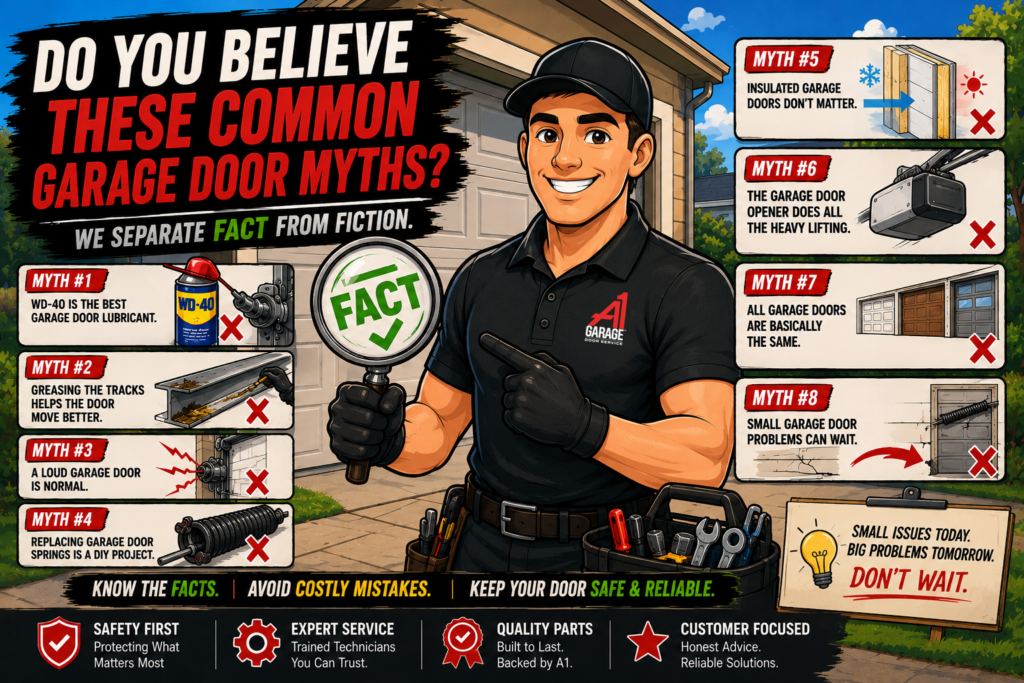
Before we dive in, here are the short answers homeowners are looking for about garage door myths:
- WD-40 is not the best lubricant for garage doors.
- Never grease your garage door tracks.
- A loud garage door is usually a warning sign.
- Replacing garage door springs yourself is dangerous.
- Insulated garage doors provide real benefits.
- Garage door springs do the heavy lifting, not the opener.
- Not all garage doors are the same.
- Small garage door issues become expensive problems when ignored.
If you only remember one thing, remember this: most major garage door failures start as small issues that homeowners ignore.
Do You Believe These Common Garage Door Myths?
Have you ever sprayed WD-40 on your garage door and assumed the problem was solved?
Have you ever heard a grinding noise and decided to deal with it later?
Many homeowners have.
The problem is that garage door myths often lead to expensive repairs, safety risks, and shortened equipment life.
At A1 Garage Door Service, we work with homeowners every day who simply don’t know the facts. In this guide, we’ll answer eight of the most common garage door questions and separate fact from fiction.
By the end, you’ll know how to protect your garage door, avoid costly mistakes, and keep your system running safely for years.
Myth #1: WD-40 Is the Best Garage Door Lubricant
The Short Answer
No, it isn’t.
WD-40 was originally designed to help prevent rust and displace moisture. While it may temporarily quiet a noisy door, it is not designed as a long-term garage door lubricant.
What You Should Use Instead
For moving garage door parts, A1 recommends:
- Silicone-based lubricants
- White lithium grease designed for garage doors
- Garage door-specific lubricants
These products last longer and provide proper protection for moving components.
 A1 Pro Tip:
If you’re buying WD-40, make sure you’re choosing their garage door lubricant product, not the traditional formula.
Myth #2: Greasing Garage Door Tracks Helps the Door Move Better
The Short Answer
Absolutely not.
This is one of the most common garage door maintenance mistakes.
Garage door rollers are designed to roll inside the track. When grease is applied, it attracts:
- Dust
- Dirt
- Pet hair
- Debris
Over time, that buildup creates additional friction and wear.
Best Practice
Keep tracks clean and dry.
Lubricate moving parts such as:
- Rollers
- Hinges
- Bearings
- Springs
Leave the tracks alone.
Myth #3: A Loud Garage Door Is Normal
The Short Answer
Not usually.
A little noise is normal. Excessive noise, however, is often your garage door’s way of telling you something is wrong.
Common Causes of Garage Door Noise
- Worn rollers
- Loose hardware
- Failing springs
- Lack of lubrication
- Misaligned components
A1 Pro Tip:
If your garage door can be heard throughout the house, it’s time for an inspection.
An A1 Real Customer Story from the Field
A homeowner contacted A1 after hearing a loud grinding sound every morning. For months, the family ignored it because the door still worked.
Eventually, the rollers seized, placing extra strain on the opener and spring system. What could have been a simple maintenance visit became a much larger repair.
The lesson was simple.
The garage door wasn’t suddenly broken. It had been warning them for months.
A1 Pro Tip:
Just like a small leak in a roof, garage door problems rarely fix themselves.
Myth #4: Replacing Garage Door Springs Is a DIY Project
The Short Answer
No.
Garage door spring replacement is one of the most dangerous repairs around the home.
Springs contain tremendous stored energy.
Many residential garage doors weigh between 200 and 300 pounds or more. Springs counterbalance that weight.
When handled incorrectly, serious injuries can happen instantly.
When to Call a Professional
Always call a trained technician for:
- Spring replacement
- Cable replacement
- Torsion system repairs
- Major balance adjustments
A1 Pro Tip:
The cost of professional service is far less than the cost of an emergency room visit.
Myth #5: Insulated Garage Doors Don’t Matter
The Short Answer
They absolutely matter.
Many homeowners focus on appearance and overlook insulation.
Benefits of Insulated Garage Doors
Better Energy Efficiency
Insulation helps reduce heat transfer into your garage.
Increased Comfort
Especially important if:
- You have a room above the garage
- The garage shares walls with living areas
- You use the garage as a workspace
Stronger Construction
Insulated doors are generally more rigid and durable.
A1 Pro Tip:
Learn More about how insulated garage doors can improve energy efficiency at https://www.energy.gov/energysaver.
Myth #6: The Garage Door Opener Does All the Heavy Lifting
The Short Answer
No. It does not.
The springs do most of the heavy lifting.
The opener’s primary job is guiding the door up and down.
Why This Matters
When springs wear out:
- The opener works harder
- Components wear faster
- Breakdowns become more likely
If your opener seems to struggle, the real problem may be the springs.
Myth #7: All Garage Doors Are Basically the Same
The Short Answer
Not even close.
Garage doors vary dramatically in:
- Material
- Thickness
- Wind resistance
- Insulation value
- Appearance
- Durability
Common Materials
Steel
Most popular and durable option.
Aluminum
Lightweight and corrosion-resistant.
Wood
Beautiful appearance but requires maintenance.
Myth #8: Small Garage Door Problems Can Wait
The Short Answer
This is one of the most expensive myths homeowners believe.
Small problems become large problems.
Examples
A small issue today can become:
| Small Problem | Bigger Problem |
| Dry rollers | Opener strain |
| Loose hardware | Track damage |
| Minor dent | Cracked panel |
| Worn spring | Complete failure |
The Pool Leak Analogy
Think about a tiny leak in a swimming pool. At first, it seems harmless.
Eventually, however, you’re losing gallons of water every day.
Garage door problems work the same way.
How Much Can Spurning Garage Door Maintenance Cost?
While exact repair costs vary, homeowners often spend significantly more when problems are ignored.
Preventive maintenance is almost always less expensive than emergency repairs or complete replacement.
The best investment is catching issues early.
Frequently Asked Questions About Garage Door Myths
Can I use WD-40 on garage door rollers?
Traditional WD-40 is not recommended for long-term lubrication. Use a garage door lubricant instead.
Should garage door tracks be lubricated?
No. Tracks should remain clean and dry.
Why is my garage door getting louder?
Common causes include worn rollers, loose hardware, failing springs, or a lack of lubrication.
Are insulated garage doors worth it?
Yes. They improve comfort, efficiency, durability, and noise reduction.
Can I replace my own garage door spring?
No. Spring replacement should always be handled by a trained professional.
In One Minute: What Every Homeowner Should Remember
- WD-40 is not a long-term garage door lubricant.
- Never grease garage door tracks.
- Loud doors usually indicate a problem.
- Spring replacement is dangerous.
- Insulation provides real benefits.
- Springs do the heavy lifting.
- Garage doors are not all the same.
- Small issues become expensive repairs.
Final Thoughts from A1
Garage doors are one of the hardest-working systems in your home. Most homeowners use them multiple times every day, yet many wait until something breaks before paying attention.
At A1 Garage Door Service, we’ve seen the same pattern repeatedly. Small warning signs become major failures when ignored.
The good news is that most problems are preventable. A little attention today can save significant time, money, and frustration tomorrow.
Ready to Protect Your Garage Door?
Schedule a professional inspection and maintenance visit with A1 Garage Door Service. Our team can identify small issues before they become costly repairs.
Want to learn more about this topic from the A1 experts? Watch A1’s podcast “The Garage Authority” below: