



Blog | GARAGE DOORS
Why Your Garage Door Opener Isn’t Working (And What to Do Next)
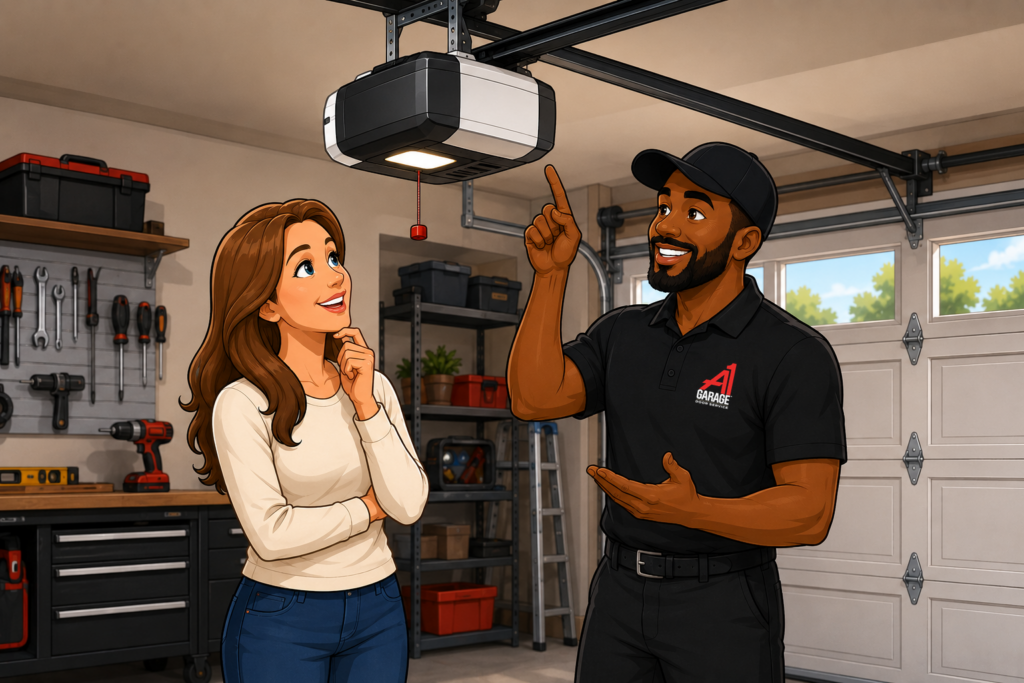
If your garage door opener is acting strange, here are the most common causes:
- Door won’t close? Usually misaligned safety sensors.
- Door opens a few inches then stops? Most likely a broken or worn spring.
- Motor runs but nothing moves? Could be a stripped gear or disconnected trolley.
- Remote or keypad stopped working? Start with batteries before assuming bigger problems.
- Door stops at random heights? Likely a travel module issue.
- Burning smell or smoke from opener? Often a blown capacitor in older AC motors.
- Door only moves a few inches at a time? Possible RPM sensor failure.
- Loud humming noise? The motor may be overloaded or failing.
Have you ever pressed your garage door button and nothing happened?
Or maybe the door started moving, made a loud grinding sound, and suddenly stopped halfway?
In these situations, most homeowners assume the opener itself is broken. But in many cases, the real problem ilies elsewhere in the garage door system.
In this guide, A1 Garage Door Service breaks down the most common garage door opener symptoms, what they usually mean, which fixes homeowners can safely try themselves, and when it’s time to call a professional before the damage gets worse.
By the end, you’ll know how to spot small problems early, avoid costly repairs, and keep your garage door system running safely.
The Most Common Garage Door Opener Problem: The Door Won’t Close
This is one of the top garage door opener problems that homeowners search online.
Most of the time, the issue is not the opener motor itself. The problem involves the safety sensors.
What Are Garage Door Safety Sensors?
Safety sensors are the two small units near the bottom of the garage door tracks.
One sends an invisible beam. The other receives it.
If something blocks that beam, the opener refuses to close the door.
Signs Your Sensors Are the Problem
- Door starts closing then reverses
- Opener lights blink
- Door will not close unless you hold the wall button
- One sensor light is off
What To Check First
- Make sure nothing blocks the sensors
- Wipe dirt or cobwebs off the lenses
- Confirm both sensors face each other
- Check for loose wiring
 A1 Pro Tip:
A small bump from a trash can or bike can knock sensors out of alignment. That simple fix solves many service calls.
Why Does My Garage Door Open a Few Inches Then Stop?
This symptom usually points to a spring problem.
Many homeowners do not realize garage door openers are not designed to lift the full weight of the door.
The springs do most of the work. The opener only guides the movement.
When springs wear out or break, the opener senses too much force and stops itself to prevent damage.
Signs of a Spring Problem
- Door feels extremely heavy
- Opener strains loudly
- Door opens a few inches then reverses
- You hear a loud bang from the garage
- The opener struggles more each week
An A1 True Customer Story From the Field
A homeowner called A1 because their garage door kept stopping halfway.
They assumed the opener motor was failing. But during the technician’s inspection, the real issue became obvious.
The spring had not completely broken, but it had lost most of its tension over time. The opener was trying to lift far more weight than it was designed for.
The homeowner had already increased the force settings on the opener after watching an online video. That temporary fix caused even more damage.
The motor overheated, the top section of the garage door started bending, and the opener rail nearly tore away from the wall.
Instead of a simple spring replacement, the homeowner now needed major repairs. This is why diagnosing the real cause matters.
Should You Increase the Force Settings on Your Garage Door Opener?
Many YouTube videos tell homeowners that it is OK to increase the force settings on their garage door opener when it appears to be working harder than normal. That advice, however well-intentioned, is usually not something homeowners should do.
Yes, it might get the door working temporarily.
But it also forces the opener to lift weight it was never meant to handle.
That can:
- Burn out the motor
- Strip gears
- Bend door sections
- Damage rails
- Create safety hazards
A1 Pro Safety Tip:
Modern openers are designed to stop when resistance becomes dangerous. That safety feature protects both the system and your family.
Motor Runs, but the Door Does Not Move
If you hear the opener running but the door stays still, there are two likely causes.
- Stripped Gear and Sprocket
Inside many garage door openers is a plastic gear that wears down over time. Heavy doors speed up that wear.
Eventually, the motor spins, but the gear cannot engage properly.
- Disconnected Emergency Release
Sometimes the emergency release cord gets pulled accidentally. This disconnects the opener from the trolley.
The opener still runs, but the door never moves. Luckily, this is often an easy fix. Simply reconnect the trolley according to the manufacturer’s instructions.
Why Did My Remote or Keypad Stop Working?
To diagnose this common problem, we at A1 urge homeowners to start simple.
Before assuming the opener is failing, check the batteries. Dead batteries cause many remote and keypad issues.
If replacing batteries does not solve the problem, possible causes include:
- Receiver failure
- Wiring issues
- Logic board problems
- Signal interference
A1 Pro Tip:
Newer garage door systems now include built-in diagnostics that can help identify these problems quickly.
Why Does My Garage Door Stop at Random Heights?
This often points to a travel module problem. The travel module tells the opener where the door should stop.
When it fails, the opener loses track of the door’s position.
Signs include:
- Door stops too high
- Door stops before closing fully
- Door opens different amounts each cycle
Modern garage door openers combine many of these electronic controls into one system. That often makes repairs simpler than older opener designs.
Burning Smell or Smoke Coming From the Opener
If you smell burnt electronics or see smoke, stop using the opener immediately. Older AC garage door motors commonly fail because of blown capacitors.
When that happens, homeowners often notice:
- A loud pop
- Smoke
- Dripping fluid
- Humming noises
- Burning smell
In many cases, replacement is smarter than repair. Modern DC openers are quieter, more efficient, and include better safety technology.
Are New Garage Door Openers Worth It?
For many homeowners, yes.
Modern garage door openers offer:
- Quieter operation
- Smart phone controls
- Battery backup
- Motion lighting
- Diagnostic apps
- Improved safety systems
- Better energy efficiency
The best part is you do not have to use every smart feature if you do not want to. But having built-in diagnostics can help homeowners avoid unnecessary service calls.
DIY vs. Professional Garage Door Repair
Safe DIY Tasks
- Replacing remote batteries
- Cleaning sensors
- Checking sensor alignment
- Reconnecting emergency release
Repairs Best Left to Professionals
- Spring replacement
- Motor repairs
- Logic board replacement
- Gear replacement
- Capacitor repairs
- Electrical troubleshooting
A1 Pro Safety Tip:
Garage door systems carry significant tension and electrical risk. A mistake can cause serious injury.
Cost Factors Homeowners Should Know
Garage door opener repair costs vary depending on:
- Opener age
- Brand
- Replacement parts needed
- Motor type
- Spring condition
- Smart feature compatibility
In many cases, replacing an aging opener provides better long-term value than repeated repairs. Especially if the system is over 15 years old.
In One Minute: What Homeowners Should Remember
- Safety sensors cause many closing issues
- Springs do the heavy lifting, not the opener
- Increasing force settings can destroy the system
- Burning smells usually mean electrical failure
- Strange noises should never be ignored
- Modern openers are safer and smarter
- Some fixes are simple, but spring repairs are dangerous
Frequently Asked Questions about Garage Door Openers
Why won’t my garage door close?
Most likely because the safety sensors are blocked or misaligned.
Why does my garage door open a few inches then stop?
Usually because the springs are broken or worn out.
Why is my garage door opener humming?
This may indicate a bad capacitor or overloaded motor.
Can I fix a garage door opener myself?
Simple issues like batteries and sensors are safe to troubleshoot. Springs and electrical repairs should be handled professionally.
How long should a garage door opener last?
Most quality openers last 10–15 years with proper maintenance.
Final Word From A1 Garage Door Service
Garage door opener problems rarely fix themselves.
In fact, waiting usually makes repairs more expensive.
If your garage door is making strange noises, reversing unexpectedly, or struggling to move, it is time for a professional inspection.
At A1 Garage Door Service, we help homeowners diagnose problems honestly and safely so small issues do not become major repairs.
Schedule your inspection today and get your garage door system running the way it should.