


Blog | GARAGE DOORS
Garage Door Bearings: Warning Signs, Problems, and When to Replace Them
Before you dive in, here’s what A1 Garage Door Service wants you to know about garage door bearings:
- Garage door bearings help your torsion system turn safely.
- Bad bearings can damage springs, drums, cables, and torsion tubes.
- Bearings should often be replaced during spring service.
- A squealing, grinding, or rattling sound is a warning sign.
- Spraying lubricant into a failing bearing may make it worse.
- Plastic center bearings should usually be upgraded to metal.
- DIY bearing repair is dangerous because springs hold high tension.
- A1 Garage Door Service recommends inspection before bearing failure happens.
Why Do Garage Door Bearings Matter?
Have you ever heard a loud squeal from your garage door? Have you wondered if it is “just noise,” or something worse?
Garage door bearings are small parts with a big job. They help support the torsion system, which is the muscle of your garage door. When bearings fail, the whole system can become unsafe.
At A1 Garage Door Service, we explain it this way: even the best spring cannot protect your door if the bearings are failing.
In this guide, we’re going to dive in and explore everything you need to know about garage door bearings. By the end, you’ll understand how to roll like an expert and make sure your door’s bearings are moving as they should.
What Are Garage Door Bearings?
Garage door bearings help the torsion tube rotate smoothly.
The torsion tube runs above the door. It works with the springs, drums, and cables to lift and lower the door. Bearings support this movement.
Most garage door systems have:
- End bearings near the outside of the torsion line
- A center bearing near the spring area
- Bearing plates that hold parts in position
When everything works well, the door moves smoothly. When bearings wear out, metal parts can grind, shift, and fail.
The Direct Answer: When Should Bearings Be Replaced?
Garage door bearings should usually be inspected during every spring repair. In many cases, A1 Garage Door Service recommends replacing bearings when springs are replaced.
At a minimum, bearings should be replaced every other spring change.
Why? Bearings are cycle-rated, just like springs. Every open and close counts as a cycle. Over time, the bearing wears down.
Ignoring worn bearings can shorten the life of:
- Springs
- Drums
- Cables
- Torsion tubes
- Openers
Think of bearings as a “cheap insurance” item. Replacing them early can help prevent a much larger repair later.
Warning Signs of Bad Garage Door Bearings
A failing bearing may not look broken at first. That is why many homeowners miss the signs of bearing failure.
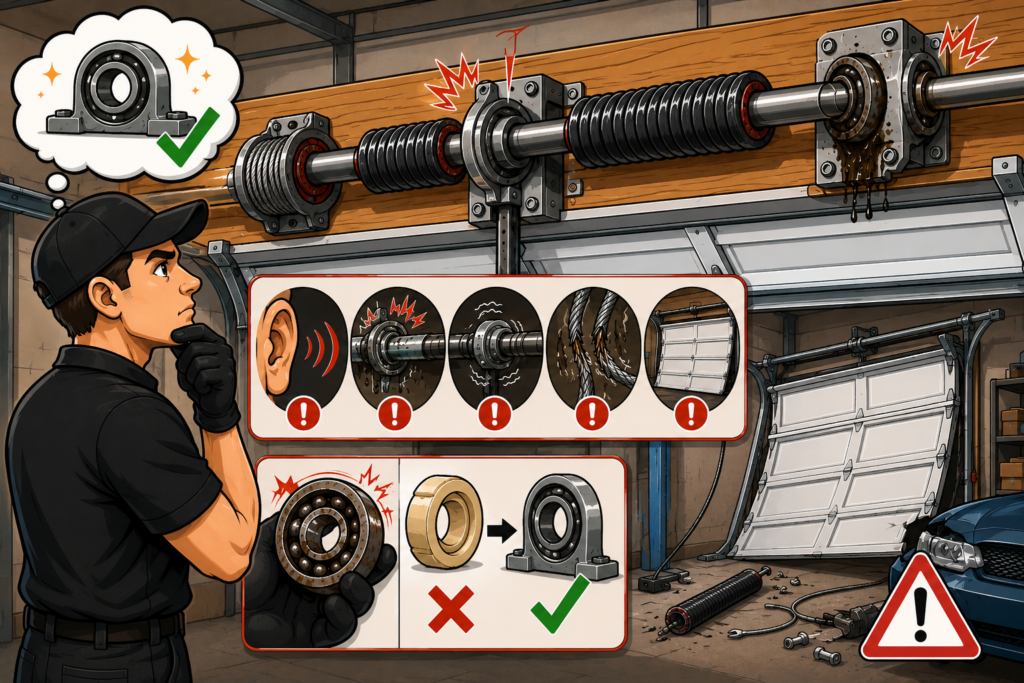
Watch and listen for:
- Grinding sounds
- High-pitched squealing
- Rattling near the spring line
- Door shaking during travel
- Door moving unevenly
- Cables becoming loose
- The door looking crooked
- Metal shavings near the torsion system
 A1 Pro Tip:
A1 Garage Door Service often finds that bad bearings sound like a baby rattle when removed and shaken. That sound can mean the internal ball bearings are worn, dry, or damaged.
Why Lubricant Is Not Always the Fix
Many homeowners hear noise and reach for spray lubricant. That may help rollers or hinges in some cases. But it is not a true fix for a failed bearing.
A sealed bearing contains packed grease. Spraying lubricant into it can wash out what is left inside. That washing away of grease can speed up bearing failure.
If the bearing is already damaged, lubricant only hides the symptom. The noise may return in days or weeks.
The Problem with Plastic Center Bearings
Some garage doors use a plastic center spacer or “donut” for bearings. We at A1 Garage Door Service do not view this as the best long-term option.
Why?
The torsion tube is metal. The spring system moves. The plastic part does not have moving internal bearings. Over time, the metal can wear down the plastic.
If it breaks or wears unevenly, the torsion tube may start riding directly on metal. That direct contact can cut into the tube.
In severe cases, the torsion tube can be damaged or even split. A metal center bearing is often the better choice.
What Happens If You Ignore Bad Bearings?
Bad bearings can create a chain reaction.
Here is what can happen:
- The bearing starts to drag.
- The torsion tube turns unevenly.
- Drums and cables lose smooth movement.
- The tube begins wearing down.
- The door can go crooked.
- Cables may come loose.
- The door may come off track.
That is when a small part becomes a big safety issue.
A1 Pro Safety Tip:
A garage door can weigh hundreds of pounds. If it comes off track, it can damage cars, storage items, walls, and the door itself. Worse, it can create a risk for people and pets.
DIY vs. Professional Bearing Replacement
Garage door bearing replacement is not a good DIY project. The reason is spring tension and the inherent danger of working with springs.
The torsion system stores a lot of force. If the wrong part is loosened, the system can move suddenly. That can cause serious injury.
A homeowner, however, can safely do visual checks from a distance.
You can look for:
- Crooked movement
- Loud noises
- Loose cables
- Visible metal shavings
- A door that will not close evenly
A1 Pro Safety Tip:
Do not take apart springs, drums, cables, or bearing plates. We can NOT stress this safety tip enough. Call a trained garage door technician.
Cost Factors: What Affects Bearing Replacement?
A1 Garage Door Service does not recommend hiring a company that quotes a price for garage door repair without first seeing the door.
Several things can affect bearing repair cost:
- Number of bearings needed
- Door size and weight
- Type of spring system
- Condition of torsion tube
- Condition of drums and cables
- Whether the center bearing is plastic or metal
- Whether other parts were damaged
A1 Pro Tip:
The lowest repair cost is usually before a major failure. Once a tube, cable, drum, or panel is damaged, the repair cost can grow.
Best Practices for Homeowners
Use this A1-approved checklist to protect your garage door system:
- Schedule regular garage door maintenance.
- Have bearings checked during spring service.
- Replace plastic center parts with metal when advised.
- Do not ignore squealing or grinding.
- Do not force a crooked door closed.
- Do not keep spraying lube into a bad bearing.
- Call for service if cables look loose.
- Ask the technician to inspect the full torsion system.
Common Mistakes to Avoid
Mistake 1: Waiting Until the Door Fails
Noise is often the first warning. Waiting can lead to bigger damage.
Mistake 2: Only Replacing the Spring
A new spring on worn bearings is not always enough. The system works together.
Mistake 3: Forcing a Crooked Door Down
This can bend tracks, damage panels, or make the door unsafe.
Mistake 4: Treating Lubricant as a Repair
Lubricant can reduce friction. It cannot rebuild a failed bearing.
Local Relevance: Why Maintenance Matters Everywhere
Weather, age, and usage all affect garage door parts.
In hot climates, parts can dry out faster. In cold climates, metal parts can become stiff and stressed. In busy homes, daily use adds cycles quickly.
That is why A1 Garage Door Service recommends regular inspections before parts fail.
In One Minute: Key Takeaways About Bearings
- Bearings support the torsion system.
- Worn bearings can damage expensive parts.
- Noise is often an early warning sign.
- Plastic center parts are not ideal in the long term.
- Spray lubricant is not a true fix.
- Bearing replacement is best handled by a pro.
- Regular maintenance can prevent surprise failures.
FAQs about Garage Door Bearings
What do garage door bearings do?
Garage door bearings help the torsion tube rotate smoothly while the door opens and closes.
How do I know if my garage door bearings are bad?
Grinding, squealing, rattling, uneven movement, and loose cables can all be warning signs.
Should bearings be replaced with springs?
Often, yes. A1 Garage Door Service recommends inspecting bearings during spring replacement.
Can I lubricate bad bearings?
Lubricant may quiet them for a short time, but it can also wash out internal grease. Bad bearings should be replaced.
Are metal center bearings better than plastic?
In many cases, yes. Metal center bearings are more serviceable and durable than plastic spacers.
Is bearing replacement safe to DIY?
No. The torsion system is under high tension. Call a trained garage door technician.
Hearing squealing, grinding, or rattling from your garage door? Schedule an inspection with A1 Garage Door Service before a small bearing issue becomes a major repair.