



Blog | GARAGE DOORS
Why Garage Door Maintenance Matters More Than Homeowners Realize
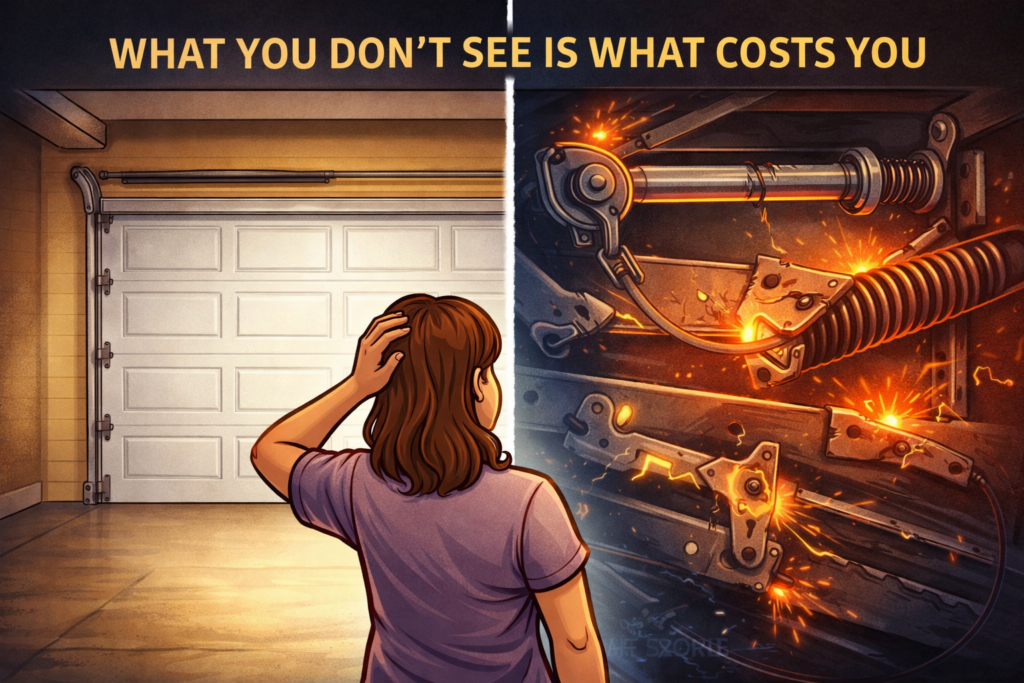
Homeowners have a tendency to treat their garage door like a light bulb. If it works when they hit the switch, all must be well.
But what if behind that regular use, your garage door is quietly wearing out? And what if a simple checkup could save you from an expensive bill for a repair or a full replacement?
In this guide, the experts at A1 break down why maintenance is often ignored, how small parts cause major failures, what neglect really costs, and the schedule every homeowner should follow. By the end, you’ll know how to avoid emergency repairs, protect your family, and extend the life of your garage door.
Why Homeowners Ignore Maintenance (and the Real Cost of Neglect)
Most homeowners don’t think about their garage door when it’s working. Why worry about something that’s functioning just fine when family, work and life’s responsibilities demand our attention?
This mindset creates the perfect setup for neglecting maintenance, which can lead to expensive problems. Even though the door might seem fine, metal parts are rubbing against each other every day and slowly wearing down over time.
How Small Parts Turn into Big Problems
Your garage door is a moving wall. It has no suspension and relies on hinges, rollers, cables, and springs to work together as a team. When one part wears out, stress shifts to the next and forces that part to work harder than usual.
This domino effect can lead to a list of problems, including:
- Hinge cracks
- Extra force shifting to the next hinge
- Rollers binding
- The door tilting
- Cable loosening
- The door is becoming stuck and unsafe
 A1 Pro Tip:
A single, ignored roller that fails can quickly lead to a door that won’t move. If this happens, you have an emergency on your hands and need to call a certified, professional garage door company for help.
What Neglect Really Costs Homeowners
Unfortunately, we’ve seen this scenario far too often at A1 Garage Service. Nice cars, that homeowners paid their hard-earned money for sitting under garage doors held together with angle iron, two-by-four lumber screwed to the top panel, and (believe it or not) duct tape.
These DIY patches eventually fail, causing the top panel to plummet. When that happens, homeowners not only need a new garage door, but they also need to address thousands of dollars’ worth of damage to their car.
Chances are, if you’re parking your car in the garage, it’s worth A LOT more than repairing or replacing your garage door. Keep that math in mind next time you reach for that roll of duct tape.
A1 Pro Safety Tip:
Expensive car damage isn’t the only thing to worry about as pieces of your garage door fall when the door is open. Unsafe DIY fixes can also lead to personal injury. Before you try to fix a big issue yourself, have a professional assess your door properly.
The Ideal Garage Door Maintenance Schedule
At A1, we recommend an easy-to-remember and follow garage door maintenance schedule.
Standard Doors:
Size
- 8×7 (single car)
- 16×7 (double car)
These are the most typical HOA-style or builder-grade sizes.
Weight
- Usually light to moderate weight
- Non-insulated or basic 1–2 layer steel
- Normal hardware load
- Standard-cycle springs (10,000 cycles)
Use Case
- Typical household: 3–5 cycles per day
- No special hardware or custom configurations
Maintenance Recommendation
- Once per year
Large or Heavy Doors
Size
- 18 feet wide or more
- 8 feet tall or higher
- Oversized RV-height doors
- Multi-car custom openings
Weight
- Heavily insulated (3-layer steel)
- Wood or wood-overlay doors
- Full-view glass doors
- Custom architectural doors
Large and heavy doors put significantly more strain on springs, rollers, and openers.
Hardware Requirements
- Large and/or heavy doors often need:
- High-cycle springs
- Heavy-duty rollers
- Reinforced struts
- Stronger operating systems
Use Case
- Higher daily cycles
- Doors used as the main entryway
- Families with multiple vehicles
Maintenance Recommendation
- Twice per year
Garage door manufacturers place stickers on the inside of the door that recommend this schedule. Once per year is the minimum for maintenance for standard doors, once every six months for large and heavy doors, or doors that are used often.
A1 Pro Tip:
If you use your garage door 10-20 times per day, we strongly recommend performing maintenance every six months (twice per year) regardless of your door’s size.
The ROI of Annual Garage Door Tuneups
Regular readers of A1’s expert guides know that garage door replacement ranks among the highest-ROI home upgrades. Due to their ability to boost curb appeal.
By preemptively addressing major failure, annual tune-ups also add their own value.
ROI of maintenance includes:
- Avoiding emergency replacements
- Reducing major part failures
- Extending door lifespan
- Protecting cars parked under the door
- Keeping your family safe
Maintaining your garage door regularly ensures that you decide when to replace your door. It’s not decided for you by an untimely collapse.
Annual Garage Door Maintenance Checklist
A1 Garage recommends performing the following maintenance tasks at least once per year, depending on the type of door you have and how often you use it:
- Checking hinges, rollers, and tracks
- Inspecting cables and balance
- Ensuring the door is level
- Listening for stress points
- Replacing failing parts early
- Testing safety systems
Many expensive garage door failures occur because the following items went unchecked for years. Don’t wait until it’s too late and you’re facing an expensive bill that could have been avoided.
Common Homeowner Mistakes to Avoid
At A1, we see homeowners make these costly, but easily avoidable mistakes:
- Waiting until the door “sounds bad”
- Lubricating only once every few years
- Ignoring sticky rollers
- Letting kids hang on or play the door
- Building DIY braces
- Forcing a stuck door to move
- Using the opener to “pull or push through” a problem
All the above add undue stress to your garage door and eventually lead to an expensive day after an avoidable failure.
A1 Pro Money-Saving Tip:
Going the DIY route when repairing your garage door may seem like a good way to save money. But remember, DIY “fixes” can make future repairs more expensive.
And ALWAYS remember that springs and cables store potentially dangerous force and can injure someone if handled improperly. Never attempt to fix them yourself.
In One Minute: Key Takeaways
- Maintenance prevents early door failure
- Small parts fail first and cause domino damage
- Neglect often leads to expensive emergencies
- Standard doors need annual checks
- Large or heavy doors need twice-yearly service
- The ROI of maintenance is priceless
Want peace of mind? Give us a call or a click at A1 Garage Service to schedule your annual garage door tune-up before small issues turn into big bills. Our info to talk or schedule online is at the top of the page!
FAQ Section
How often should I service my garage door?
Once a year for standard doors; twice a year for large or high-use doors.
What happens if I skip garage door maintenance?
Small part failures can spread, leading to crooked doors, stuck rollers, opener burnout, or full panel collapse.
Can garage door maintenance prevent emergency repairs?
Yes. Most emergency failures start as small issues that would have been caught during a tune-up.
Is garage door maintenance worth the cost?
Yes. Tune-ups prevent expensive repairs, protect vehicles, and extend door lifespan.
Can homeowners do their own tune-ups?
Homeowners can visually inspect, but mechanical adjustments should be done by a professional.