



Blog | GARAGE DOORS
Choosing the Right Garage Door Color: Designing the Smile That Completes Your Home
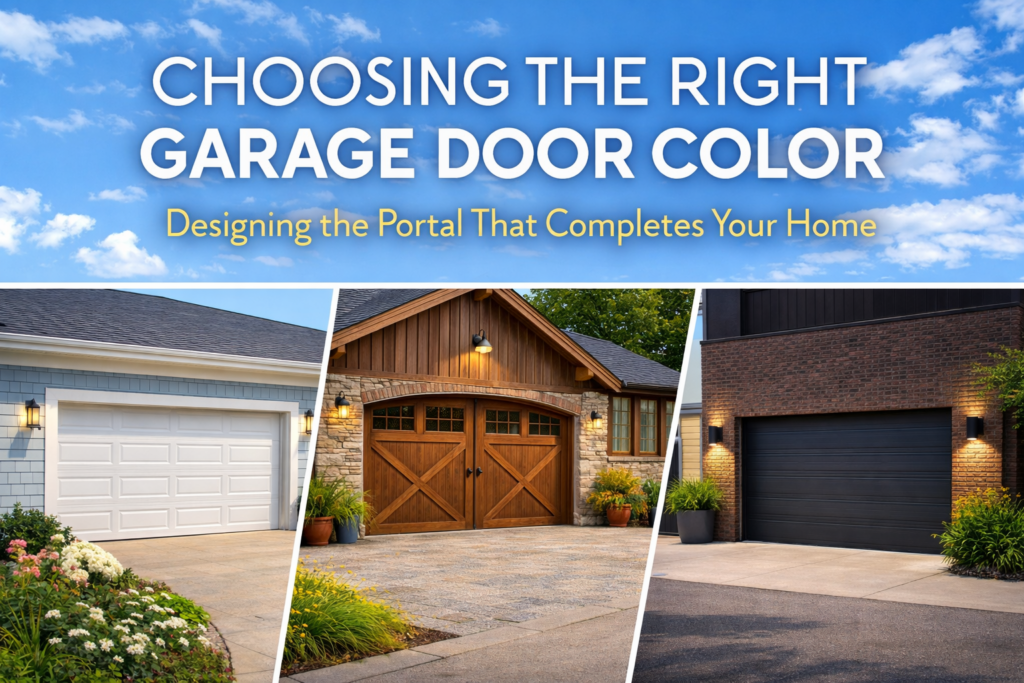
There’s a moment in every home design journey when the big decisions are already made. The structure is set. The materials are chosen. The style is clear.
And yet, something still feels unfinished.
More often than not, that missing piece is color, specifically, the color of the garage door. As one of the largest visual elements on most homes, the garage door doesn’t just participate in the design. It anchors it.
In a lifestyle-focused garage, the door is more than a boundary. It’s the smile of your home. And its color determines whether that smile blends seamlessly into the home—or quietly disrupts it.
The Hidden Impact of Garage Door Color
Garage door color has a disproportionate influence on how a home is perceived. Because of its size and placement, it can either unify the exterior or unintentionally dominate it.
A door that’s too bright, too dark, or simply mismatched can draw the eye immediately, but not in a good way. Instead of complementing the home, it competes with it.
And while this may seem like a purely aesthetic issue, it often affects how the space feels and functions. A visually heavy door can make a garage feel closed-off before it’s even opened. A poorly integrated color can make the entire façade feel less intentional.
 A1 Pro Insight: Common Color Mistake
One of the most frequent missteps is choosing a garage door color in isolation based on a sample, a photo, or a showroom display. Without seeing that color against your home’s siding, trim, roof, and lighting conditions, it’s easy to end up with a result that feels disconnected or overly bold.
Designing for Harmony—Matching Color to Architecture
Color works best when it reinforces what’s already there.
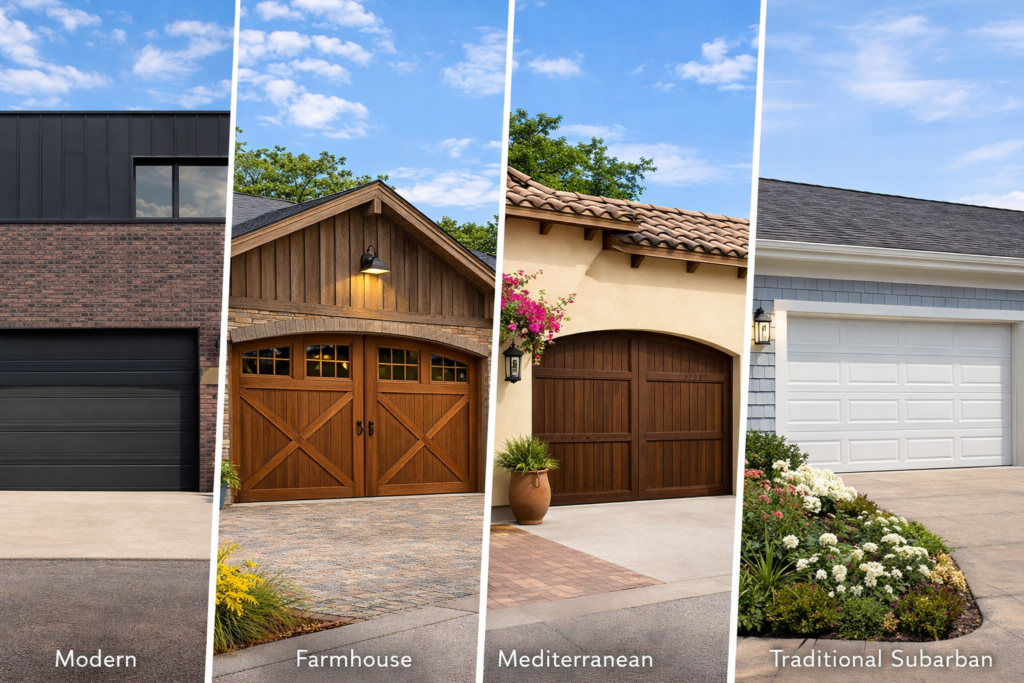
Modern homes often benefit from darker tones—black, charcoal, or deep gray—that emphasize clean lines and create contrast with lighter walls. These colors tend to visually “ground” the structure while maintaining a sleek, minimal aesthetic.
Farmhouse and craftsman homes lean toward softer palettes: warm whites, muted grays, or natural wood tones. These colors enhance texture and create a welcoming, lived-in feel that aligns with the home’s character.
Mediterranean and Spanish-style homes call for warmth. Earthy browns, deep stains, and muted neutrals echo the tones of stucco, tile, and stone, allowing the garage door to feel like a natural extension of the architecture.
Traditional suburban homes often benefit from balance—colors that closely align with siding or trim, creating cohesion rather than contrast.
A1 Pro Insight: Good / Better / Best Approach
- Good: Match the garage door color closely to the primary exterior color for a safe, cohesive look
- Better: Coordinate with trim or accent colors to introduce subtle depth
- Best: Choose a complementary tone that intentionally balances all exterior materials, creating a layered and architecturally aligned finish
Contrast vs. Camouflage: What Role Should Your Door Play?
Every garage door color decision comes down to a simple question: should the door stand out, or step back?
A blending approach allows the garage door to recede into the home’s exterior. This works particularly well for front-facing garages, where minimizing visual bulk can make the home feel more balanced.
A contrasting approach, on the other hand, turns the garage door into a feature. Dark doors against light homes, or richly stained wood against neutral exteriors, can create a sense of depth and intentional design.
Neither approach is inherently better. It depends on the home’s layout and the homeowner’s goals.
A1 Pro Insight: Best-For Recommendations
- Best for minimizing visual bulk: Colors that closely match siding
- Best for architectural emphasis: Darker tones that create contrast
- Best for long-term flexibility and resale: Neutral, widely appealing palettes
Light, Climate, and Real-World Color Performance
Color doesn’t exist in a vacuum. It changes throughout the day.
Morning light, afternoon sun, and evening shadows all affect how a garage door color is perceived. A shade that looks subtle at noon might feel dramatically different at dusk.
Climate also plays a role. In warmer regions, darker colors absorb more heat, which can raise the temperature inside the garage, especially if the door isn’t well insulated. Lighter colors reflect more sunlight, helping maintain a more stable environment.
Then there’s the question of longevity. Some colors fade faster than others, and certain finishes show dirt, dust, or wear more easily.
A1 Pro Insight: Real-World Outcome
- Dark colors offer a striking contrast but may increase heat absorption
- Light colors maintain a cooler surface but can show dirt more readily
- Finish matters: matte, gloss, and woodgrain textures each age differently and affect ongoing maintenance
Material + Color Pairing: Why Finish Matters as Much as Hue
Color alone doesn’t tell the full story. The material beneath it changes everything.
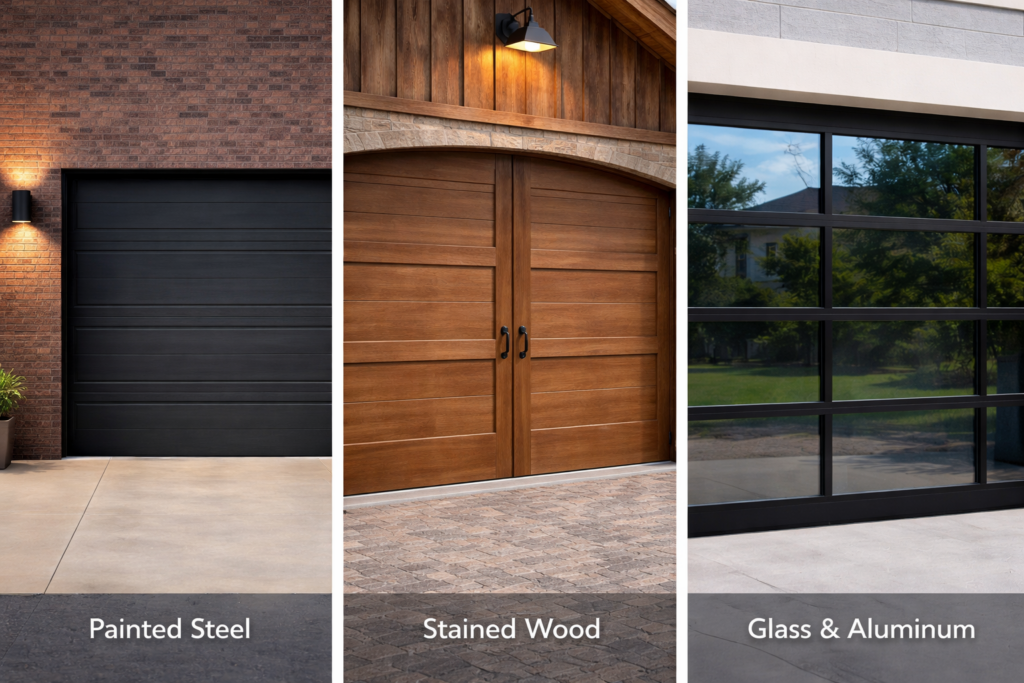
A black steel door delivers a smooth, modern look with a consistent tone. The same black applied as a wood stain introduces variation, depth, and natural texture. Composite materials can replicate that warmth while offering greater durability and lower maintenance.
Glass and aluminum doors shift the conversation entirely. Here, color often lives in the frame rather than the panel, creating a different kind of visual rhythm.
The key is understanding that “color” is not just a hue. It’s a combination of tone, texture, and material.
A1 Pro Insight: Comparison Insight
- Painted steel: Clean, uniform, low maintenance
- Stained wood: Rich, natural variation with higher upkeep
- Wood-look composite: Balanced aesthetic with improved durability and less maintenance
Testing Before You Commit: How to Get It Right
Even well-informed decisions benefit from real-world testing.
Viewing samples at different times of day can reveal how dramatically lighting affects color. Comparing options against fixed elements such as roofing, stonework, and trim helps ensure cohesion. Digital visualizers or mockups can provide a helpful preview, but they should complement, not replace, physical samples.
A1 Pro Insight: Cost & Value Context
Upgraded finishes, custom colors, and woodgrain effects can increase the cost of a garage door. However, the right color choice often delivers one of the highest returns in terms of curb appeal and perceived home value, making it a strategic investment rather than a purely aesthetic one.
The Lifestyle Effect: How Color Shapes Daily Experience
Color doesn’t just influence how a home looks. It shapes how it feels.
A light-colored garage door can make the space feel more open and inviting, especially when paired with natural light. Darker tones introduce a sense of structure and sophistication, defining the space more clearly. Natural wood finishes bring warmth, making the garage feel like a true extension of the home.
These subtle effects show up in daily life when you arrive home, when the door opens to start your day, when the garage shifts from storage to workspace or retreat.
Color becomes part of the rhythm.
Conclusion: Color as the Element That Brings Everything Together
In a well-designed home, nothing exists in isolation. That includes the garage door.
Its color has the power to unify materials, reinforce architecture, and shape how the space is experienced every day. When chosen thoughtfully, it doesn’t call attention to itself. Instead, it brings everything else into focus.
The right color doesn’t just finish the design.
It completes it.
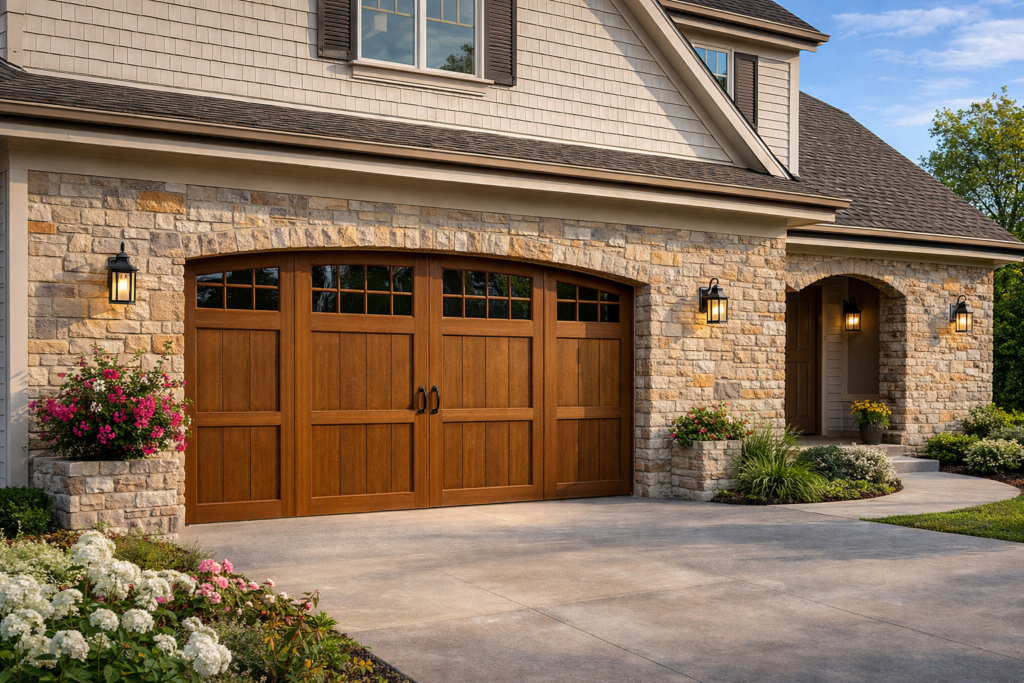
Find the Color That Works as Beautifully as It Looks
If your garage door color feels slightly off, it may affect more than just appearance. It may limit how cohesive and comfortable your space feels.
A1 Garage Door Service approaches color selection as part of a larger system—balancing design, material, performance, and lifestyle. From subtle neutrals to bold architectural statements, the goal is to help you choose a color that truly belongs.
If you’re considering an update, start with a professional evaluation. With the right guidance, your garage door can become more than a visual element. It can become a seamless, high-performing part of how your home looks and lives.